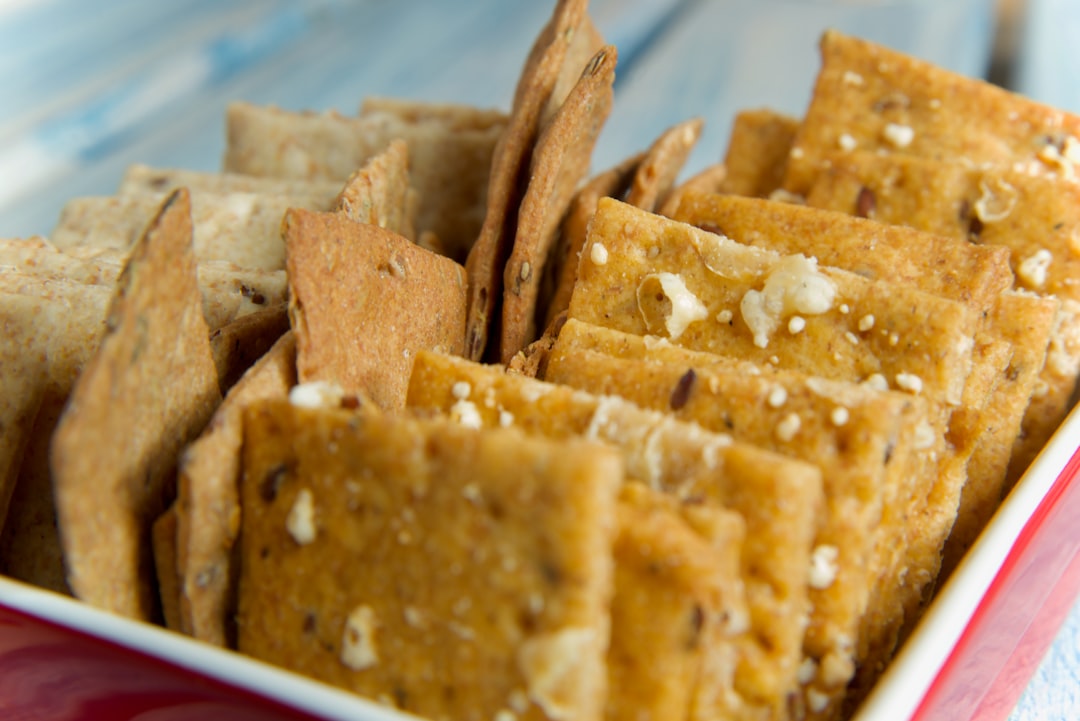
The diets react (see scores below)
Diet Ratings
Whole grain crackers contain 15-20g net carbs per serving (typically 5-6 crackers). Even the 'healthier' whole grain versions are too carb-dense for ketogenic compliance.
Whole grain crackers vary widely. Many are vegan, but many contain dairy, eggs, honey, or animal-derived emulsifiers. Whole grain varieties are nutritionally superior but require label verification.
Some vegans readily approve whole grain crackers from trusted vegan brands, while others maintain caution due to frequent hidden dairy or egg content in mainstream products.
Whole grain crackers are still grain-based products made from wheat, oats, or other excluded grains. The paleo diet excludes all grains regardless of processing level.
Whole grain crackers are acceptable as a whole grain product but are processed and often calorie-dense. They can be part of a Mediterranean diet when used sparingly as accompaniments to meals rather than as primary carbohydrate sources. Traditional Mediterranean diets favor whole grain bread over crackers.
Some Mediterranean diet practitioners accept whole grain crackers as convenient whole grain options, particularly when paired with Mediterranean foods like hummus, olive tapenade, or cheese.
Whole grain crackers are plant-derived grain products. Despite the 'whole grain' marketing, they remain excluded on carnivore diets as they are grain-based carbohydrates.
Crackers are explicitly listed as non-compliant on Whole30, regardless of grain type. They are processed grain products and fall under the 'no recreating junk food' rule.
Whole grain crackers contain wheat and thus fructans. Monash data suggests low-FODMAP status at restricted portions (approximately 5-6 crackers or 30g), but high-FODMAP at larger servings. Serving size is critical.
Monash University specifies a low-FODMAP threshold at ~30g; however, clinical practitioners often recommend stricter avoidance during elimination phase due to cumulative fructan load and variable cracker composition.
Whole grain base is positive, but most crackers contain 100-200mg sodium per serving. Portion control critical. Better than refined alternatives but sodium content limits approval.
Whole grain crackers have moderate glycemic impact (GI ~55-65 depending on brand). They can fit in Zone if portioned carefully (typically 4-6 crackers = 1 carb block). However, vegetables are preferred carb sources. Requires strict portion control.
Dr. Sears prioritizes vegetables and low-GI fruits over grain-based carbs. While whole grain crackers are acceptable, they should be secondary to vegetable carbs in meal planning.
Whole grain crackers provide fiber and some polyphenols, supporting anti-inflammatory profile. However, processing reduces nutrient density compared to intact whole grains. Often high in sodium. Acceptable as occasional snack but should not replace whole grain staples.
Whole grain crackers offer better fiber (2-3g per serving) than refined versions, but protein is minimal (2-3g per serving). They are portion-sensitive and easy to overeat. Best used as a vehicle for high-protein toppings (hummus, cheese, tuna) rather than eaten alone. Nutrient density per calorie is moderate at best.
Nutritional profile
Six traits that cut across every diet.
Fiber & Plants
How much whole-plant food and fiber it delivers.
Healthy Fats
The quality of its fats (unsaturated, omega-3).
Whole / Unprocessed
How close it is to its natural, unprocessed form.
Gut Gentle
How easy it is on digestion (low FODMAP, few irritants).
Low Glycemic
How little it spikes your blood sugar.
Protein Density
How much protein it packs per calorie.
Controversy Index
Score range: 1–6/10. Higher controversy = more disagreement between diets.
Diet-Specific Tips for Crackers (whole grain)
 Vegan — 6/10
- Highly variable by brand
- Often contains dairy or eggs
- May contain honey
- Emulsifiers may be animal-derived
 Mediterranean — 5/10
- Whole grain ingredient
- Processed product
- Calorie-dense
- Portion control important
 Low-FODMAP — 5/10
- Wheat-based with fructans
- FODMAP status highly dose-dependent
- Serving size cutoff around 30g
- Whole grain increases fructan density
 DASH — 6/10
- Whole grain benefit
- Moderate to high sodium per serving
- Portion-dependent
- Check label for added sodium
 Zone — 5/10
- Moderate glycemic index (55-65)
- Whole grain base
- Requires careful portioning
- Less preferred than vegetables
 Anti-Inflammatory — 6/10
- whole grain
- fiber present
- processed
- high sodium
- lower nutrient density
 GLP-1 Friendly — 5/10
- Improved fiber vs. refined crackers
- Low standalone protein
- Highly portion-sensitive
- Works best with protein toppings
- Easy to overconsume