Diet Ratings
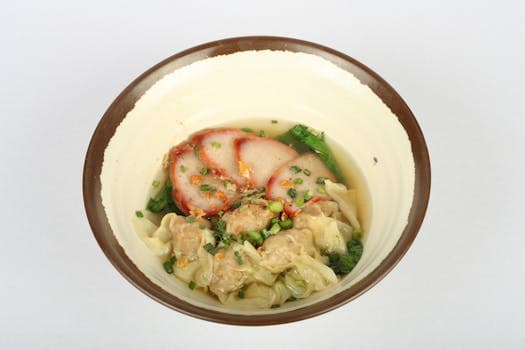
Wonton wrappers are made from wheat flour (3-4g net carbs per wonton). A typical serving contains 6-8 wontons, delivering 18-32g net carbs. The broth is keto-friendly, but the wontons dominate the carb profile.
Wonton soup typically contains wontons filled with pork or shrimp and is served in animal-based broth. Both filling and broth are non-vegan.
Wontons are made from wheat flour wrappers (grain), which is a primary component. Broth and fillings may be paleo-compliant, but wheat wrappers are explicitly excluded.
Wontons are typically filled with pork or shrimp and wrapped in refined wheat flour. While broth is light, the dumpling component introduces processed refined grains and concentrated protein. Shrimp-filled versions are slightly more compatible than pork.
iSome Mediterranean diet practitioners view wonton soup as acceptable occasionally due to its broth base and seafood options, though it falls outside traditional Mediterranean cuisine.
Wonton wrappers are made from wheat flour (grain), a plant-derived product. Despite meat filling and broth being acceptable, the wrapper base violates carnivore diet rules.
Wonton wrappers are made from wheat flour (grains), explicitly excluded. The broth and fillings may be compliant, but wontons themselves violate Whole30.
Wonton wrappers are wheat-based (fructans). Filling is typically pork/shrimp (low-FODMAP) but may contain garlic or onion. Broth is low-FODMAP if not made with garlic/onion. FODMAP status depends on wrapper amount and filling ingredients.
iMonash University rates wheat as high-FODMAP due to fructans. Clinical practitioners note that small amounts of wonton wrappers in soup may be tolerated; filling ingredients determine overall FODMAP load.
Wonton soup contains wontons (pork/shrimp filling, wheat wrapper) and broth. Wontons are often high in sodium and saturated fat from pork. Broth sodium varies. Typical serving contains 600-1000mg sodium. Can be made DASH-compliant with low-sodium broth and lean protein wontons, but traditional versions exceed sodium limits.
iNIH DASH guidelines emphasize limiting processed foods and sodium; traditional wonton soup exceeds these limits. However, updated clinical interpretation suggests homemade versions with low-sodium broth and lean fillings can fit DASH.
Wontons contain pork/shrimp (protein) but wrapped in refined wheat wrapper (moderate-glycemic). Broth is low-calorie; vegetable content minimal. Carb-heavy with insufficient fat and protein density for Zone.
Wontons are typically filled with pork and wrapped in refined wheat flour, then boiled. Broth may provide some benefit, but wontons contribute saturated fat and refined carbs. Minimal anti-inflammatory nutrients unless vegetable-filled and served in vegetable broth.
iVegetable wonton versions with mushroom broth score higher (6-7). Some Asian medicine traditions emphasize broth benefits for gut health, potentially rating higher (5-6).
Broth-based soup is hydrating and easy to digest. Wontons provide moderate protein but are often made with pork and wrapped in refined wheat. Low fat if broth is clear. Small portion-friendly. Quality depends on filling and broth preparation.
iSome GLP-1 experts view wonton soup as acceptable given its broth base and portion-friendly nature, while others caution against refined carbohydrate wrappers and potential pork fat content.
Controversy Index
Score range: 1–6/10. Higher controversy = more disagreement between diets.