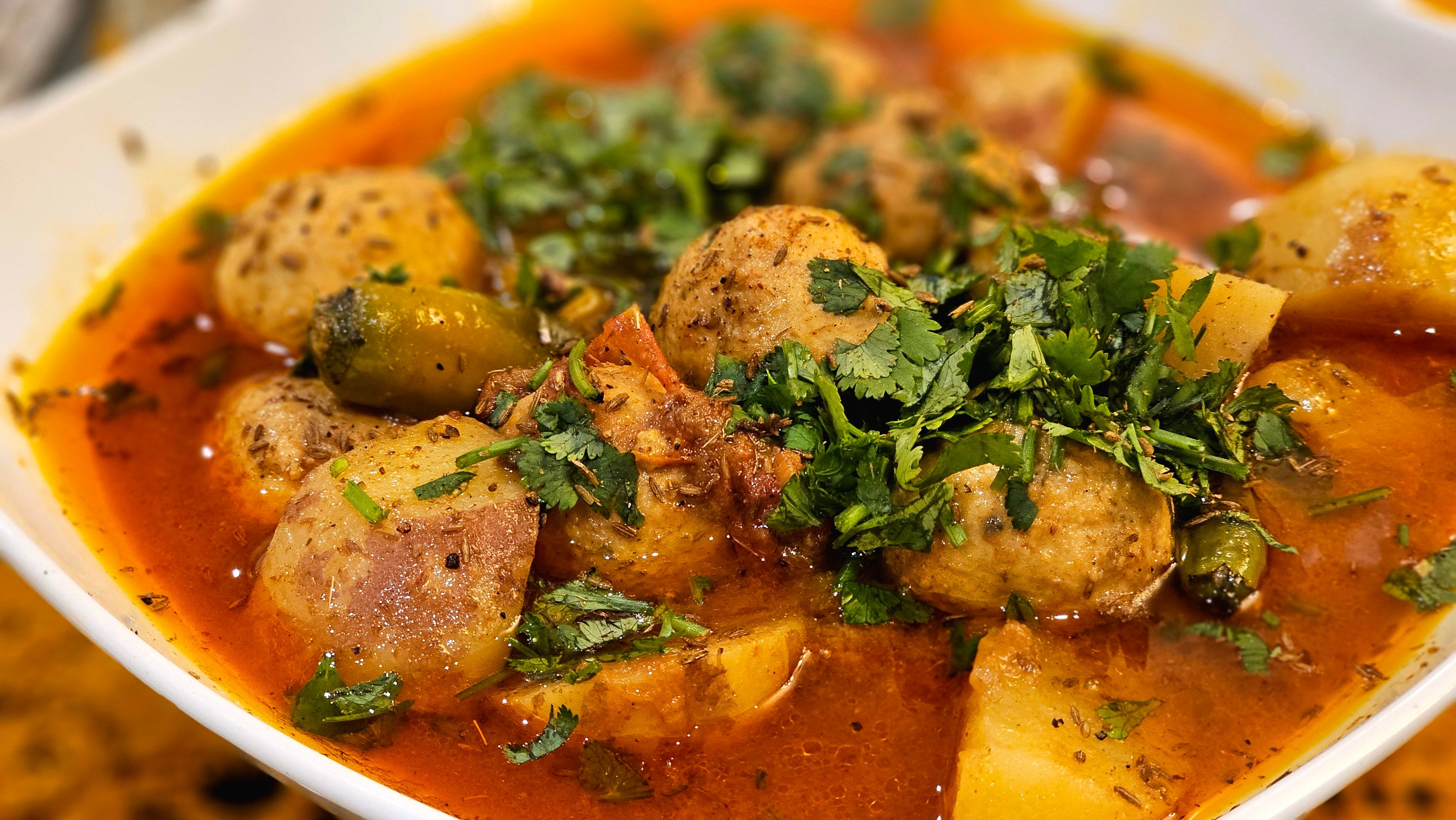
Photo: Dr M Khawar Nazir / Pexels
Indian
Aloo Matar
The diets react (see scores below)
Common Ingredients
- potatoes
- green peas
- tomatoes
- onion
- ginger
- garam masala
- cumin seeds
- cilantro
Specific recipes may vary.
Incompatible with 4 of 11 diets
Diet Ratings
Aloo Matar is built around two high-carb ingredients that make it fundamentally incompatible with ketosis. Potatoes are one of the most carb-dense foods, with roughly 15-17g net carbs per 100g. Green peas add another 9-12g net carbs per 100g. A standard serving of this dish would easily deliver 40-60g net carbs, likely exceeding the entire daily keto carb budget in a single meal. The remaining ingredients — tomatoes, onion, and spices — contribute minor carbs but cannot offset the dominant starchy base. There is no meaningful way to make this dish keto-compatible without replacing the core ingredients (potatoes and peas), which would fundamentally change the dish.
Aloo Matar is a traditional Indian potato and green pea curry that is entirely plant-based in its standard preparation. Every ingredient listed — potatoes, green peas, tomatoes, onion, ginger, garam masala, cumin seeds, and cilantro — is a whole plant food with no animal-derived components. The dish is naturally vegan without any modification required. It is also nutritionally solid, offering complex carbohydrates from potatoes, plant protein and fiber from peas, and antioxidants from tomatoes and spices. As a whole-food plant-based meal, it scores near the top of the approval range.
Aloo Matar contains two significant paleo violations. Green peas are legumes, which are excluded from the paleo diet due to their lectin and phytate content. White potatoes are a debated ingredient — originally excluded by Cordain and The Paleo Diet's official guide, though accepted by some modern paleo practitioners. With both a clear legume (green peas) and a debated starch (white potatoes) present, the dish cannot rise above 'avoid'. The remaining ingredients — tomatoes, onion, ginger, garam masala, cumin seeds, and cilantro — are all paleo-compliant vegetables, spices, and herbs.
Some modern paleo voices (Mark Sisson, Whole30) accept white potatoes, and a minority argue that green peas, being immature seeds with relatively lower anti-nutrient loads than mature legumes, are borderline acceptable. Under this lenient interpretation, potatoes could be included, but green peas remain a stretch even for flexible paleo frameworks.
Aloo Matar is a plant-based dish composed entirely of whole, minimally processed ingredients — potatoes, green peas, tomatoes, onion, ginger, and spices. Green peas are a legume, strongly encouraged on the Mediterranean diet, and tomatoes, onion, and ginger are classic Mediterranean-compatible vegetables and aromatics. The spice blend (garam masala, cumin) is not traditional to Mediterranean cuisine but poses no nutritional conflict. Potatoes are a whole food and acceptable, though less emphasized than other vegetables. If prepared with olive oil, this dish aligns well with Mediterranean principles. The main consideration is that potatoes are a starchy carbohydrate with a moderate glycemic load, slightly tempering the score.
Some stricter Mediterranean diet interpretations would rate potatoes cautiously, as they are not a core Mediterranean staple and can contribute to glycemic load; traditional Mediterranean plant dishes tend to favor legumes, leafy greens, and non-starchy vegetables. However, most practitioners accept potatoes as a whole food in moderation.
Aloo Matar is an entirely plant-based Indian dish with zero animal-derived ingredients. Every single component — potatoes, green peas, tomatoes, onion, ginger, garam masala, cumin seeds, and cilantro — is explicitly excluded from the carnivore diet. There is no animal protein, no animal fat, and no animal product of any kind. This dish is fundamentally incompatible with carnivore principles at every level.
Aloo Matar (potato and pea curry) is made entirely from Whole30-compliant ingredients: potatoes (allowed vegetable), tomatoes, onion, ginger, garam masala, cumin seeds, and cilantro are all permitted. The one ingredient requiring attention is green peas — unlike green beans, sugar snap peas, or snow peas, standard green peas (mature garden peas / Pisum sativum) are NOT on the explicit legume exception list. Regular green peas are a legume and are excluded from Whole30. This makes the dish as traditionally prepared non-compliant. However, if the green peas were substituted or omitted, the remaining dish would be fully compliant. The dish is rated 'caution' rather than 'avoid' because all other ingredients are clean and compliant, and the single problematic ingredient could easily be swapped or removed.
Some community members and practitioners conflate 'green peas' with the explicitly allowed 'snow peas' or 'sugar snap peas,' but official Whole30 guidelines by Melissa Urban only carve out those specific pod vegetables — green peas (shelled peas) remain in the excluded legume category. Conversely, a minority view holds that since immature peas are nutritionally closer to vegetables than mature legumes, they should be treated similarly to the allowed exceptions, though this is not the official position.
Aloo Matar contains two major high-FODMAP ingredients that make it unsuitable during the elimination phase. Onion is one of the highest-FODMAP foods tested by Monash University, containing significant fructans at any culinary amount — even small quantities used for flavoring will push a dish into high-FODMAP territory. Green peas are high in GOS (galacto-oligosaccharides) and become high-FODMAP at servings above 15 grains (approximately 15g), which is far below a standard serving in a main dish like Aloo Matar. Potatoes are low-FODMAP and safe. Tomatoes are low-FODMAP at standard servings (up to 75g canned or 1 small fresh tomato). Ginger is low-FODMAP at culinary amounts. Garam masala and cumin seeds are used in small quantities and are generally low-FODMAP as spices. Cilantro is safe. However, the combination of onion (unavoidable fructan load) and a full serving of green peas (GOS) makes this dish a clear avoid during elimination.
Aloo Matar is a plant-based Indian dish made primarily from potatoes, green peas, tomatoes, onion, ginger, and spices. This combination aligns well with DASH principles: green peas provide plant-based protein, fiber, and potassium; tomatoes and onion contribute potassium, magnesium, and antioxidants; ginger and spices like garam masala and cumin add flavor without sodium, which is a key DASH strategy for reducing salt reliance. Potatoes, while starchy, are rich in potassium and fiber, especially with skin. The dish contains no added sodium inherently, no saturated fat, no red meat, and no processed ingredients. The primary concern is the glycemic load from potatoes and the lack of lean protein, which may require pairing with a legume or low-fat dairy side for a complete DASH meal. Oil used in tempering (typically a small amount of vegetable oil) is acceptable under DASH. As prepared with minimal oil and no added salt, this dish fits DASH guidelines comfortably.
NIH DASH guidelines emphasize portion control for starchy vegetables like potatoes due to their high glycemic index and carbohydrate density. Some DASH-oriented clinicians caution that frequent consumption of potato-heavy dishes could impede blood pressure and weight management goals, and recommend substituting part of the potato content with lower-glycemic vegetables like cauliflower or carrots.
Aloo Matar is a potato and pea-based dish with no lean protein source, making it very difficult to fit into Zone balance. Potatoes are explicitly listed as an 'unfavorable' high-glycemic carbohydrate in Dr. Sears' Zone framework — they spike blood sugar and are specifically called out alongside corn, bananas, and white rice as foods to avoid or strictly limit. The dish is carbohydrate-dominant with no meaningful protein or fat to balance the macronutrient ratio. Green peas provide modest protein but not enough to approach the 30% protein target. Tomatoes, onion, ginger, and spices are Zone-friendly, but they cannot offset the glycemic load from potatoes as the primary ingredient. As a standalone main dish without modification, Aloo Matar cannot achieve the 40/30/30 ratio and would generate a high glycemic response. To make it Zone-compatible, one would need to significantly reduce or eliminate the potatoes (replacing with a lower-GI vegetable like cauliflower), add a lean protein source (chicken, tofu, egg whites), and add a monounsaturated fat. As presented, it sits in caution-to-avoid territory, with the potato as the primary disqualifying factor.
Aloo Matar is a plant-based dish with a genuinely mixed anti-inflammatory profile. On the positive side, it contains several anti-inflammatory stars: ginger and garam masala (which typically includes turmeric, coriander, and other beneficial spices) contribute curcumin, gingerols, and polyphenols with documented anti-inflammatory effects. Green peas provide fiber, plant protein, and antioxidants. Tomatoes offer lycopene and vitamin C. Onion supplies quercetin. Cilantro adds flavonoids. However, potatoes are the primary ingredient and are a nightshade starchy vegetable — they have a moderate-to-high glycemic index and provide limited anti-inflammatory benefit per calorie. The overall dish is fiber-rich, plant-forward, and free from processed ingredients, trans fats, or added sugars, which are meaningful positives. The absence of inflammatory proteins or fats keeps the profile clean. The dish scores well on dietary quality but falls short of 'approve' primarily due to the starchy potato base limiting its anti-inflammatory density, and the nightshade controversy. The verdict lands solidly in 'caution' — a healthy, wholesome dish acceptable as part of an anti-inflammatory diet, but not a standout anti-inflammatory meal.
Mainstream anti-inflammatory nutrition (including Dr. Weil's framework) generally considers nightshades like potatoes and tomatoes acceptable or even beneficial due to their antioxidant content (lycopene, vitamin C, carotenoids). However, Autoimmune Protocol (AIP) advocates including Dr. Tom O'Bryan argue that solanine and lectins in nightshades can promote gut permeability and trigger inflammation in sensitive or autoimmune-prone individuals — making this dish potentially problematic for that population while fine for the general public.
Aloo Matar is a plant-based Indian stew of potatoes, green peas, tomatoes, and aromatic spices. It has real nutritional merit — green peas contribute modest plant protein (roughly 4–5g per half-cup) and fiber, tomatoes add micronutrients and lycopene, and the spice base (ginger, cumin, garam masala) is GLP-1 friendly and may aid digestion. However, the dish is fundamentally carbohydrate-dominant: potatoes are a starchy, low-fiber-per-calorie food that can spike blood sugar and offer little protein. The listed ingredients include no dedicated protein source, making it difficult to reach the 15–30g per-meal protein target on GLP-1 therapy without pairing. On the positive side, it is low in fat, easy to digest (no fried component in the base recipe), and portion-friendly. The fiber contribution from peas is meaningful but unlikely to hit targets alone. As a standalone main dish for a GLP-1 patient, it falls short primarily on protein density and glycemic load. As a side dish or when paired with a protein source (paneer, tofu, chicken, lentils), it becomes considerably more suitable.
Some GLP-1-focused dietitians view starchy vegetable dishes like Aloo Matar more favorably when eaten in small portions, arguing that the satiety effect of GLP-1 medications reduces overeating of starch anyway and that the dish's low fat and whole-food profile outweigh its glycemic concerns. Others flag potatoes specifically as a food to minimize due to rapid glucose absorption and low protein-per-calorie ratio, recommending cauliflower or chickpea substitutions to improve the nutritional profile.
*See how scores were generated at our methodology page.
Nutritional profile
Six traits that cut across every diet.
Fiber & Plants
How much whole-plant food and fiber it delivers.
Healthy Fats
The quality of its fats (unsaturated, omega-3).
Whole / Unprocessed
How close it is to its natural, unprocessed form.
Gut Gentle
How easy it is on digestion (low FODMAP, few irritants).
Low Glycemic
How little it spikes your blood sugar.
Protein Density
How much protein it packs per calorie.
Controversy Index
Higher controversy = more disagreement between diets.
Diet-Specific Tips
 Vegan — 9/10
View tips
- All ingredients are whole plant foods — no animal products present
- Potatoes and green peas provide carbohydrates, fiber, and plant protein
- Garam masala and cumin are fully plant-derived spice blends
- No dairy-based additions (e.g., ghee or cream) are included in the listed ingredients — common restaurant versions sometimes add ghee, which would make it non-vegan
- Cilantro, tomatoes, and onion contribute micronutrients with no ethical concerns
- No processed or refined ingredients — qualifies as whole-food plant-based
 Mediterranean — 8/10
View tips
- Green peas are a legume — a Mediterranean diet staple
- All ingredients are whole, minimally processed plant foods
- No red meat, processed ingredients, refined grains, or added sugars
- Potatoes add starchy carbohydrates, slightly less favored than non-starchy vegetables
- Spices are nutritionally neutral and anti-inflammatory
- Cooking fat not specified — olive oil would make this fully compliant
 Whole30 — 5/10
View tips
- Green peas are a legume NOT on the Whole30 exception list (unlike green beans, sugar snap peas, snow peas)
- All other ingredients — potatoes, tomatoes, onion, ginger, garam masala, cumin seeds, cilantro — are fully Whole30 compliant
- Dish can be made compliant by omitting or substituting green peas
- No grains, dairy, added sugar, soy, or other excluded ingredients present
- Garam masala spice blend should be checked for additives, but is generally compliant in pure form
 DASH — 8/10
View tips
- No added sodium in base ingredients — DASH-friendly flavor built entirely from spices
- Green peas provide plant-based protein, fiber, and potassium — core DASH nutrients
- Tomatoes and onion contribute potassium and magnesium supporting blood pressure goals
- Potatoes are rich in potassium but high glycemic — portion control recommended
- No saturated fat, no red meat, no processed ingredients
- Dish lacks a lean protein source — consider pairing with legumes or low-fat dairy
- Sodium content is preparation-dependent — adding salt during cooking would lower the score
 Zone — 5/10
View tips
- Potatoes are explicitly 'unfavorable' high-glycemic carbohydrates in Zone Diet — specifically called out by Sears
- No lean protein source present; green peas provide insufficient protein to reach 30% target
- Carbohydrate-dominant macronutrient profile with no fat component to achieve 40/30/30 ratio
- Green peas are moderate-GI but also primarily carbohydrate, compounding the imbalance
- Tomatoes, onion, ginger, and spices are Zone-favorable ingredients
- Cauliflower aloo matar (replacing potato) would dramatically improve Zone compatibility
- Would require significant modification — added lean protein, monounsaturated fat, and potato replacement — to serve as a Zone meal
 Anti-Inflammatory — 6/10
View tips
- Ginger: gingerols and shogaols are well-documented anti-inflammatory compounds
- Garam masala likely contains turmeric and other anti-inflammatory spices (curcumin, coriander)
- Green peas: fiber, plant protein, and antioxidants support anti-inflammatory profile
- Tomatoes: lycopene and vitamin C are anti-inflammatory, but nightshade controversy applies
- Potatoes: nightshade vegetable with moderate-to-high glycemic index; limited anti-inflammatory benefit per calorie
- Onion: quercetin content is a meaningful anti-inflammatory contributor
- Cumin seeds: polyphenols and potential anti-inflammatory properties
- No processed ingredients, trans fats, added sugars, or inflammatory oils — a clean base
- Entirely plant-based with no pro-inflammatory protein or fat sources
 GLP-1 Friendly — 5/10
View tips
- No primary protein source — fails the 15–30g per meal protein target without pairing
- Potatoes are high glycemic index, starchy, and low in protein per calorie
- Green peas provide modest fiber (~4g per half-cup) and some plant protein (~4g)
- Low fat content — no fried elements, no heavy oils listed, GLP-1 side-effect friendly
- Ginger and cumin are digestion-supportive spices, appropriate for GLP-1 patients
- Whole-food, minimally processed ingredients support nutrient density
- Must be paired with a protein source (paneer, tofu, lentils, eggs) to be meal-appropriate
- Small portions of potato are tolerable; large servings worsen glycemic and satiety profile