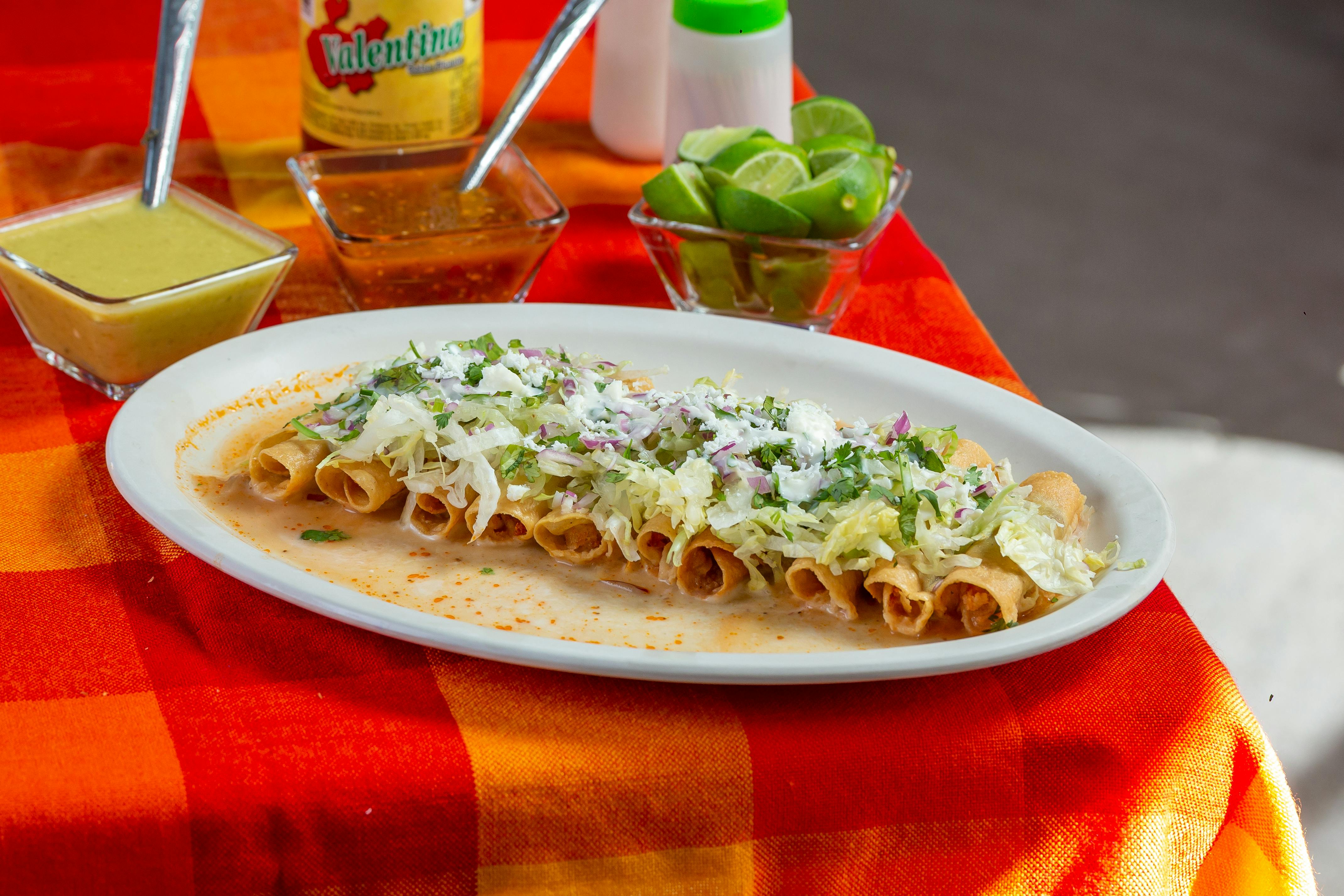
Photo: Jonathan Reynaga / Pexels
Mexican
Chicken Flautas
The diets react (see scores below)
Common Ingredients
- corn tortillas
- shredded chicken
- cumin
- garlic
- onion
- vegetable oil
- sour cream
- guacamole
Specific recipes may vary.
Incompatible with 6 of 11 diets
Diet Ratings
Chicken Flautas are fundamentally incompatible with ketogenic eating due to the corn tortillas, which are the defining structural component of the dish. Corn tortillas contain approximately 12-14g of net carbs each, and a standard serving of flautas typically includes 3-4 tortillas, delivering 36-56g of net carbs from the tortillas alone — enough to meet or exceed the entire daily keto carb budget in a single dish. Corn is a grain-based starchy food with zero tolerance under keto rules. The fillings themselves (shredded chicken, cumin, garlic, onion) and accompaniments (sour cream, guacamole) are largely keto-friendly, but the tortilla wrapper makes the dish as presented incompatible with ketosis. This dish cannot be meaningfully modified while still being called a flauta.
Chicken Flautas contain multiple animal products that are strictly excluded from a vegan diet. Shredded chicken is direct poultry meat, and sour cream is a dairy product. Both are unambiguously non-vegan ingredients with no meaningful debate within the vegan community. The remaining ingredients — corn tortillas, cumin, garlic, onion, vegetable oil, and guacamole — are plant-based, but the presence of chicken and sour cream makes this dish entirely incompatible with a vegan diet.
Chicken Flautas are fundamentally incompatible with the paleo diet due to multiple non-paleo ingredients. Corn tortillas are a grain product — corn is explicitly excluded from paleo. Vegetable oil (a seed oil) is also a clear violation. Sour cream is a dairy product, equally excluded. While shredded chicken, cumin, garlic, and onion are all paleo-approved, and guacamole (avocado-based) is generally fine, the structural and cooking components of this dish make it impossible to classify as paleo-friendly. Three distinct 'avoid' category ingredients disqualify it entirely.
Chicken flautas sit in a gray zone for Mediterranean diet compatibility. The shredded chicken is acceptable poultry (moderate consumption), and the corn tortillas are whole-grain derived and less problematic than refined flour tortillas. Garlic, onion, and cumin are excellent Mediterranean-friendly aromatics. Guacamole (avocado) provides healthy monounsaturated fats aligned with Mediterranean principles. However, the dish is deep-fried in vegetable oil rather than olive oil, which is a significant departure from Mediterranean fat norms. Sour cream is a full-fat dairy used as a topping rather than a modest condiment, adding saturated fat. The frying method and non-olive oil fat source are the primary concerns, pushing this below a clean 'caution' into the lower range.
Some Mediterranean diet interpreters would focus on the favorable elements — lean poultry, plant-based aromatics, avocado — and suggest the dish could be adapted (baked, olive oil substituted) to become more compliant. Others note that corn-based dishes with chicken appear in some traditional coastal Mediterranean cuisines adapted with New World ingredients, though flautas are distinctly non-Mediterranean in preparation style.
Chicken Flautas are fundamentally incompatible with the carnivore diet. The dish is built around corn tortillas, which are a grain-based plant food and completely excluded. Additional plant-based ingredients include cumin (spice), garlic (vegetable), onion (vegetable), and vegetable oil (plant oil) — all strictly prohibited. The guacamole (avocado-based) is entirely plant-derived. While shredded chicken is a carnivore-acceptable protein, it is a minor component in a dish dominated by plant foods and processed plant oils. The sour cream is the only other animal-derived ingredient, but its presence does not redeem a dish that is structurally and foundationally plant-based.
Chicken Flautas are fundamentally non-compliant on multiple grounds. First, corn tortillas are made from corn, which is an excluded grain on Whole30. Second, even if compliant tortillas existed, flautas are explicitly listed as a 'wrap' or tortilla-based item that falls under the 'no recreating junk food/baked goods' rule — tortillas and wraps are specifically called out as prohibited. Third, sour cream is a dairy product and is excluded. The guacamole itself (avocado, lime, onion, cilantro) would be compliant, and shredded chicken with cumin, garlic, and onion is compliant, but the dish as constructed cannot be made Whole30-compatible because its defining structure (the corn tortilla wrap) is excluded both as a grain and as a prohibited food form.
Chicken Flautas as described contain multiple high-FODMAP ingredients that make this dish unsuitable during the elimination phase. Garlic and onion are among the highest-FODMAP foods tested by Monash University — both are rich in fructans and must be avoided entirely during elimination at any culinary quantity. These two ingredients alone are disqualifying. Sour cream contains lactose and is high-FODMAP at typical serving sizes (a dollop of 2+ tablespoons exceeds the low-FODMAP threshold). Guacamole, while avocado itself is low-FODMAP at 1/8 avocado, is almost always made with garlic and onion, compounding the fructan load further. The corn tortillas and shredded chicken are individually low-FODMAP and safe, as is cumin at spice quantities and garlic-infused oil (if used). However, the presence of whole garlic, onion, lactose-containing sour cream, and likely garlic/onion in the guacamole creates a cumulative FODMAP load that is clearly high during elimination phase.
Chicken flautas present a mixed DASH profile. The lean shredded chicken and corn tortillas are generally DASH-compatible — chicken is an approved lean protein, and corn tortillas are lower in sodium and fat than flour tortillas. Garlic, onion, and cumin add flavor without sodium burden. However, the dish is deep-fried (vegetable oil), which significantly increases total fat and calorie content, moving it away from DASH ideals. Sour cream is a full-fat dairy product, which DASH guidelines specify should be limited in favor of low-fat or fat-free dairy alternatives. Guacamole contributes healthy monounsaturated fats from avocado, which is generally DASH-friendly, but adds calorie density. The combination of frying plus full-fat sour cream tips this dish into 'caution' territory. Sodium content depends heavily on seasoning and preparation — restaurant versions often contain high sodium. With modifications (baking instead of frying, using low-fat Greek yogurt instead of sour cream, controlling sodium in seasoning), this dish could score closer to 6.
NIH DASH guidelines emphasize low-fat preparation and limiting total fat, making deep-fried dishes problematic. However, some updated DASH-aligned clinicians note that vegetable oils (like corn or canola) are preferable to saturated fats, and that occasional consumption of baked or air-fried versions with avocado-based toppings aligns reasonably well with DASH's heart-healthy fat profile — particularly when portion-controlled.
Chicken flautas present a mixed Zone profile. The shredded chicken is an excellent lean protein source fitting Zone block targets well. Guacamole provides favorable monounsaturated fat. However, the dish is structurally problematic for the Zone: corn tortillas are a moderate-to-high glycemic carbohydrate ('unfavorable' in Zone terminology) and as the primary structural component, they dominate the carb blocks in a way that's hard to control. Deep-frying or pan-frying in vegetable oil (typically omega-6-heavy seed oil) adds unfavorable fat that displaces the preferred monounsaturated fat allocation and runs counter to Zone's anti-inflammatory principles. Sour cream adds saturated fat. The 40/30/30 ratio is achievable in principle — chicken handles the protein block, guacamole the fat block — but the tortilla-to-filling ratio in a traditional flauta skews carbs high and the glycemic load upward. A strict Zone practitioner would need to limit to 1-2 small flautas, skip the frying oil in favor of baking, and add a large side of low-glycemic vegetables to rebalance the plate. As traditionally prepared and served, the macro balance is off-ratio and the fat quality is suboptimal.
Some Zone practitioners note that corn tortillas, while 'unfavorable,' are not categorically excluded — they can be counted as carb blocks if portions are controlled (one small corn tortilla ≈ 1 carb block). If flautas are baked rather than fried and served with guacamole as the fat source alongside a vegetable-heavy side, the meal can be made Zone-compliant. Sears' later writings also soften the stance on occasional use of higher-glycemic whole-food carbs when the overall meal ratio is maintained.
Chicken flautas have a mixed anti-inflammatory profile. On the positive side, corn tortillas are a whole grain option with fiber, lean shredded chicken is an acceptable moderate protein source, garlic and cumin are anti-inflammatory spices, onion provides quercetin and flavonoids, and guacamole is a standout anti-inflammatory component rich in oleic acid and monounsaturated fats from avocado. However, the dish is typically deep-fried or pan-fried in vegetable oil, which is a meaningful concern — most anti-inflammatory protocols caution against regular use of refined seed oils (likely corn, sunflower, or soybean here) due to high omega-6 content and oxidation at high heat. Sour cream adds full-fat dairy and saturated fat, which should be limited. The preparation method — frying in oil — is the primary detractor here. If baked rather than fried, and served with guacamole as the main condiment while minimizing sour cream, the dish moves toward the more favorable end of 'caution.' As traditionally prepared (deep-fried), it leans toward the lower end of caution due to oxidized seed oils and saturated fat from sour cream.
Most anti-inflammatory protocols (Dr. Weil, IF Rating system) recommend avoiding refined seed oils regularly due to omega-6 load and oxidation potential at frying temperatures; however, mainstream nutrition science and the AHA consider vegetable oils acceptable heart-healthy fats, and some anti-inflammatory researchers argue that the overall dietary pattern matters more than any single ingredient.
Chicken flautas present a mixed nutritional profile for GLP-1 patients. The shredded chicken filling is a solid lean protein source, and corn tortillas provide modest fiber and are easier to digest than flour tortillas. However, flautas are traditionally deep-fried or pan-fried in vegetable oil, which significantly increases fat content and caloric density — a meaningful concern given that high-fat foods worsen GLP-1 side effects like nausea, bloating, and reflux. The toppings compound the issue: sour cream is high in saturated fat and low in protein density, and while guacamole contains beneficial unsaturated fats, it adds substantial fat per serving. The overall dish ends up calorie-dense relative to its protein and fiber yield, which conflicts with the nutrient-density-per-calorie priority. Portion size is critical — a single flauta with minimal toppings is far more manageable than the typical serving of 3-4 with generous sour cream. The dish is not an outright avoid because the chicken core has genuine protein value and corn tortillas are relatively benign, but as typically prepared and served it falls squarely in the caution range.
Some GLP-1-focused RDs would rate this lower (toward avoid) specifically because the frying method is difficult to control when ordering out, and the combination of fat from frying plus sour cream plus guacamole can meaningfully trigger nausea and delayed gastric emptying symptoms in GLP-1 patients. Others note that a baked or air-fried version with Greek yogurt substituted for sour cream transforms this into a near-approve dish, suggesting the cooking method matters more than the dish category itself.
*See how scores were generated at our methodology page.
Nutritional profile
Six traits that cut across every diet.
Fiber & Plants
How much whole-plant food and fiber it delivers.
Healthy Fats
The quality of its fats (unsaturated, omega-3).
Whole / Unprocessed
How close it is to its natural, unprocessed form.
Gut Gentle
How easy it is on digestion (low FODMAP, few irritants).
Low Glycemic
How little it spikes your blood sugar.
Protein Density
How much protein it packs per calorie.
Controversy Index
Higher controversy = more disagreement between diets.
Diet-Specific Tips
 Mediterranean — 4/10
View tips
- Chicken is acceptable poultry — moderate consumption aligns with Mediterranean guidelines
- Corn tortillas are preferable to refined flour tortillas but are deep-fried
- Frying in vegetable oil rather than extra virgin olive oil contradicts primary fat principles
- Guacamole provides beneficial monounsaturated fats from avocado
- Sour cream adds saturated fat and is not a Mediterranean staple
- Garlic, onion, and cumin are Mediterranean-friendly flavor components
- Overall preparation method (deep frying) is inconsistent with Mediterranean cooking traditions
 DASH — 4/10
View tips
- Deep-frying in vegetable oil significantly increases total fat content beyond DASH ideals
- Corn tortillas are lower in sodium than flour tortillas — a positive DASH factor
- Shredded chicken is a DASH-approved lean protein source
- Sour cream is full-fat dairy, not recommended by DASH guidelines
- Guacamole provides heart-healthy monounsaturated fats from avocado
- Sodium content likely elevated in restaurant/commercial preparations
- Baked or air-fried preparation with low-fat dairy substitutes would improve DASH compatibility
 Zone — 4/10
View tips
- Corn tortillas are 'unfavorable' high-glycemic carbs in Zone terminology, difficult to portion-control in this dish format
- Shredded chicken is an ideal lean Zone protein source
- Vegetable (seed) oil used for frying is omega-6-heavy, directly counter to Zone's anti-inflammatory fat guidance
- Guacamole is a favorable monounsaturated fat — a Zone-positive component
- Sour cream adds saturated fat, acceptable only in small amounts under Zone rules
- Traditional preparation skews the 40/30/30 ratio carb-heavy with poor fat quality
- Baked version with vegetable sides could improve Zone compatibility significantly
 Anti-Inflammatory — 5/10
View tips
- Guacamole/avocado is a strong anti-inflammatory positive (monounsaturated fats, oleic acid)
- Garlic, onion, and cumin provide anti-inflammatory polyphenols and phytonutrients
- Corn tortillas are a whole grain base with reasonable fiber
- Lean shredded chicken is an acceptable moderate protein source
- Frying in vegetable/seed oil introduces high-omega-6 refined oils — a significant concern under anti-inflammatory guidelines
- Sour cream adds full-fat dairy and saturated fat, which should be limited
- Preparation method is critical: baked version is considerably more favorable than fried
 GLP-1 Friendly — 4/10
View tips
- Traditional frying method adds significant fat, worsening GLP-1 GI side effects
- Shredded chicken is a quality lean protein source but diluted by high-fat preparation
- Sour cream topping is high in saturated fat with minimal nutritional value for GLP-1 patients
- Guacamole provides healthy unsaturated fats but adds caloric density in an already fat-heavy dish
- Corn tortillas are preferable to flour — modest fiber, easier to digest, smaller portion footprint
- Dish is highly portion-sensitive — 1 baked flauta with toppings on the side is very different from a full restaurant serving
- Baked or air-fried preparation would significantly improve the score