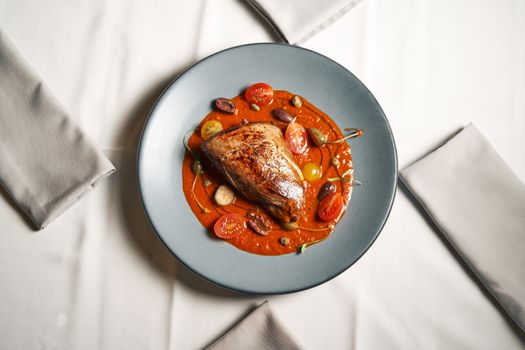
Photo: Willians Huerta / Pexels
Mediterranean
Mediterranean Roasted Chicken
The diets react (see scores below)
Common Ingredients
- whole chicken
- olive oil
- lemon
- garlic
- oregano
- Kalamata olives
- cherry tomatoes
- rosemary
Specific recipes may vary.
Incompatible with 3 of 11 diets
Diet Ratings
Mediterranean Roasted Chicken is an excellent keto dish. Whole chicken provides high-quality protein and natural fats (especially skin-on), while olive oil adds healthy monounsaturated fats. Kalamata olives contribute additional fat and minimal net carbs. The only mild carb contributors are cherry tomatoes (roughly 3-4g net carbs per 100g) and lemon juice (used sparingly for flavor), but in typical recipe quantities these remain well within daily keto limits. Garlic, oregano, and rosemary are used in small amounts and add negligible carbs. The overall macronutrient profile — high fat, moderate protein, very low net carbs — aligns closely with keto targets.
Mediterranean Roasted Chicken contains whole chicken as its primary protein, which is a direct animal product and unambiguously excluded from a vegan diet. There is no debate within the vegan community about poultry — it is animal flesh and therefore incompatible with veganism. The remaining ingredients (olive oil, lemon, garlic, oregano, Kalamata olives, cherry tomatoes, rosemary) are all plant-based, but the presence of chicken makes this dish entirely off-limits for vegans.
Mediterranean Roasted Chicken is an excellent paleo dish. Every ingredient aligns cleanly with paleo principles: whole chicken is an unprocessed animal protein, olive oil is a preferred paleo fat, lemon and cherry tomatoes are whole fruits, garlic and oregano and rosemary are natural herbs and spices, and Kalamata olives are a whole food fat source. There are no grains, legumes, dairy, seed oils, refined sugars, or processed additives present. This is the kind of simple, whole-food preparation that sits at the heart of the paleo philosophy.
Mediterranean Roasted Chicken is a well-aligned dish with many core Mediterranean principles, but its primary protein — whole chicken — places it in the 'caution' category. Poultry is accepted in the Mediterranean diet but is not a daily staple; it is recommended in moderate amounts, a few servings per week. The supporting ingredients are exemplary: extra virgin olive oil as the primary fat, lemon and garlic as traditional aromatics, oregano and rosemary as classic Mediterranean herbs, Kalamata olives adding healthy fats and polyphenols, and cherry tomatoes contributing antioxidants and plant diversity. The dish contains no processed ingredients, refined grains, added sugars, or red meat. It is a genuinely traditional Mediterranean preparation, but the chicken itself prevents a full 'approve' rating under strict guidelines.
Mediterranean Roasted Chicken is heavily incompatible with the carnivore diet. While chicken itself is an acceptable animal protein, this dish is dominated by plant-based ingredients: olive oil (plant oil), lemon (fruit), garlic (vegetable/bulb), oregano (herb/spice), Kalamata olives (fruit), cherry tomatoes (fruit/vegetable), and rosemary (herb). Every ingredient except the chicken itself is excluded from the carnivore diet. The dish is essentially a plant-forward preparation that uses chicken as a supporting ingredient rather than a clean animal-only meal. Even practitioners who allow minor spice use would object to the volume and variety of plant foods here.
Every ingredient in Mediterranean Roasted Chicken is explicitly compliant with Whole30 rules. Whole chicken is an approved protein; olive oil is a natural, compliant fat; lemon, garlic, cherry tomatoes, and fresh herbs (oregano and rosemary) are all allowed vegetables, fruits, and seasonings. Kalamata olives are whole, natural foods with no excluded ingredients in their basic form. There are no grains, legumes, dairy, added sugars, or any other excluded ingredients present. This dish is a textbook Whole30-compliant meal.
This dish contains whole garlic cloves, which are one of the highest-FODMAP foods tested by Monash University (very high in fructans, problematic even in tiny amounts). Garlic alone is sufficient to classify this dish as high-FODMAP and unsuitable during the elimination phase. Kalamata olives are generally low-FODMAP at a standard serving (around 15g or ~4 olives), cherry tomatoes are low-FODMAP at up to ~75g, lemon juice is low-FODMAP, and olive oil, chicken, oregano, and rosemary are all safe. However, the presence of garlic as a primary flavoring ingredient — typical in Mediterranean roasted chicken recipes — makes this dish a clear 'avoid' unless the garlic is substituted with garlic-infused oil.
Mediterranean Roasted Chicken aligns well with many DASH principles — olive oil is a heart-healthy unsaturated fat, lemon and garlic add flavor without sodium, cherry tomatoes and herbs provide potassium and antioxidants, and chicken is a lean protein DASH explicitly endorses. However, two factors introduce caution: (1) Whole chicken includes skin, which is high in saturated fat. DASH recommends skinless poultry, so skin-on preparation pushes this dish away from ideal. (2) Kalamata olives, while rich in healthy monounsaturated fats, are very high in sodium — a 1/4 cup serving can contain 700–900mg sodium, a significant portion of the DASH sodium budget. The combination of skin-on chicken and brined olives means this dish requires meaningful modification (remove skin before eating, limit olive quantity) to fully fit DASH guidelines. As prepared, it is acceptable in moderation but not a core DASH meal.
NIH DASH guidelines specify skinless poultry and low sodium, which this dish technically does not meet due to skin-on chicken and high-sodium olives. However, updated Mediterranean-DASH hybrid interpretations (such as the MIND diet) highlight that olive oil, herbs, tomatoes, and moderate olive consumption fit an evidence-based cardiovascular protective pattern — some DASH-oriented clinicians would approve this dish with the practical advice to remove the skin and rinse or reduce the olives.
Mediterranean Roasted Chicken is an excellent Zone Diet candidate. The primary protein — whole chicken — is lean when skinless white meat portions are used, providing clean protein blocks at roughly 7g per ounce. Olive oil is the quintessential Zone-approved monounsaturated fat. Kalamata olives add additional monounsaturated fat with minimal carbohydrate impact. Cherry tomatoes and garlic are low-glycemic, polyphenol-rich carbohydrate sources that Sears would actively encourage. Lemon juice adds negligible carbs but contributes polyphenols. Oregano and rosemary are anti-inflammatory herbs aligned with Sears' later emphasis on polyphenol-rich foods. The dish naturally assembles a favorable Zone ratio: lean protein, monounsaturated fat, and low-glycemic colorful vegetables. The primary caution is that a whole roasted chicken includes skin, which adds saturated fat, and dark meat cuts elevate the fat profile. Portion control is needed to hit the ~25g protein / 10-15g fat per meal target. With skin removed and white meat portioned properly, this dish scores very highly on Zone compliance.
The use of a whole chicken (with skin) is the key variable. Early Zone methodology (Enter the Zone) strictly limited saturated fat and would classify skin-on chicken as 'unfavorable.' Sears' later anti-inflammatory writing (The OmegaRx Zone, Zone Perfect Meals in Minutes) softened this stance somewhat, acknowledging that saturated fat in context of an otherwise anti-inflammatory meal is less problematic. Strict early-Zone adherents would reduce this score to 6-7 and insist on skinless breast portions only.
This Mediterranean Roasted Chicken is a strong example of anti-inflammatory eating. Extra virgin olive oil is a cornerstone of the anti-inflammatory diet, rich in oleocanthal (a natural COX inhibitor) and monounsaturated fats. Garlic, oregano, and rosemary are well-established anti-inflammatory herbs with documented antioxidant and polyphenol activity. Kalamata olives contribute additional monounsaturated fats, polyphenols, and hydroxytyrosol, a potent anti-inflammatory compound. Cherry tomatoes provide lycopene and vitamin C, both associated with reduced oxidative stress and inflammatory markers. Lemon adds flavonoids and vitamin C. Whole chicken is a lean protein (particularly breast) that falls squarely in the 'moderate' category — it lacks the saturated fat burden of red meat and provides selenium and B vitamins that support anti-inflammatory pathways. The primary concern is that whole chicken includes skin, which is higher in saturated fat; however, this is a minor issue in the context of an otherwise strongly anti-inflammatory ingredient profile. The overall dish aligns closely with Dr. Weil's Anti-Inflammatory Food Pyramid and the broader Mediterranean dietary pattern, which is one of the most extensively researched anti-inflammatory dietary frameworks.
Mediterranean Roasted Chicken offers a genuinely nutritious profile — chicken is a high-quality lean protein, olive oil provides heart-healthy unsaturated fats, and the vegetable components (cherry tomatoes, garlic, lemon) add micronutrients and modest fiber. However, the use of a whole chicken is the key limitation for GLP-1 patients. A whole bird includes skin and dark meat cuts (thighs, drumsticks, wings) that are significantly higher in saturated fat than skinless breast alone. The olive oil and Kalamata olives add additional fat load, and while these are unsaturated fats, total fat per serving can be high enough to worsen GLP-1 side effects like nausea, bloating, and delayed gastric emptying. The dish scores well on nutrient density, digestibility of the lean portions, and absence of fried or ultra-processed components, but the fat content from whole chicken preparation is a meaningful concern at typical serving sizes. Patients who remove skin and select white meat portions would see this dish perform significantly better.
Some GLP-1-focused RDs would rate this higher, arguing that the Mediterranean fat profile (olive oil, olives) is categorically preferable to saturated fat sources and that the protein quality of chicken — even dark meat — supports muscle preservation goals. Others apply a stricter total-fat-per-serving threshold given that slowed gastric emptying amplifies GI sensitivity to any high-fat meal, and would recommend modifying to skinless breast before approving.
*See how scores were generated at our methodology page.
Nutritional profile
Six traits that cut across every diet.
Fiber & Plants
How much whole-plant food and fiber it delivers.
Healthy Fats
The quality of its fats (unsaturated, omega-3).
Whole / Unprocessed
How close it is to its natural, unprocessed form.
Gut Gentle
How easy it is on digestion (low FODMAP, few irritants).
Low Glycemic
How little it spikes your blood sugar.
Protein Density
How much protein it packs per calorie.
Controversy Index
Higher controversy = more disagreement between diets.
Diet-Specific Tips
 Keto — 9/10
View tips
- Whole chicken is a keto staple — high protein, natural fat, zero carbs
- Olive oil adds healthy monounsaturated fats, boosting fat ratio
- Kalamata olives are keto-friendly: high fat, very low net carbs
- Cherry tomatoes add minimal net carbs (~2-3g for a modest serving)
- Lemon used as flavoring only — negligible carb impact at typical amounts
- No grains, added sugars, or starchy vegetables
- Herbs and garlic in cooking quantities contribute trace carbs only
 Paleo — 9/10
View tips
- Whole chicken is a clean, unprocessed animal protein — fully paleo approved
- Olive oil is an explicitly preferred paleo cooking fat
- Lemon, cherry tomatoes, and Kalamata olives are whole, unprocessed plant foods
- Garlic, oregano, and rosemary are natural herbs and spices with no paleo restrictions
- No grains, legumes, dairy, seed oils, or refined sugars present
- Minimal processing — roasting is a ancestrally consistent cooking method
 Mediterranean — 6/10
View tips
- Chicken is poultry — acceptable a few times per week, not a daily staple
- Extra virgin olive oil as primary fat is strongly aligned with Mediterranean principles
- Kalamata olives add beneficial monounsaturated fats and polyphenols
- Lemon, garlic, oregano, and rosemary are canonical Mediterranean aromatics
- Cherry tomatoes contribute plant diversity and lycopene
- No processed ingredients, refined grains, or added sugars present
- Traditional preparation method consistent with Greek and broader Mediterranean cuisine
 Whole30 — 9/10
View tips
- Whole chicken is a fully approved Whole30 protein
- Olive oil is an approved natural fat
- Lemon, garlic, cherry tomatoes are compliant produce
- Oregano and rosemary are compliant herbs
- Kalamata olives are compliant in their natural form (check jarred versions for added sulfites or non-compliant preservatives, though sulfites are now allowed per 2024 rules)
- No excluded ingredients: no grains, legumes, dairy, or added sugars
 DASH — 6/10
View tips
- Chicken is DASH-approved lean protein, but whole chicken with skin adds saturated fat — skinless preparation would score higher
- Kalamata olives are high in sodium (700–900mg per 1/4 cup) due to brining, posing a significant DASH sodium challenge
- Olive oil is a DASH-recommended unsaturated fat; garlic, lemon, and herbs add flavor without sodium
- Cherry tomatoes provide potassium and fiber, supporting DASH nutrient goals
- Removing skin and limiting or rinsing olives would improve DASH compatibility significantly
- Overall sodium load may approach or exceed 1,500–2,300mg target depending on portion size of olives
 Zone — 8/10
View tips
- Chicken provides lean, high-quality protein blocks — ideal Zone protein source when skinless
- Olive oil and Kalamata olives supply monounsaturated fat, the preferred Zone fat category
- Cherry tomatoes and garlic are low-glycemic, polyphenol-rich carb sources — highly favorable
- Oregano and rosemary contribute anti-inflammatory polyphenols aligned with Sears' later Zone evolution
- Whole chicken includes skin — saturated fat concern requires portioning to skinless white meat to optimize Zone compliance
- No high-glycemic carbohydrates, refined grains, or sugars present — macro balance is naturally favorable
- Lemon juice adds flavor and polyphenols with negligible glycemic impact
 Anti-Inflammatory — 8/10
View tips
- Extra virgin olive oil provides oleocanthal and monounsaturated fats with strong anti-inflammatory evidence
- Kalamata olives add polyphenols and hydroxytyrosol
- Garlic, rosemary, and oregano are antioxidant-rich anti-inflammatory herbs
- Cherry tomatoes supply lycopene and vitamin C
- Whole chicken is a lean, acceptable protein within anti-inflammatory guidelines
- Chicken skin adds some saturated fat, a minor concern in this context
- Dish reflects the Mediterranean dietary pattern, one of the most research-supported anti-inflammatory frameworks
 GLP-1 Friendly — 6/10
View tips
- Whole chicken includes high-fat skin and dark meat cuts — meaningful saturated fat risk for GLP-1 GI side effects
- Olive oil and Kalamata olives add unsaturated fat — beneficial fat type but increases total fat load per serving
- High-quality lean protein if patient selects white meat and removes skin
- Cherry tomatoes, garlic, lemon, herbs add micronutrients and modest fiber with low calorie cost
- No fried components, no refined grains, no added sugar — clean ingredient list
- Portion control critical: small serving of skinless breast performs much better than a mixed plate with skin-on dark meat
- Easy to modify into a higher-scoring dish by specifying skinless chicken breast