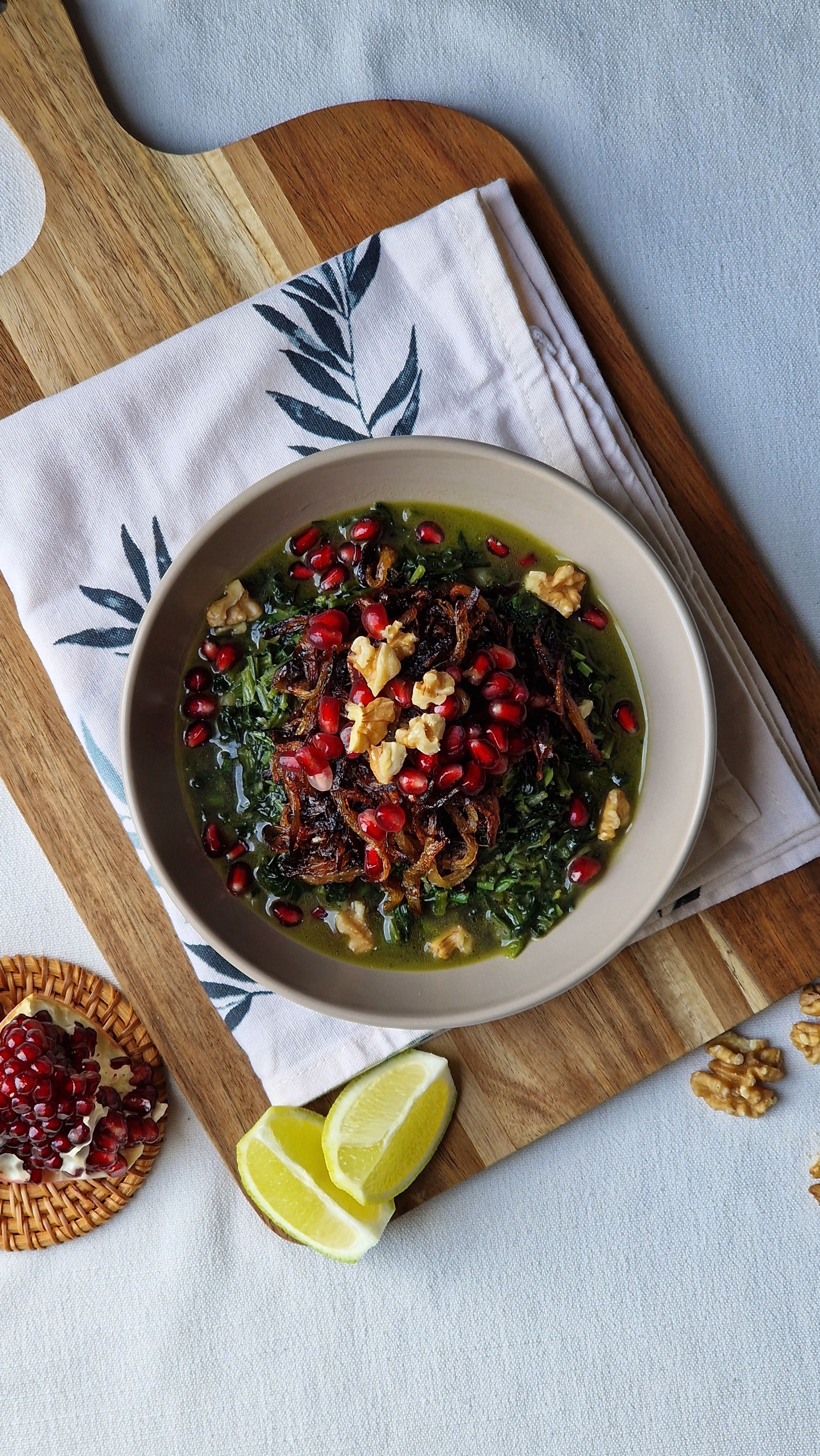
Photo: Nour Alhoda / Pexels
Middle-Eastern
Fesenjan
The diets react (see scores below)
Common Ingredients
- chicken
- walnuts
- pomegranate molasses
- onion
- saffron
- cinnamon
- sugar
- turmeric
Specific recipes may vary.
Incompatible with 5 of 11 diets
Diet Ratings
Fesenjan is fundamentally incompatible with ketogenic eating in its traditional form. The two defining ingredients — pomegranate molasses and added sugar — are the core problem. Pomegranate molasses is a highly concentrated reduction of pomegranate juice, delivering roughly 15-20g of sugar per tablespoon, and traditional recipes use several tablespoons. Combined with explicitly added sugar (also traditional to balance tartness), the dish can easily carry 40-60g+ of net carbs per serving before accounting for the onion. While chicken and walnuts are individually keto-friendly, the sauce transforms this into a high-sugar, high-carb dish. A keto-adapted version replacing pomegranate molasses with a low-carb substitute and omitting sugar could work, but the dish as described cannot maintain ketosis.
Fesenjan is a Persian stew that contains chicken as its primary protein, making it incompatible with a vegan diet. Chicken is an animal product and is explicitly excluded under all vegan dietary frameworks. The remaining ingredients — walnuts, pomegranate molasses, onion, saffron, cinnamon, sugar, and turmeric — are all plant-based and would be vegan-compliant, but the inclusion of chicken is disqualifying. A vegan adaptation could substitute the chicken with chickpeas, lentils, butternut squash, or tofu while retaining the signature walnut-pomegranate sauce.
Fesenjan is a Persian stew built on mostly paleo-friendly ingredients: chicken (approved protein), walnuts (approved nut), onion, saffron, cinnamon, and turmeric (all approved aromatics/spices). The dish is undermined by two problematic ingredients. First, pomegranate molasses is a concentrated reduction of pomegranate juice — while pomegranate itself is paleo, the molasses form is heavily concentrated natural sugar and often contains added sugar, placing it in caution-to-avoid territory depending on preparation. Second, added refined sugar is explicitly excluded from the paleo diet. The sugar can be omitted or substituted with a small amount of honey or dates in a paleo adaptation, and homemade pomegranate molasses without added sugar would shift the dish closer to approve. As traditionally prepared with refined sugar and commercial pomegranate molasses, the dish sits firmly in caution territory — the base is sound and paleo-adaptable, but the standard recipe requires modification.
Strict Cordain-school paleo would push this toward avoid due to the refined sugar and the high sugar load of pomegranate molasses, arguing that concentrated fruit sugars and any added sugar represent a meaningful glycemic and metabolic departure from ancestral eating patterns. A stricter interpreter would require full reformulation rather than classifying the dish as merely cautionary.
Fesenjan is a Persian stew built around chicken (a Mediterranean-approved moderate protein), walnuts (an excellent Mediterranean staple nut, high in healthy fats and omega-3s), and pomegranate molasses (concentrated pomegranate, a fruit with antioxidant benefits but also high natural and often added sugar). The spice profile — saffron, cinnamon, turmeric — is largely compatible with Mediterranean anti-inflammatory principles. However, added sugar is a concern, directly contradicting Mediterranean dietary guidelines, and pomegranate molasses itself is highly concentrated in sugars. The dish contains no olive oil as the primary fat, relying instead on walnuts and the rendered fat from chicken. Chicken keeps this out of the 'avoid' zone, and walnuts are genuinely beneficial, but the added sugar and absence of olive oil prevent a full approval. Portion size and the amount of added sugar used matter significantly.
Some Mediterranean diet practitioners with a broader, more inclusive lens toward Middle Eastern culinary traditions would view this dish more favorably, noting that walnuts as the dominant fat source and pomegranate as a fruit-based ingredient align closely with plant-forward Mediterranean principles. Reducing or omitting added sugar would push this dish toward an 'approve' rating in those interpretations.
Fesenjan is fundamentally incompatible with the carnivore diet. While it contains chicken as its protein base, the dish is defined by its plant-heavy ingredient list: walnuts (nuts, strictly excluded), pomegranate molasses (fruit-derived, high in sugar), onion (vegetable), saffron (plant spice), cinnamon (plant spice), added sugar, and turmeric (plant spice). The only carnivore-acceptable component is the chicken itself. The overwhelming majority of ingredients — including the two primary flavor components (walnuts and pomegranate molasses) — are entirely plant-derived. This is not a borderline case; Fesenjan as a dish cannot be modified into a carnivore meal without completely deconstructing it into plain chicken.
Fesenjan contains sugar as a listed ingredient, which is explicitly excluded on the Whole30 program. Added sugar in any form — real or artificial — is not permitted during the 30 days. Additionally, pomegranate molasses as commonly prepared and sold often contains added sugar, compounding the issue. The remaining ingredients (chicken, walnuts, onion, saffron, cinnamon, turmeric) are all Whole30-compliant, but the presence of sugar makes this dish as described non-compliant.
Fesenjan contains two significant high-FODMAP ingredients that make it problematic during the elimination phase. Onion is one of the highest fructan-containing foods and a primary FODMAP trigger — it cannot be made safe by portion reduction at any realistic serving size in a stew. Pomegranate molasses is concentrated pomegranate juice, and while fresh pomegranate seeds are low-FODMAP in small amounts (Monash rates 45g as low-FODMAP), concentrated molasses used in meaningful cooking quantities likely delivers excess fructose and polyols (mannitol) at levels that exceed safe thresholds. Walnuts are low-FODMAP at 10 walnuts (30g) per Monash, but stews like Fesenjan typically use a large quantity of ground walnuts (often 200–300g for a full recipe), meaning a standard serving portion could push past the safe threshold. Chicken, saffron, cinnamon, turmeric, and sugar are low-FODMAP. However, the combination of onion (unavoidable high-FODMAP) and concentrated pomegranate molasses makes this dish unsafe during the strict elimination phase without significant ingredient substitutions (e.g., replacing onion with the green tops of spring onions or asafoetida in oil, and limiting pomegranate molasses quantity carefully).
Some clinical FODMAP practitioners may suggest that small portions of Fesenjan could be tolerated if onion is removed or replaced with low-FODMAP alternatives, and pomegranate molasses is used in minimal quantities — Monash has not specifically tested pomegranate molasses as a concentrate, creating uncertainty about the exact fructose/polyol load per serving.
Fesenjan is a Persian stew combining lean chicken (DASH-approved protein) with walnuts (heart-healthy unsaturated fats, magnesium, and fiber — explicitly compatible with DASH), pomegranate molasses (rich in polyphenols and potassium but concentrated in sugar), onion, and anti-inflammatory spices (saffron, cinnamon, turmeric). The chicken and walnuts are strong DASH positives. However, pomegranate molasses is very high in concentrated sugars, and the added sugar in the recipe further elevates the glycemic load — DASH limits sweets and added sugars. Walnuts are calorie-dense and require portion control. The dish is naturally low in sodium (no processed ingredients, no added salt listed), which is a meaningful DASH advantage. Overall, Fesenjan is not a red-flag dish, but the significant added sugar from molasses and table sugar places it in the caution zone rather than full approval. Prepared with reduced sugar or sugar substitutes, it could score higher.
NIH DASH guidelines broadly restrict added sugars and sweets, which would flag pomegranate molasses and added sugar as concerns. However, some DASH-oriented cardiologists and dietitians note that pomegranate molasses provides polyphenols and potassium alongside its sugar content, and that whole-dish context (lean protein, heart-healthy fats, anti-inflammatory spices, no sodium) may make a moderate portion of Fesenjan compatible with an overall DASH eating pattern.
Fesenjan is a Persian stew combining lean chicken (excellent Zone protein) with walnuts and pomegranate molasses. The dish has strong Zone-compatible elements but significant concerns that require careful portioning. Chicken provides ideal lean protein at approximately 7g per ounce, fitting Zone block structure well. Walnuts offer healthy fats but are predominantly omega-6 polyunsaturated rather than the monounsaturated fats (olive oil, avocado, almonds) that Sears preferentially recommends — though walnuts are notable for ALA omega-3 content, which partially offsets this concern. The pomegranate molasses is the primary problem: it is a concentrated, high-sugar reduction with significant added sugar, contributing a high glycemic load that disrupts Zone carbohydrate balance. Traditional recipes also add extra sugar, compounding the issue. Saffron, cinnamon, turmeric, and onion are all Zone-favorable — cinnamon and turmeric have anti-inflammatory polyphenol profiles Sears would endorse. As served in a restaurant or traditional preparation, the sugar content from pomegranate molasses likely exceeds what can be balanced in a single Zone meal without skewing the carb block severely. However, a home-modified version using reduced pomegranate molasses, no added sugar, and controlled walnut portions could be made Zone-compatible. The dish sits at the boundary of caution and avoid primarily due to the pomegranate molasses/sugar combination, but the lean protein base and anti-inflammatory spices prevent it from being categorically dismissed.
Some Zone practitioners and Sears' later anti-inflammatory writings give more credit to pomegranate as a polyphenol-rich food — pomegranate has among the highest polyphenol content of any fruit, which Sears actively promotes in his Zone 2.0 framework. A modified Fesenjan with minimal added sugar, using pomegranate juice or lightly reduced molasses rather than heavily sweetened versions, could be viewed more favorably (score 6-7) by practitioners focused on the anti-inflammatory Zone rather than strict glycemic control. Walnuts, while omega-6 heavy, are also the nut highest in ALA omega-3s, which some Zone adherents consider a meaningful positive.
Fesenjan is a Persian stew with a genuinely impressive anti-inflammatory foundation. Walnuts are among the most emphasized nuts in anti-inflammatory frameworks — rich in ALA omega-3s, polyphenols, and ellagic acid. Pomegranate molasses delivers concentrated punicalagins and anthocyanins, some of the most potent anti-inflammatory polyphenols known; research has associated pomegranate consumption with reduced CRP and IL-6. Turmeric (curcumin) and cinnamon are both well-supported anti-inflammatory spices. Saffron contains crocin and safranal, with emerging evidence of anti-inflammatory and antioxidant activity. Onion provides quercetin, a well-studied flavonoid. Chicken is a lean protein that qualifies as 'moderate' under anti-inflammatory guidelines — not a concern. The main reservation is the added sugar, which is pro-inflammatory and pulls the score down. Traditional recipes can use significant amounts of sugar to balance the tartness of pomegranate molasses; this is the primary weak point. The overall dish is clearly net positive, but the sugar content introduces a 'caution' element that prevents a top-tier score. For those with autoimmune conditions, no specific concerns stand out with these ingredients.
Some anti-inflammatory practitioners would score this lower, noting that pomegranate molasses concentrate sugars substantially and that many recipes call for 2–4 tablespoons of added sugar, tipping the glycemic load into concerning territory. Others, particularly those following Dr. Weil's broader framework, would argue the polyphenol payload of pomegranate and walnuts clearly outweighs the modest sugar addition in a typical serving.
Fesenjan is a Persian walnut and pomegranate stew with chicken. The chicken provides a solid lean protein base (15-25g per serving depending on portion), which is a strong positive. However, the dish is heavily walnut-based, making it significantly high in fat — typically 25-40g of fat per serving, the majority from walnuts. While walnut fat is predominantly unsaturated and includes beneficial omega-3 ALA, the sheer volume of fat in a traditional fesenjan preparation is a meaningful concern for GLP-1 patients who are prone to nausea, bloating, and reflux when fat load per meal is high. Pomegranate molasses and added sugar contribute a notable sugar load (10-20g+ per serving), adding low-nutrient calories. On the positive side, walnuts do provide some fiber, the spices (turmeric, cinnamon, saffron) are anti-inflammatory and GI-neutral, and the dish is slow-cooked to a tender, easy-to-digest texture. This dish is not inherently off-limits, but the fat density per serving and sugar content push it into caution territory. A modified version with reduced walnuts, less added sugar, and extra chicken would score higher.
Some GLP-1-focused dietitians would rate this more favorably given that walnut fat is predominantly unsaturated and omega-3-rich, arguing that fat quality matters more than fat quantity in a small portion. Others are stricter about total fat per meal given how consistently high-fat meals worsen GI side effects in GLP-1 patients regardless of fat type, particularly in the early months of treatment.
*See how scores were generated at our methodology page.
Nutritional profile
Six traits that cut across every diet.
Fiber & Plants
How much whole-plant food and fiber it delivers.
Healthy Fats
The quality of its fats (unsaturated, omega-3).
Whole / Unprocessed
How close it is to its natural, unprocessed form.
Gut Gentle
How easy it is on digestion (low FODMAP, few irritants).
Low Glycemic
How little it spikes your blood sugar.
Protein Density
How much protein it packs per calorie.
Controversy Index
Higher controversy = more disagreement between diets.
Diet-Specific Tips
 Paleo — 5/10
View tips
- Chicken is a fully approved paleo protein
- Walnuts are an approved paleo nut
- Onion, saffron, cinnamon, and turmeric are all paleo-approved
- Refined/added sugar is explicitly excluded from the paleo diet
- Pomegranate molasses is a highly concentrated sugar source and often contains added sugar
- Dish is paleo-adaptable by omitting sugar and using homemade unsweetened pomegranate molasses
- As traditionally prepared, the sugar content is the primary disqualifying factor
 Mediterranean — 5/10
View tips
- Chicken is an acceptable moderate-frequency protein (poultry)
- Walnuts are a core Mediterranean-approved nut, rich in omega-3 fatty acids
- Pomegranate molasses provides antioxidants but is very high in concentrated sugars
- Added sugar directly contradicts Mediterranean dietary principles
- No olive oil as primary fat — walnuts provide fat instead, which is acceptable but non-canonical
- Spices (saffron, cinnamon, turmeric) are anti-inflammatory and compatible
- Not a traditional Mediterranean dish, but shares ingredient overlap with Eastern Mediterranean cuisines
 DASH — 5/10
View tips
- Lean chicken is a DASH-approved primary protein
- Walnuts provide heart-healthy unsaturated fats, magnesium, and fiber — explicitly DASH-compatible
- Pomegranate molasses is high in concentrated sugars, conflicting with DASH's limit on added sugars
- Added sugar in recipe further elevates sugar content beyond DASH recommendations
- No processed ingredients or added sodium — naturally very low in sodium, a major DASH advantage
- Anti-inflammatory spices (saffron, cinnamon, turmeric) are DASH-neutral to positive
- High caloric density from walnuts requires portion control
- Reducing or omitting added sugar would meaningfully improve DASH compatibility
 Zone — 5/10
View tips
- Chicken is an ideal Zone lean protein — strong positive
- Pomegranate molasses is high-sugar and high-glycemic — primary concern
- Added sugar in traditional recipes further elevates glycemic load
- Walnuts provide fat blocks but are omega-6 dominant, not preferred monounsaturated fat
- Walnuts do contain ALA omega-3s — partial mitigation
- Turmeric, cinnamon, saffron are anti-inflammatory polyphenol sources — Zone positive
- Onion is a favorable low-glycemic carb
- Dish is Zone-adaptable at home but difficult to portion correctly in restaurant servings
 Anti-Inflammatory — 7/10
View tips
- Walnuts: excellent source of ALA omega-3 fatty acids and anti-inflammatory polyphenols — strongly positive
- Pomegranate molasses: rich in punicalagins and anthocyanins with documented CRP-lowering effects — strongly positive
- Turmeric and cinnamon: well-supported anti-inflammatory spices — positive
- Saffron: emerging anti-inflammatory and antioxidant evidence — positive
- Onion: quercetin and other flavonoids — positive
- Added sugar: pro-inflammatory; amount varies by recipe but can be significant — negative
- Chicken: lean protein, acceptable under anti-inflammatory guidelines — neutral to positive
 GLP-1 Friendly — 5/10
View tips
- Good lean protein source from chicken
- Very high fat per serving due to heavy walnut base
- Walnut fat is mostly unsaturated with omega-3 ALA — better fat quality than saturated fats
- Pomegranate molasses and added sugar increase sugar load and empty calories
- Slow-cooked texture is easy to digest — a positive for GLP-1 patients
- Traditional portion sizes tend to be large and calorie-dense — portion sensitivity is critical
- Anti-inflammatory spices are GI-neutral and beneficial