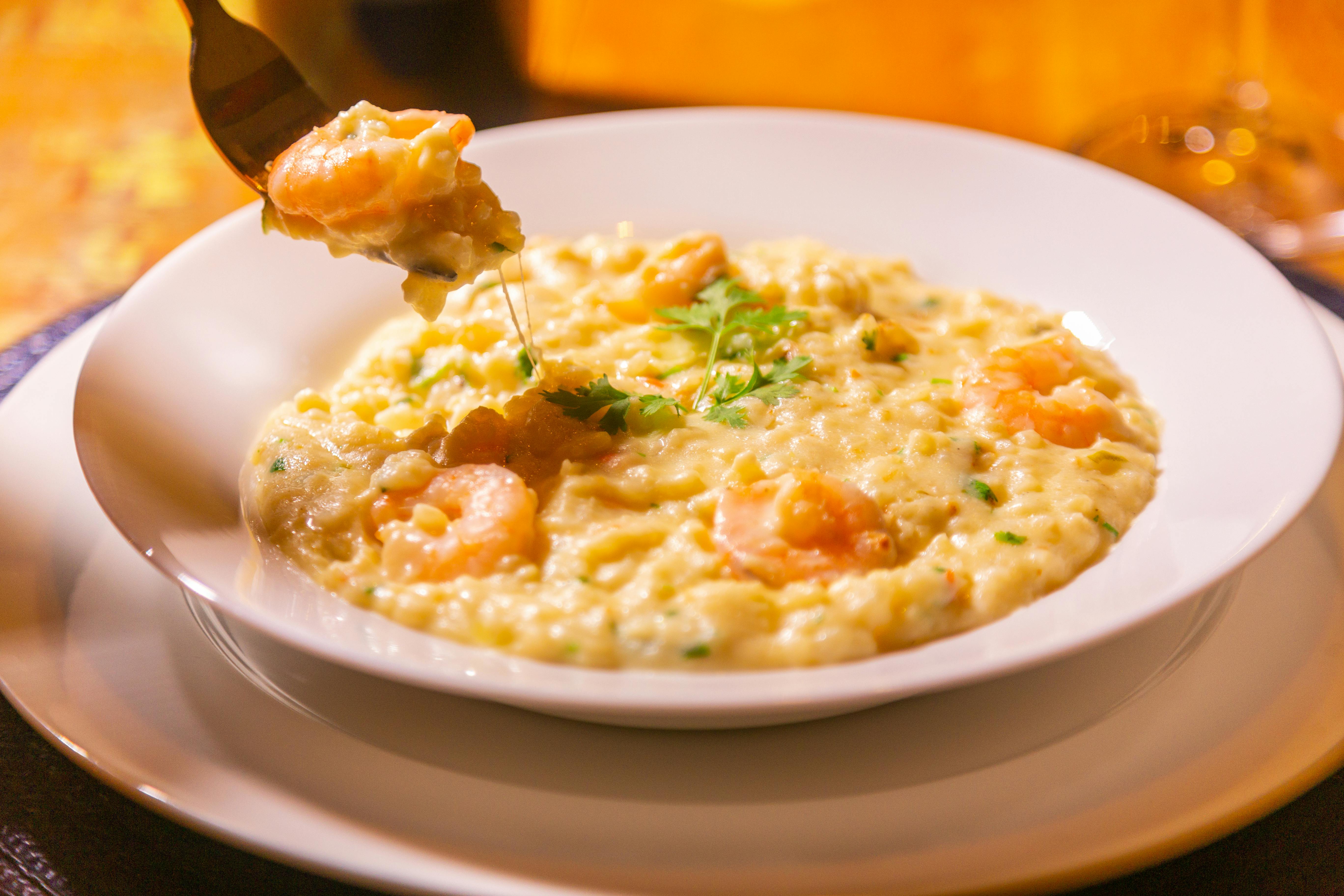
Photo: Wallace Araujo / Pexels
Italian
Shrimp Risotto
The diets react (see scores below)
Common Ingredients
- arborio rice
- shrimp
- white wine
- fish stock
- butter
- shallot
- lemon
- parsley
Specific recipes may vary.
Incompatible with 5 of 11 diets
Diet Ratings
Shrimp Risotto is fundamentally incompatible with a ketogenic diet due to its primary ingredient: arborio rice. Arborio rice is a high-starch short-grain rice with approximately 35-40g of net carbs per 1/4 cup dry (a standard single serving of risotto typically uses far more). A single serving of risotto can easily contain 45-60g of net carbs from the rice alone, which exceeds the entire daily carb budget for ketosis. The white wine adds additional sugars and carbs. While the shrimp, butter, fish stock, shallot, lemon, and parsley are individually keto-friendly or low-carb, the arborio rice makes this dish a clear keto violation. No reasonable portion reduction could make risotto keto-compatible while still constituting a recognizable dish.
Shrimp Risotto contains multiple animal-derived ingredients that are categorically incompatible with a vegan diet. Shrimp is seafood (an animal product), fish stock is derived from fish, and butter is a dairy product. These three ingredients alone make this dish entirely off-limits for vegans. There is no ambiguity here — this dish is built around animal proteins and animal-derived fats and broths.
Shrimp Risotto is fundamentally incompatible with the Paleo diet. The defining ingredient — arborio rice — is a grain, which is explicitly excluded from Paleo eating. Grains are avoided due to their lectin and phytic acid content, and because they were not a staple of Paleolithic human diets. Butter is a dairy product, also excluded under strict Paleo rules. White wine, while derived from fruit, is a processed, fermented alcohol and falls outside core Paleo guidelines. The remaining ingredients — shrimp, fish stock, shallot, lemon, and parsley — are all Paleo-compliant, but the dish as a whole cannot be considered Paleo due to its grain and dairy foundation.
Shrimp risotto has both Mediterranean-friendly and less-ideal elements. Shrimp is an excellent Mediterranean protein, encouraged 2-3 times weekly. However, arborio rice is a refined, starchy grain — not a whole grain — and risotto relies on butter rather than extra virgin olive oil as the primary fat, both of which deviate from core Mediterranean principles. The use of white wine, fish stock, lemon, shallot, and parsley are all consistent with Mediterranean cooking traditions. The dish is a classic Northern Italian preparation, but Mediterranean diet guidelines favor whole grains over refined white rice and olive oil over butter. Overall, it is an acceptable occasional meal, particularly given the seafood component, but it is not a dietary staple.
Traditional Italian Mediterranean cuisine, particularly from regions like Veneto and Lombardy, includes risotto as a cultural staple, and some Mediterranean diet authorities acknowledge that regional whole-diet patterns — not individual ingredients — define adherence; in this context, a shrimp risotto eaten within an otherwise plant-rich dietary pattern could be viewed as compatible rather than merely tolerated.
Shrimp Risotto is fundamentally incompatible with the carnivore diet. The dish is built around arborio rice, a grain, which is a core plant food that is strictly excluded. Additional plant-based ingredients include shallot, lemon, parsley, and white wine — all plant-derived and off-limits. While shrimp and butter are animal-derived and acceptable, they are minor components of a dish whose entire structure depends on excluded ingredients. There is no meaningful way to adapt this dish while retaining its identity as a risotto.
Shrimp Risotto contains two excluded ingredients: arborio rice (a grain, explicitly excluded on Whole30) and butter (dairy, excluded — only ghee/clarified butter is permitted as the dairy exception). While shrimp, white wine used in cooking, fish stock, shallot, lemon, and parsley are all compliant, the foundational grain component (arborio rice) and butter make this dish non-compliant regardless of preparation method. There is no compliant substitution that would still constitute a traditional risotto.
Shrimp risotto contains several low-FODMAP friendly ingredients — shrimp, arborio rice, butter, fish stock (if onion/garlic-free), lemon, and parsley are all low-FODMAP. However, shallots are the primary concern: they contain fructans similar to onion and are high-FODMAP even at small amounts (Monash rates shallots as high-FODMAP at just 1 tablespoon). White wine is low-FODMAP at a standard serving (about 150ml), and a small amount used in cooking is generally considered safe. The dish's overall FODMAP safety hinges almost entirely on whether shallots can be substituted or omitted, and whether the fish stock is free from onion and garlic. As typically prepared in a restaurant or home kitchen, shallots are a standard ingredient and would render the dish high-FODMAP. A modified version using green onion (scallion) tops only and confirmed low-FODMAP stock would be approvable.
Monash University rates shallots as high-FODMAP at even small culinary quantities, meaning this dish as traditionally prepared should likely be 'avoid' rather than 'caution.' However, many FODMAP-aware practitioners suggest the dish can be made compliant with simple swaps (green onion tops, garlic-infused oil), which is why a cautious middle rating reflects real-world adaptability.
Shrimp risotto contains several DASH-compatible elements — shrimp is a lean protein, lemon and parsley add nutrients without sodium, and shallots are a vegetable. However, this dish has notable concerns: arborio rice is a refined white grain rather than a DASH-preferred whole grain; butter adds saturated fat; fish stock and white wine can contribute meaningful sodium depending on preparation; and risotto is inherently calorie-dense with limited fiber. Shrimp itself is low in saturated fat and a good lean protein source, which DASH endorses, but its natural sodium content (~200mg per 3oz) adds up. The dish is acceptable in moderation with portion control and low-sodium stock, but does not align closely with DASH core principles due to refined grains, added saturated fat, and potential sodium load from stock.
NIH DASH guidelines emphasize whole grains over refined grains and limit saturated fat sources like butter; however, updated clinical interpretations note that the overall dietary pattern matters more than individual ingredients, and some DASH practitioners accept refined grains occasionally if the rest of the diet is adherent — using low-sodium stock and reducing butter would meaningfully improve this dish's DASH compatibility.
Shrimp Risotto presents a significant Zone Diet challenge primarily due to arborio rice, which is a high-glycemic, starchy carbohydrate that Dr. Sears explicitly classifies as an 'unfavorable' carb. Arborio rice has a high glycemic index (around 69+) and is very dense in starch, making it difficult to control insulin response. A typical risotto serving contains 40-50g of net carbs from the rice alone, which would consume multiple carb blocks without providing the fiber or micronutrient density of preferred Zone carb sources like vegetables. On the positive side, shrimp is an excellent lean protein source — very low in fat, high in protein, and aligns well with Zone protein block requirements (~7g per block). The butter adds saturated fat rather than preferred monounsaturated fat, though the quantity is relatively small in a restaurant-style portion. White wine and fish stock contribute minimal macros. Lemon and parsley are Zone-friendly additions with negligible macro impact. To make this more Zone-compatible, one would need to dramatically reduce the rice portion and supplement with low-glycemic vegetables, which fundamentally changes the dish from traditional risotto. As served in a typical Italian restaurant portion, the carb load from arborio rice makes it very difficult to maintain the 40/30/30 block ratio without severe portion restriction of the core ingredient.
Shrimp risotto presents a mixed anti-inflammatory profile. On the positive side, shrimp provides lean protein and contains some anti-inflammatory compounds including astaxanthin (a potent carotenoid), selenium, and iodine. Fish stock adds collagen and trace minerals with modest anti-inflammatory benefits. Shallots, lemon, and parsley contribute flavonoids, quercetin, vitamin C, and polyphenols — all beneficial. White wine in cooking quantities contributes minimally, and most alcohol cooks off. However, the dish has notable drawbacks: arborio rice is a refined, high-glycemic carbohydrate that can spike blood sugar and promote inflammatory markers — a whole grain alternative would significantly improve the profile. Butter, while not as harmful as trans fats, contributes saturated fat and is classified as a 'limit' ingredient. Shrimp itself is debated: it's low in fat and calories but contains dietary cholesterol and relatively modest omega-3 levels compared to fatty fish. The dish lacks the high-antioxidant vegetables, extra virgin olive oil, or omega-3-rich ingredients that would elevate it to 'approve' status. Overall, this is an acceptable occasional dish — refined and moderately indulgent — but not optimized for anti-inflammatory eating.
Some anti-inflammatory practitioners (particularly those following stricter protocols) would rate this lower, citing refined arborio rice's glycemic load as meaningfully pro-inflammatory and butter's saturated fat content — swapping in cauliflower rice and EVOO would shift the verdict toward approve. Conversely, Mediterranean diet researchers would note this dish's seafood-forward, herb-rich character aligns reasonably well with Mediterranean anti-inflammatory principles and may rate it more favorably.
Shrimp risotto has meaningful strengths for GLP-1 patients but several structural drawbacks that prevent a full approval. Shrimp is an excellent lean protein source — low fat, high protein density, easy to digest — which strongly supports the #1 priority. However, arborio rice is a refined, starchy grain with low fiber content, which fails the #2 fiber priority and contributes a dense glycemic load in a dish where patients are eating small volumes. Butter adds saturated fat, which can worsen GLP-1 side effects like nausea and reflux. The white wine contributes alcohol, which is flagged as an avoid ingredient — though the amount per serving after cooking is small and most alcohol cooks off, trace amounts remain and the habit of cooking with alcohol is worth noting. The dish is generally soft and easy to digest, which is a positive for GLP-1 patients struggling with GI side effects. Fish stock adds flavor with minimal nutritional downside. Lemon and parsley are neutral positives. The core issue is the refined carbohydrate base with butter fat and near-zero fiber, combined with moderate saturated fat — making this a caution rather than an approve. A modified version with reduced butter, added vegetables (peas, spinach, asparagus), and portion control could move this toward a 6-7.
Some GLP-1-focused dietitians accept risotto as an occasional comfort meal given shrimp's strong protein profile and the dish's soft texture, which is well-tolerated during GI side effect flares. Others flag the refined carbohydrate load and butter content as meaningfully counterproductive given how few total calories GLP-1 patients consume, arguing every meal should prioritize fiber and nutrient density over palatability.
*See how scores were generated at our methodology page.
Nutritional profile
Six traits that cut across every diet.
Fiber & Plants
How much whole-plant food and fiber it delivers.
Healthy Fats
The quality of its fats (unsaturated, omega-3).
Whole / Unprocessed
How close it is to its natural, unprocessed form.
Gut Gentle
How easy it is on digestion (low FODMAP, few irritants).
Low Glycemic
How little it spikes your blood sugar.
Protein Density
How much protein it packs per calorie.
Controversy Index
Higher controversy = more disagreement between diets.
Diet-Specific Tips
 Mediterranean — 5/10
View tips
- Shrimp is a core Mediterranean protein, encouraged multiple times weekly
- Arborio rice is a refined grain, not a whole grain — less ideal than farro, barley, or brown rice
- Butter is the primary fat rather than extra virgin olive oil, diverging from Mediterranean fat guidelines
- White wine, lemon, parsley, shallot, and fish stock are all Mediterranean-compatible ingredients
- Dish reflects authentic Italian regional cuisine, which has cultural legitimacy within broader Mediterranean patterns
- Moderate portion within a plant-rich overall diet mitigates concerns
 Low-FODMAP — 5/10
View tips
- Shallots are high-FODMAP (fructans) even at small servings — primary risk ingredient
- Arborio rice is low-FODMAP and safe as a base grain
- Shrimp is low-FODMAP with no FODMAP concerns
- Fish stock must be verified free from onion and garlic to be safe
- White wine is low-FODMAP at typical cooking quantities
- Butter, lemon, and parsley are all low-FODMAP
- Dish can be made compliant by replacing shallots with green onion tops and using safe stock
 DASH — 5/10
View tips
- Shrimp is a DASH-approved lean protein source
- Arborio rice is a refined grain, not a DASH-preferred whole grain
- Butter adds saturated fat, which DASH limits
- Fish stock can be high in sodium — low-sodium versions strongly preferred
- No saturated-fat-heavy dairy or red meat
- Lemon, parsley, and shallots are DASH-positive additions
- Portion control critical — risotto is calorie-dense
- White wine contributes minimal nutritional concern but adds calories
 Zone — 4/10
View tips
- Arborio rice is high-glycemic and explicitly 'unfavorable' in Zone carbohydrate classification
- Typical serving contains 40-50g net carbs from rice alone, overwhelming Zone block balance
- Shrimp is an ideal lean Zone protein source — low fat, clean protein profile
- Butter provides saturated fat rather than preferred monounsaturated fat
- Dish could be Zone-adapted by drastically reducing rice and adding vegetables, but this changes the dish fundamentally
- No vegetables in the recipe means missing Zone's recommended 8 servings of low-glycemic vegetables per day
 Anti-Inflammatory — 5/10
View tips
- Shrimp provides lean protein and astaxanthin (anti-inflammatory carotenoid) but limited omega-3s compared to fatty fish
- Arborio rice is a refined, high-glycemic carbohydrate — a key inflammatory concern
- Butter contributes saturated fat (a 'limit' ingredient under anti-inflammatory guidelines)
- Shallots, parsley, and lemon add beneficial flavonoids, quercetin, and vitamin C
- Fish stock offers collagen and minerals with modest anti-inflammatory benefit
- No extra virgin olive oil, omega-3-rich ingredients, or high-antioxidant vegetables present
- White wine used in cooking: minimal concern as most alcohol evaporates
 GLP-1 Friendly — 5/10
View tips
- Shrimp is a high-quality lean protein — strong positive for GLP-1 protein priority
- Arborio rice is a refined grain with negligible fiber — fails fiber priority
- Butter adds saturated fat, which can worsen nausea and reflux on GLP-1 medications
- White wine contributes trace alcohol after cooking — minor concern but flagged per guidelines
- Soft texture and easy digestibility are positives for GLP-1 GI side effect management
- Low fiber content does not support constipation prevention, a key GLP-1 side effect concern
- Small serving friendly — risotto is satisfying in moderate portions
- Nutrient density per calorie is moderate-low due to refined starch and fat content