This dish contains raw or undercooked ingredients. Consume at your discretion.
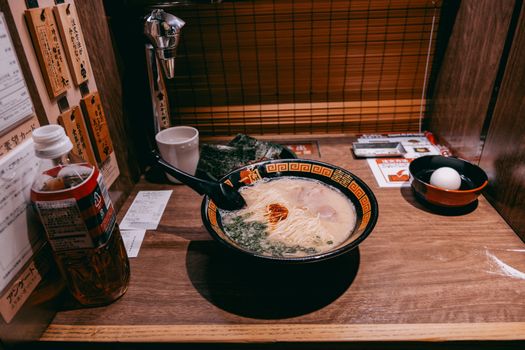
Photo: Diana Nguyen / Pexels
Japanese
Tonkotsu Ramen
The diets react (see scores below)
Common Ingredients
- ramen noodles
- pork bones
- chashu
- soft-boiled egg
- scallions
- wood ear mushrooms
- pickled ginger
- nori
Specific recipes may vary.
Incompatible with 9 of 11 diets
Diet Ratings
Tonkotsu Ramen is fundamentally incompatible with a ketogenic diet, primarily due to the ramen noodles, which are wheat-based and contain approximately 50-60g of net carbs per serving alone — exceeding the entire daily carb allowance in a single component. The pork bone broth, chashu pork, soft-boiled egg, nori, and scallions are individually keto-friendly or low-carb, but the noodles make the dish a non-starter. Pickled ginger may also contain added sugar, adding marginally to the carb load. There is no realistic portion size of traditional ramen that keeps net carbs within keto limits.
Tonkotsu Ramen contains multiple animal products that unambiguously disqualify it from a vegan diet. The broth is made by boiling pork bones for extended periods, making it the very foundation of the dish. Chashu is braised pork belly, a direct cut of meat. The soft-boiled egg is an animal-derived ingredient. These three components alone — pork bones, pork meat, and egg — make this dish entirely incompatible with vegan principles. The remaining ingredients (ramen noodles, scallions, wood ear mushrooms, pickled ginger, nori) are plant-based, but the animal-derived components are core and structural to the dish, not incidental.
Tonkotsu Ramen is fundamentally incompatible with the paleo diet. The dish's base ingredient — ramen noodles — is made from wheat flour, a grain that is explicitly excluded from the paleo framework. While several individual components are paleo-friendly (pork bone broth, chashu pork, soft-boiled egg, scallions, wood ear mushrooms), the noodles are the defining structural element of the dish and cannot simply be removed without transforming it into a different dish entirely. Additionally, pickled ginger commonly contains added sugar and salt, and nori (dried seaweed), while technically a whole food, is often processed with additives. Chashu is typically prepared with soy sauce and sugar — both non-paleo ingredients — making it a processed meat preparation. The dish as traditionally served is a grain-based, processed-ingredient meal that conflicts with core paleo principles.
Tonkotsu Ramen conflicts with Mediterranean diet principles on multiple fronts. The primary protein is pork (chashu — braised pork belly), which is red/fatty meat, limited to only a few times per month in Mediterranean guidelines. The broth is made by boiling pork bones for hours, producing a rich, saturated-fat-laden base. The noodles are refined white wheat ramen noodles, a processed refined grain discouraged in favor of whole grains. There is no olive oil, no legumes, no meaningful plant-forward components — the vegetables present (scallions, mushrooms, nori, pickled ginger) are minimal garnishes rather than the dietary foundation. The dish is entirely outside the Mediterranean culinary and nutritional tradition.
Tonkotsu Ramen is fundamentally incompatible with the carnivore diet despite containing some animal-derived components. The dish is anchored by ramen noodles, which are wheat-based and entirely plant-derived — a core excluded food group. Beyond the noodles, the dish contains multiple additional plant-based ingredients: scallions, wood ear mushrooms, pickled ginger, and nori (seaweed) are all plant foods with no place on a carnivore diet. The pork bone broth base and chashu pork belly are carnivore-approved components, and the soft-boiled egg is generally accepted by most practitioners, but the overwhelming presence of plant ingredients and grain-based noodles makes this dish a clear avoid. This is not a borderline case requiring nuanced debate — the disqualifying ingredients are numerous and central to the dish's identity.
Tonkotsu Ramen is definitively non-compliant with the Whole30 program. The most glaring violation is ramen noodles, which are made from wheat flour — a grain explicitly excluded from Whole30. Noodles are also specifically called out in Rule 4 as a prohibited 'junk food recreation' category item. Beyond the noodles, chashu (braised pork belly) is typically prepared with soy sauce and sugar, both of which are excluded. Pickled ginger commonly contains added sugar and sometimes sulfites (though sulfites are now allowed per 2024 rule changes). The pork bone broth, soft-boiled egg, scallions, wood ear mushrooms, and nori are individually compliant, but the dish as a whole cannot be made Whole30-compliant without fundamentally changing its defining characteristic — the ramen noodles.
Tonkotsu Ramen contains multiple high-FODMAP ingredients that make it unsuitable during the elimination phase. The most significant offender is the ramen noodles, which are made from wheat flour and are therefore high in fructans. The tonkotsu broth, made by boiling pork bones for many hours, often includes onion, garlic, and leek during cooking — all major fructan sources — and these FODMAPs leach into the broth during the long simmer. Scallion greens are low-FODMAP but the white bulb portions (commonly used as garnish in ramen) are high-FODMAP. Wood ear mushrooms (kikurage) are high in polyols (mannitol) and should be avoided. The soft-boiled egg is low-FODMAP, chashu pork (braised pork belly) is generally low-FODMAP if the marinade avoids garlic and onion, and pickled ginger is low-FODMAP in small amounts. Nori is low-FODMAP. However, the wheat noodles alone are a deal-breaker, and the broth preparation almost certainly introduces fructans. As a restaurant dish, there is virtually no way to make this safe during elimination without fundamental ingredient changes.
Monash University rates wheat noodles as high-FODMAP due to fructans, but some FODMAP practitioners note that very small portion sizes of noodles (around 26g cooked wheat noodles) may fall below the threshold — however, a standard ramen serving typically contains 150-200g of noodles, far exceeding any safe portion. Additionally, the FODMAP content of long-simmered bone broths is debated; some practitioners believe prolonged boiling further extracts fructans from alliums while others suggest the final concentration may vary.
Tonkotsu ramen is fundamentally incompatible with DASH diet principles across multiple dimensions. The broth is made by boiling pork bones for extended periods, producing a rich, creamy liquid that is extremely high in both sodium and saturated fat. A single restaurant serving of tonkotsu ramen typically contains 1,500–2,500mg of sodium — potentially exceeding the entire daily allowance for standard DASH (2,300mg) or nearly two days' worth for low-sodium DASH (1,500mg). Chashu (braised pork belly) is a fatty, high-sodium red meat, directly conflicting with DASH guidance to limit red meat, saturated fat, and sodium. Refined ramen noodles provide minimal fiber compared to DASH-preferred whole grains. While some ingredients (scallions, wood ear mushrooms, soft-boiled egg, pickled ginger, nori) are neutral or modestly beneficial, they are overwhelmed by the dish's core structural problems: extreme sodium load, high saturated fat from pork bone broth and pork belly, and refined carbohydrates.
Tonkotsu ramen presents multiple Zone Diet challenges but isn't categorically off-limits. The primary issues are: (1) Ramen noodles are high-glycemic refined carbohydrates — a 'unfavorable' carb in Zone terminology that spikes insulin rapidly; (2) The tonkotsu broth is extremely fat-heavy from pork bones, with a high proportion of saturated fat, which Sears historically discouraged; (3) Chashu pork belly is a fatty, processed protein source — the opposite of the lean protein Zone recommends. On the positive side, the soft-boiled egg provides reasonable protein blocks, scallions and nori contribute polyphenols and micronutrients, wood ear mushrooms are Zone-friendly low-glycemic vegetables, and pickled ginger adds anti-inflammatory benefit. The macro ratio is significantly skewed — likely 50-60% carbs from noodles, high saturated fat from broth and chashu, and moderate protein. Bringing this into Zone balance would require dramatically reducing noodle portions (or substituting shirataki/zucchini noodles), skimming the broth, replacing chashu with leaner protein, and adding more Zone-favorable vegetables. As served in a restaurant, it's a difficult fit.
Some Zone practitioners in Sears' later anti-inflammatory framework (Zone 2.0) note that bone broth contains collagen and anti-inflammatory compounds, and that the saturated fat concern is less absolute than in early Zone writings. Additionally, if noodle portions are modest and the dish is primarily consumed for its broth, egg, and mushroom components, it could be worked into a Zone-adjacent meal. The egg and mushroom components are genuinely Zone-favorable.
Tonkotsu ramen presents a mixed anti-inflammatory profile. On the positive side, wood ear mushrooms provide beta-glucans and antioxidants with demonstrated anti-inflammatory properties. Scallions and nori contribute polyphenols, flavonoids, and micronutrients (including iodine and chlorophyll from nori). Pickled ginger offers gingerols, which are well-documented anti-inflammatory compounds. Soft-boiled egg adds choline and selenium. However, several elements work against an anti-inflammatory rating: The tonkotsu broth is derived from pork bones and rendered fat, making it high in saturated fat, which is linked to elevated inflammatory markers at high intake. Chashu (braised pork belly) is a fatty cut of red/processed pork and is one of the foods the anti-inflammatory framework recommends limiting. Ramen noodles are refined carbohydrates with a high glycemic index, which can promote post-meal inflammatory spikes. The dish is also typically very high in sodium, which some research links to increased inflammatory cytokine production. Overall, the anti-inflammatory positives (mushrooms, ginger, scallions, nori) are real but significantly outweighed by the saturated-fat-heavy broth and fatty pork components. The dish is not as acutely pro-inflammatory as fried processed food, but it falls clearly in the 'limit' category of the anti-inflammatory framework and is acceptable only occasionally rather than regularly.
Some anti-inflammatory researchers, including those who emphasize the benefits of collagen and glycine in bone broth, argue that long-simmered bone broth may reduce inflammation by supporting gut integrity and providing anti-inflammatory amino acids — a view promoted in paleo and ancestral health communities. Mainstream anti-inflammatory protocols like Dr. Weil's would still flag the overall saturated fat load and refined noodles as limiting factors, keeping this dish in the 'moderate' tier at best.
Tonkotsu ramen is a poor fit for GLP-1 patients across nearly every key criterion. The broth is made by boiling pork bones for hours, producing an extremely high-fat, high-saturated-fat liquid that is calorie-dense with minimal nutritional return per calorie. Chashu (braised pork belly) is one of the fattiest cuts of pork available — high in saturated fat and difficult to digest given GLP-1-slowed gastric emptying. The ramen noodles are refined white flour with negligible fiber and low protein density. The overall dish is heavy, greasy, and high in sodium, all of which worsen common GLP-1 side effects including nausea, bloating, and reflux. Protein content exists (egg, chashu) but is modest relative to the fat and calorie load, and the fat-to-protein ratio is unfavorable. The large liquid volume may seem appealing for hydration but the broth's fat content undermines this. Positive elements — soft-boiled egg, scallions, wood ear mushrooms, nori, and pickled ginger — are nutritionally decent but minor in the context of the dish as a whole.
Some GLP-1-focused dietitians note that broth-based soups can support hydration and are easier to consume in small portions when appetite is suppressed, and that the egg and mushroom components offer modest nutritional value. A small portion may be tolerable for patients without significant GI side effects, but most obesity medicine clinicians would flag the pork belly and bone broth fat content as likely to worsen nausea and reflux, particularly in the early titration phase.
*See how scores were generated at our methodology page.
Nutritional profile
Six traits that cut across every diet.
Fiber & Plants
How much whole-plant food and fiber it delivers.
Healthy Fats
The quality of its fats (unsaturated, omega-3).
Whole / Unprocessed
How close it is to its natural, unprocessed form.
Gut Gentle
How easy it is on digestion (low FODMAP, few irritants).
Low Glycemic
How little it spikes your blood sugar.
Protein Density
How much protein it packs per calorie.
Controversy Index
Higher controversy = more disagreement between diets.
Diet-Specific Tips
 Zone — 4/10
View tips
- Ramen noodles are high-glycemic refined carbs — 'unfavorable' Zone carbohydrate source
- Tonkotsu broth is very high in saturated fat from pork bones, skewing the 30% fat target toward unhealthy fat types
- Chashu pork belly is a fatty, processed protein — opposite of lean Zone protein guidelines
- Soft-boiled egg is a solid Zone protein block contributor
- Wood ear mushrooms, scallions, nori, and pickled ginger are Zone-favorable low-glycemic additions
- Overall macro ratio is likely 50-60% carb, high saturated fat — requires significant modification to hit 40/30/30
- Dish could be partially rehabilitated by reducing noodles, skimming broth fat, and substituting leaner protein
 Anti-Inflammatory — 4/10
View tips
- Wood ear mushrooms provide beta-glucans and anti-inflammatory antioxidants
- Pickled ginger contains gingerols with demonstrated anti-inflammatory activity
- Nori and scallions contribute polyphenols and micronutrients
- Tonkotsu broth is high in saturated fat from pork bone marrow and rendered fat
- Chashu pork belly is a fatty, processed red meat — an 'avoid or limit' category food
- Ramen noodles are refined carbohydrates with high glycemic index
- High sodium content may contribute to inflammatory cytokine activity
- Overall saturated fat and refined carb load outweighs the anti-inflammatory components