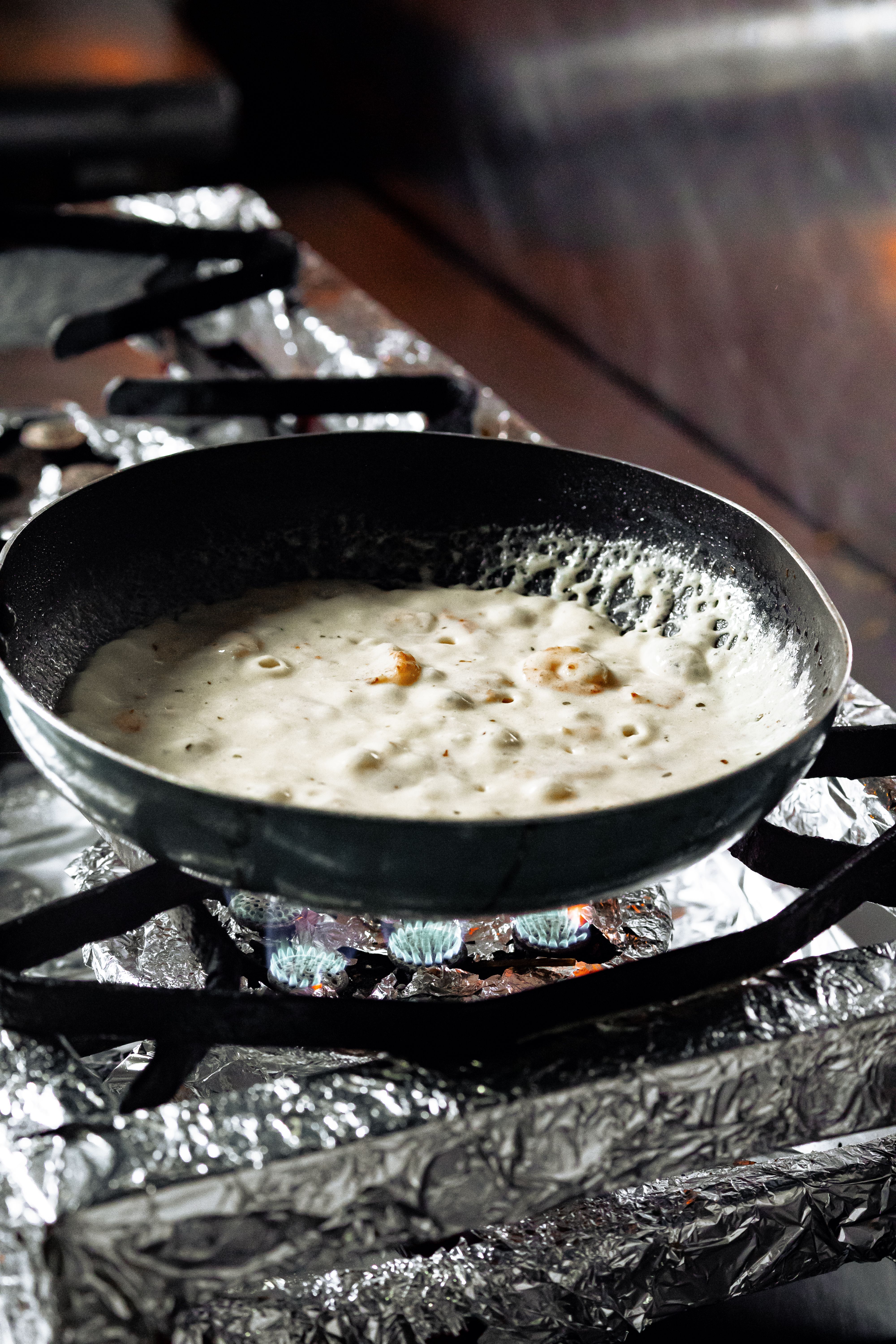
The diets react (see scores below)
Diet Ratings
Traditional béchamel (butter, flour, milk) contains flour, making it high-carb (~5-8g net carbs per 2oz serving). However, keto-adapted versions using almond flour or omitting flour entirely are viable. Standard béchamel should be avoided or heavily modified.
Some keto practitioners make full-fat béchamel with heavy cream and butter (omitting flour) and consider it fully keto-compatible; others avoid all traditional béchamel due to flour content.
Béchamel is a classic French sauce made from butter (dairy fat) and milk, thickened with flour. Both butter and milk are animal products and are core to the sauce's definition.
Béchamel is a sauce made from butter, flour, and milk. It contains both grains (flour) and dairy (milk and butter), both of which are excluded from paleo. The flour base disqualifies it entirely.
Cream-based sauce made with butter and refined flour. High in saturated fat and refined carbohydrates. Contradicts Mediterranean emphasis on olive oil as primary fat and whole foods.
Béchamel is a sauce made from butter, flour, and milk. While butter and milk are animal-derived, the wheat flour is plant-based and excluded. A carnivore-compliant version could use only butter and milk (or cream), but traditional béchamel contains flour and is incompatible.
Some carnivore practitioners might accept a modified béchamel made with only butter and full-fat cream (no flour), viewing it as acceptable dairy-fat sauce. However, traditional béchamel with flour is universally excluded.
Béchamel is a sauce made from butter, flour, and milk. Both wheat flour (grain) and milk (dairy) are explicitly excluded on Whole30. Additionally, it is a processed sauce that mimics non-compliant cooking.
Béchamel is a sauce made from butter, flour, and milk. The flour (typically wheat) contains fructans, and milk contains lactose. Both are FODMAP concerns. However, the small amount of flour in a typical serving and the lactose content of milk depend on the specific recipe and portion. A small serving of béchamel may be low-FODMAP, but larger amounts become problematic.
Monash rates wheat flour as high-FODMAP and cow's milk as high-FODMAP due to lactose. While a thin béchamel coating on a dish might be tolerated, the combination of fructans and lactose makes this a borderline food best avoided during strict elimination or used in minimal amounts.
Cream-based sauce high in saturated fat and sodium. Made with butter, cream, and often salt. Contradicts DASH limits on saturated fat and sodium.
Béchamel is a cream sauce made from butter, flour, and milk. It combines refined carbohydrates (flour) with saturated fat and dairy. While milk provides some protein, the refined flour component is high-glycemic. Small portions can fit in Zone meals if carefully measured, but the macro profile is challenging to balance.
Some Zone practitioners may rate this lower (2-3) due to the refined flour content and saturated fat, which conflicts with Zone anti-inflammatory principles. Others may rate it slightly higher (5-6) if using whole grain flour and measuring portions precisely.
Béchamel is a sauce made from butter, flour, and milk. High in saturated fat (butter), refined carbohydrates (flour), and full-fat dairy. Saturated fat and refined carbs are explicitly limited in anti-inflammatory guidelines. No anti-inflammatory compounds. Promotes inflammatory markers.
Cream-based sauce (butter, flour, milk) is high in saturated fat and calories with minimal protein relative to fat content. Worsens GLP-1 side effects (nausea, bloating, reflux). Poor nutrient density and difficult to digest.
Nutritional profile
Six traits that cut across every diet.
Fiber & Plants
How much whole-plant food and fiber it delivers.
Healthy Fats
The quality of its fats (unsaturated, omega-3).
Whole / Unprocessed
How close it is to its natural, unprocessed form.
Gut Gentle
How easy it is on digestion (low FODMAP, few irritants).
Low Glycemic
How little it spikes your blood sugar.
Protein Density
How much protein it packs per calorie.
Controversy Index
Score range: 1–6/10. Higher controversy = more disagreement between diets.
Diet-Specific Tips for Béchamel
 Keto — 6/10
- Traditional recipe contains wheat flour
- 5-8g net carbs per serving (traditional)
- Keto-adaptable with substitutions
- High fat content when made with butter/cream
 Carnivore — 5/10
- contains wheat flour (plant-based)
- butter and milk are animal-derived
- traditional recipe incompatible
 Low-FODMAP — 4/10
- Contains wheat flour (fructans)
- Contains milk (lactose)
- Portion size critical
- Cumulative FODMAP load from two sources
 Zone — 4/10
- refined flour (high glycemic)
- saturated fat from butter
- dairy protein present
- difficult macro balance
- portion control essential