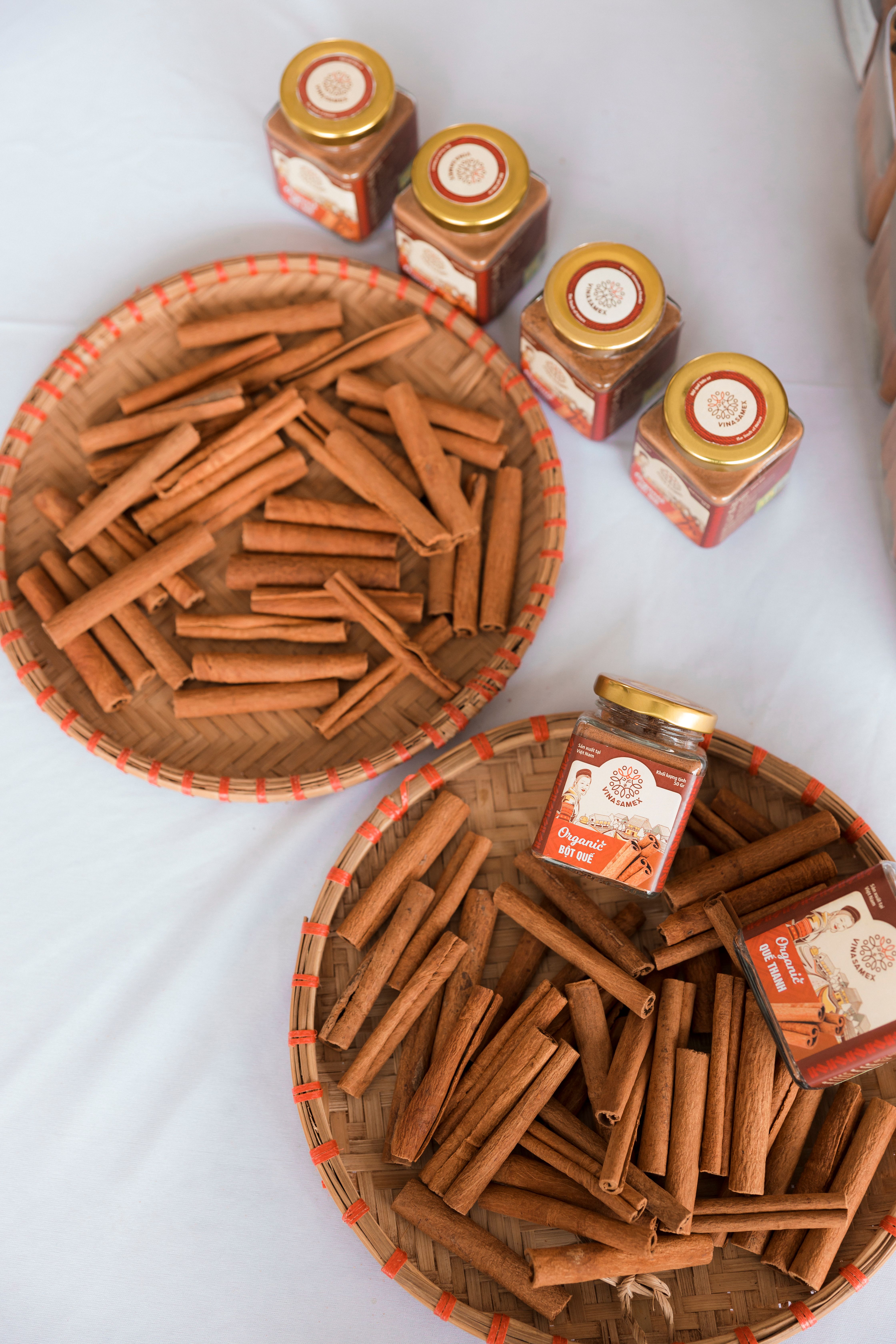
The diets react (see scores below)
Diet Ratings
Cinnamon contains ~1.3g net carbs per tablespoon. Used in typical spice amounts (small pinches), it poses no threat to ketosis. Some varieties may have added sugar, so check labels.
Pure plant-derived spice from tree bark. No animal products or derivatives. Whole food form.
Pure cinnamon bark spice with no processing concerns. Available to hunter-gatherers. No grains, legumes, dairy, or refined ingredients.
Cinnamon is a traditional Mediterranean spice with minimal processing, no added sugars when pure, and supports flavor enhancement without unhealthy ingredients. Used in both savory and sweet applications.
Plant-derived spice from tree bark. Contains plant compounds and sugars. Excluded from strict carnivore protocol.
Pure spice with no excluded ingredients. Whole30 explicitly allows all herbs and spices.
Cinnamon is a pure spice with no significant FODMAP content. Monash University confirms cinnamon is low-FODMAP at typical culinary serving sizes.
Sodium-free spice with minimal calories. May have modest blood glucose benefits. Excellent for flavoring without salt, supporting DASH sodium reduction goals.
Cinnamon has modest glycemic-moderating properties and polyphenol content. Minimal macronutrient impact at typical serving sizes. Supports anti-inflammatory goals without disrupting ratios.
Cinnamon contains polyphenols and has demonstrated anti-inflammatory and antioxidant effects. Helps regulate blood sugar, reducing inflammatory spikes. Explicitly listed in anti-inflammatory herb recommendations.
Zero calories, blood sugar stabilizing properties, well-tolerated by GLP-1 patients. Adds flavor without fat or sugar. Supports satiety perception and pairs well with protein-rich meals and fiber sources.
Nutritional profile
Six traits that cut across every diet.
Fiber & Plants
How much whole-plant food and fiber it delivers.
Healthy Fats
The quality of its fats (unsaturated, omega-3).
Whole / Unprocessed
How close it is to its natural, unprocessed form.
Gut Gentle
How easy it is on digestion (low FODMAP, few irritants).
Low Glycemic
How little it spikes your blood sugar.
Protein Density
How much protein it packs per calorie.
Controversy Index
Score range: 2–10/10. Higher controversy = more disagreement between diets.
Diet-Specific Tips for Cinnamon
 Keto — 8/10
- Low net carbs per serving
- Minimal impact at typical usage amounts
- Check for added sugars in processed versions
 Vegan — 9/10
- 100% plant-based
- Whole food spice
- No processing concerns
 Paleo — 9/10
- Unprocessed plant-based spice
- No additives or fillers
- Minimal impact on blood sugar
 Mediterranean — 8/10
- Minimal processing
- No added sugars in pure form
- Traditional Mediterranean use
- Flavor enhancement
 Whole30 — 10/10
- Pure spice
- No additives
- Explicitly allowed category
 Low-FODMAP — 9/10
- Pure spice with negligible fermentable carbohydrates
- No fructans, GOS, lactose, or polyols
- Standard serving sizes are very small
 DASH — 9/10
- Zero sodium
- Negligible calories
- Potential glycemic benefits
- Salt substitute for sweetened foods
 Zone — 8/10
- Polyphenol content
- Negligible macronutrients
- May help moderate blood sugar
 Anti-Inflammatory — 8/10
- Polyphenol content
- Anti-inflammatory compounds
- Blood sugar regulation
- Antioxidant activity
 GLP-1 Friendly — 8/10
- zero calorie density
- blood sugar stabilization
- no GI triggers
- enhances satiety perception