The diets react (see scores below)
Diet Ratings
Traditional Japanese broth made from kombu and bonito. Minimal carbs, rich umami flavor, and nutrient-dense. Excellent keto-friendly broth.
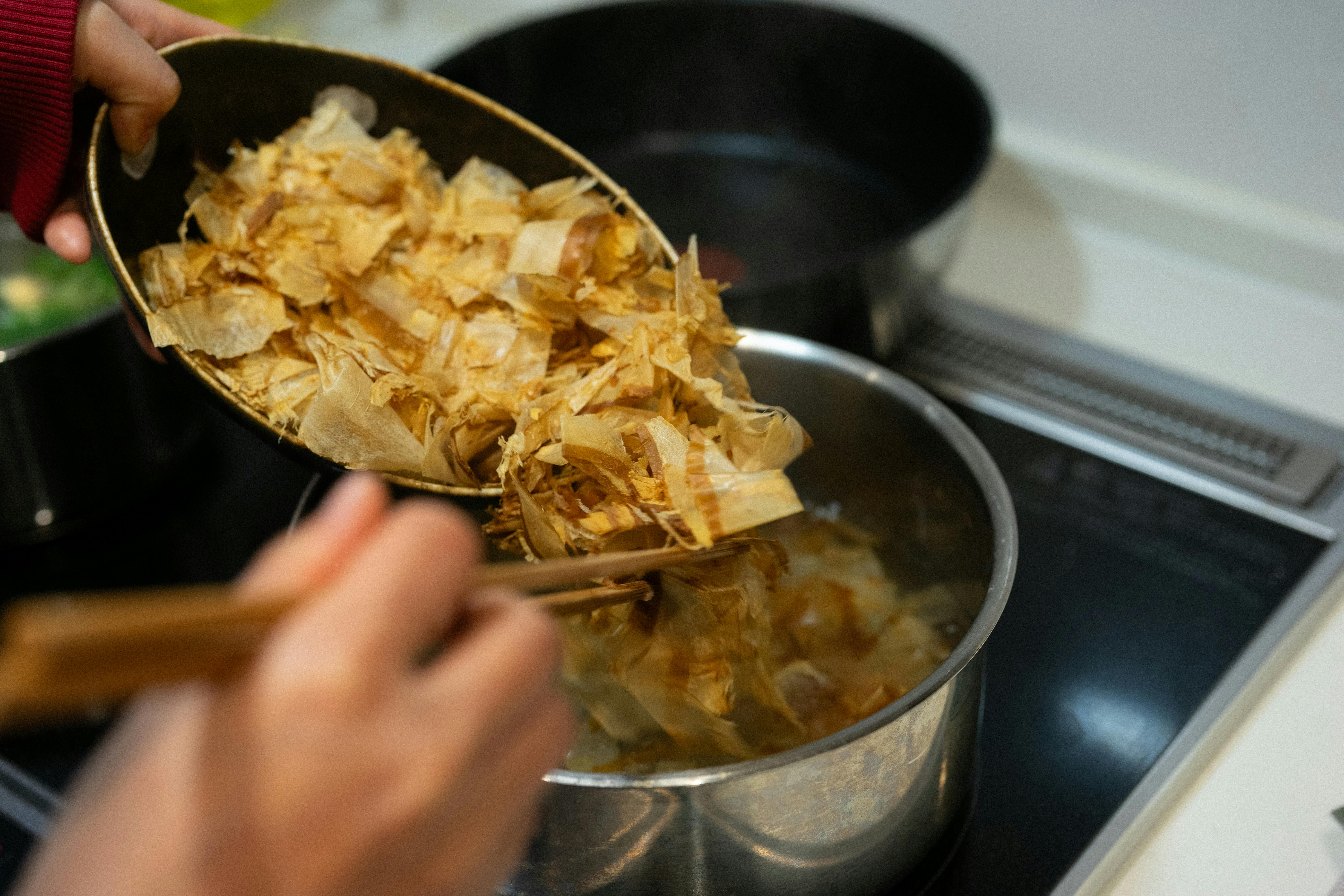
Dashi is a Japanese broth traditionally made from kombu seaweed and bonito fish flakes (katsuobushi). The bonito fish component makes it non-vegan. While kombu-only dashi exists, standard dashi contains fish.
Traditional dashi (kombu seaweed and bonito fish stock) is an unprocessed, nutrient-dense broth. Both kombu and bonito are paleo-approved whole foods with no additives.
Dashi is a broth made from kombu seaweed and bonito fish, providing umami and nutrients. While not traditionally Mediterranean, it functions similarly to Mediterranean broths and supports plant-based vegetable dishes without added fats or sugars.
Strict Mediterranean diet adherents may prefer traditional Mediterranean broths (vegetable, chicken, fish) over Asian ingredients; however, the nutritional profile and culinary function align well with Mediterranean principles.
Traditional Japanese broth made from kombu (seaweed) and bonito fish. While bonito is animal-derived, kombu is a plant (seaweed/algae). Depends on whether seaweed is acceptable; most strict carnivores exclude it.
Strict carnivores exclude dashi due to kombu (plant-derived seaweed) content. Some practitioners argue seaweed is acceptable as a mineral source, but this is minority view within carnivore community.
Traditional dashi made from kombu (seaweed) and bonito flakes with water is compliant. However, many commercial dashi broths contain added sugar, MSG (now allowed per 2024 rules), or soy. Label-reading is essential.
Official Whole30 allows MSG as of 2024, making many commercial dashi compliant if sugar-free. However, some versions contain soy or other additives requiring verification.
Traditional dashi (kombu seaweed and bonito flakes) is low-FODMAP. However, many commercial dashi products contain garlic, onion, or shiitake mushrooms (polyols). Homemade dashi from kombu and bonito is safe; store-bought requires verification.
Monash rates plain kombu and bonito as low-FODMAP, but commercial dashi broths often contain garlic, onion, or mushrooms. During elimination, homemade or verified ingredient dashi is safer.
Dashi (Japanese stock) made from kombu and bonito is relatively low in sodium compared to Western broths, though sodium varies by preparation. Provides umami and minerals. Acceptable in moderation if sodium content is monitored.
Traditional Japanese broth made from kombu seaweed and bonito flakes. Minimal calories, provides umami flavor, and contains beneficial compounds from seaweed. Does not significantly impact Zone macronutrient ratios and supports anti-inflammatory cooking.
Dashi (kombu and bonito stock) is a foundational anti-inflammatory broth. Kombu (kelp) provides iodine, minerals, and fucoidan (anti-inflammatory polysaccharide). Bonito adds umami and B vitamins. Low sodium versions support gut health and provide mineral-rich hydration without inflammatory load.
Dashi (Japanese broth made from kombu seaweed and bonito flakes) provides hydration, umami flavor, and trace minerals. Protein content is minimal (1-2g per cup). Like chicken broth, it's useful for hydration and nausea management but should not substitute for protein-rich meals. High sodium content in some preparations is a consideration.
Some RDs value dashi specifically for its mineral content and ability to support hydration without triggering nausea, while others view it similarly to other broths—useful but nutritionally insufficient as a primary food.
Controversy Index
Score range: 1–9/10. Higher controversy = more disagreement between diets.
Diet-Specific Tips for Dashi
 Keto — 8/10
- 0-1g net carbs per cup
- Mineral-rich (iodine, potassium)
- No added sugars
- Supports satiety
 Paleo — 9/10
- Unprocessed seafood and seaweed
- Mineral and umami source
- No additives or grains
 Mediterranean — 7/10
- Nutrient-dense broth
- Supports vegetable dishes
- Minimal processing
- Not traditional but functionally compatible
 Carnivore — 5/10
- Contains bonito (animal)
- Contains kombu (plant/seaweed)
- Mixed animal and plant origin
- Seaweed acceptability debated
 Whole30 — 6/10
- Homemade versions are safest
- Check for added sugar
- MSG now allowed (2024 rule change)
- Verify no soy or other legume derivatives
 Low-FODMAP — 5/10
- Depends on ingredients
- Mushrooms are polyol-containing
- Garlic and onion are common additives
 DASH — 5/10
- Variable sodium depending on preparation
- Rich in minerals from seaweed and fish
- Low calorie
- Umami flavor reduces need for salt
 Zone — 8/10
- Minimal macronutrient impact
- Umami flavor support
- Seaweed polyphenols
- Anti-inflammatory cooking base
 Anti-Inflammatory — 8/10
- fucoidan from kombu (anti-inflammatory)
- mineral-rich
- umami compounds
- low inflammatory load
- supports gut health
 GLP-1 Friendly — 5/10
- minimal protein
- high water content
- easy to digest
- umami flavor supports satiety
- variable sodium