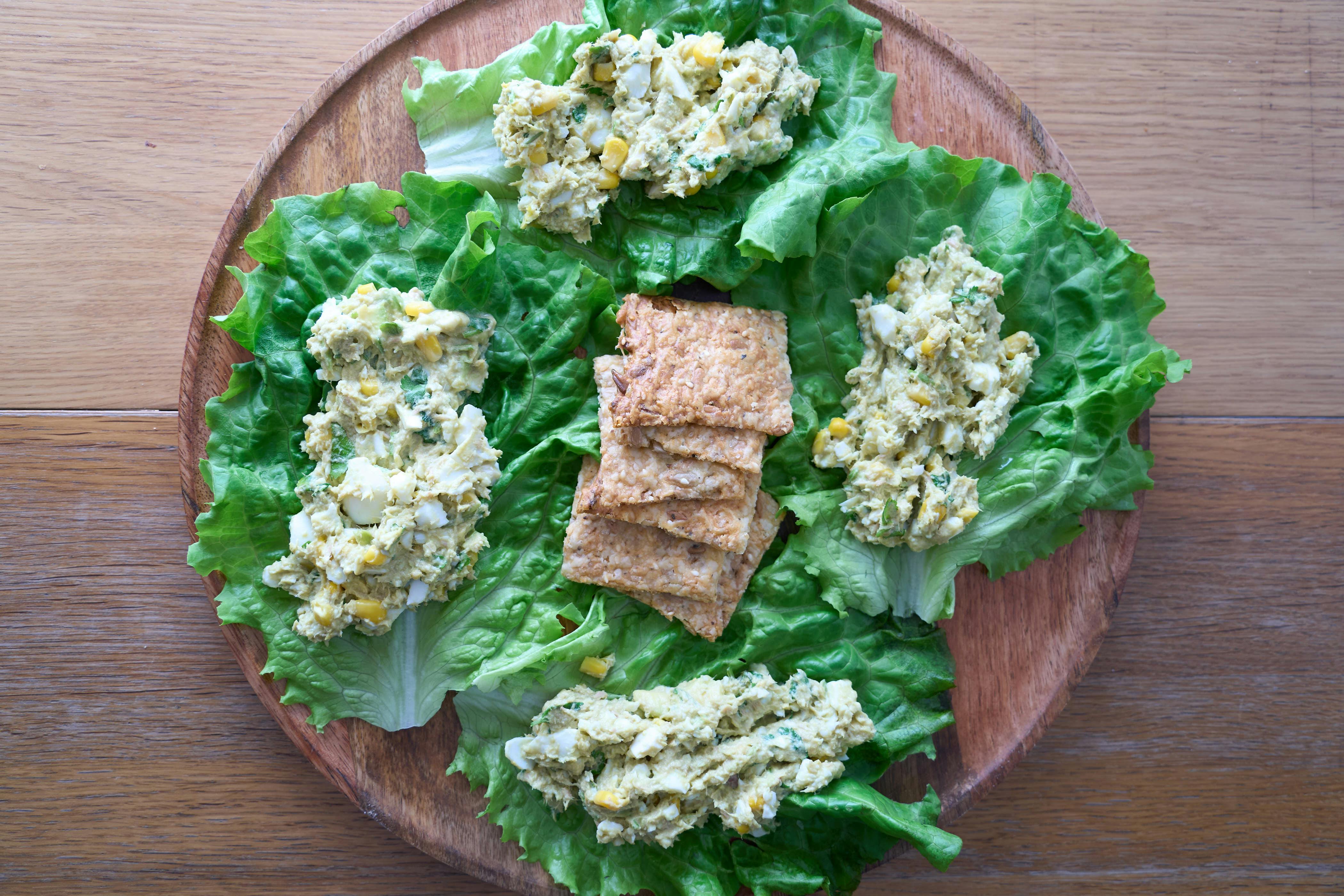
The diets react (see scores below)
Diet Ratings
Egg salad made with mayo, eggs, and minimal additions is excellent for keto. High in fat and protein, virtually zero carbs. Whole food preparation with quality ingredients.
Eggs are explicitly excluded from vegan diet. Egg salad is primarily composed of eggs, making it non-vegan.
Eggs are paleo-approved, but egg salad typically contains mayonnaise made with seed oils and added sugar. The salad base is acceptable if vegetables are unprocessed.
Egg salad made with homemade mayo using olive oil or avocado oil would be fully approvable (score 8-9).
Eggs are acceptable in moderation. However, egg salad typically uses mayo (high saturated fat). Approval depends on preparation with olive oil-based dressing instead.
Some Mediterranean traditions prepare egg dishes with olive oil and vegetables rather than mayo, making the concept compatible with proper preparation methods.
Eggs are animal-derived and widely accepted in carnivore diet. Egg salad is typically eggs mixed with mayonnaise (acceptable if made with animal fat or eggs). However, traditional recipes may include celery, onions, or other vegetables, and added sugars. Pure egg salad with mayo and salt is excellent.
Strict Lion Diet adherents exclude eggs entirely, consuming only ruminant meat, salt, and water. Most other carnivore practitioners include eggs as a staple protein and fat source.
Eggs and vegetables are compliant. Mayo-based preparation is technically compliant if made with compliant ingredients. Depends on mayo quality and any added sugar.
Similar to tuna salad, some practitioners avoid mayo-based preparations due to processed nature, though mayo itself is technically Whole30-compliant.
Eggs and mayonnaise are both low-FODMAP. Egg salad is low-FODMAP at standard servings (1-1.5 cups). Verify no onion, celery, or high-fructose additions. Plain egg salad with mayonnaise and mustard is safe.
Eggs provide high-quality protein and choline, but traditional egg salad uses mayo (saturated fat). Cholesterol content moderate. Preparation method determines DASH compatibility.
NIH DASH guidelines support eggs as protein source; however, mayo-based preparation increases saturated fat. Consider Greek yogurt or mustard-based versions.
Eggs provide excellent protein and contain beneficial fats. However, traditional egg salad uses mayo (omega-6 heavy) and lacks carbohydrates. Works as Zone component if mayo is minimized, olive oil-based dressing used, and paired with low-glycemic vegetables and whole grain.
Eggs are acceptable in moderation (anti-inflammatory diet allows them). However, egg salad typically uses mayo (seed oil omega-6), which can be inflammatory. Depends on mayo quantity and type. Whole eggs contain choline and lutein (beneficial), but preparation method matters significantly.
Some authorities emphasize eggs' nutrient density and acceptable omega-6 ratio. Others prioritize mayo's inflammatory seed oil content as problematic.
Good protein (12-15g per serving) and nutrient-dense (choline, lutein). However, traditional egg salad is made with mayo, making it high in fat. If made with Greek yogurt or light mayo, score improves to 8. Fat content may trigger nausea in some GLP-1 patients.
Some RDs recommend egg salad as-is for satiety; others recommend mayo reduction or substitution due to fat intolerance on GLP-1. Individual tolerance and preparation method significantly affect suitability.
Nutritional profile
Six traits that cut across every diet.
Fiber & Plants
How much whole-plant food and fiber it delivers.
Healthy Fats
The quality of its fats (unsaturated, omega-3).
Whole / Unprocessed
How close it is to its natural, unprocessed form.
Gut Gentle
How easy it is on digestion (low FODMAP, few irritants).
Low Glycemic
How little it spikes your blood sugar.
Protein Density
How much protein it packs per calorie.
Controversy Index
Score range: 1–8/10. Higher controversy = more disagreement between diets.
Diet-Specific Tips for Egg salad
 Keto — 8/10
- Zero net carbs
- High-quality fat and protein
- Whole food ingredients
- Avoid sweetened versions
 Paleo — 6/10
- Eggs (approved)
- Mayonnaise typically uses seed oils
- Check for added sugar
- Vegetable base acceptable
 Mediterranean — 5/10
- eggs acceptable in moderation
- mayo preparation problematic
- preparation method critical
- mayo contradicts olive oil principle
 Carnivore — 8/10
- eggs are animal-derived
- check for vegetable additions
- mayo quality matters
- added sugars possible
 Whole30 — 6/10
- Eggs are compliant
- Vegetables are compliant
- Mayo ingredient quality matters
- Check for added sugar
 Low-FODMAP — 8/10
- Eggs are low-FODMAP
- Mayonnaise is low-FODMAP
- Avoid additions: onion, celery, apple
- Homemade versions are safest
 DASH — 5/10
- High-quality protein
- Contains choline
- Often high in saturated fat (mayo)
- Moderate cholesterol
- Preparation method critical
 Zone — 6/10
- Excellent protein quality
- Beneficial fat profile (yolk)
- Mayo preparation problematic
- Lacks carbohydrates
- Requires vegetable pairing
 Anti-Inflammatory — 5/10
- eggs (moderate)
- mayo preparation (omega-6)
- choline and lutein
- preparation-dependent
 GLP-1 Friendly — 6/10
- Good protein
- Nutrient-dense
- Mayo-dependent fat content
- Preparation-sensitive
- Easy to digest