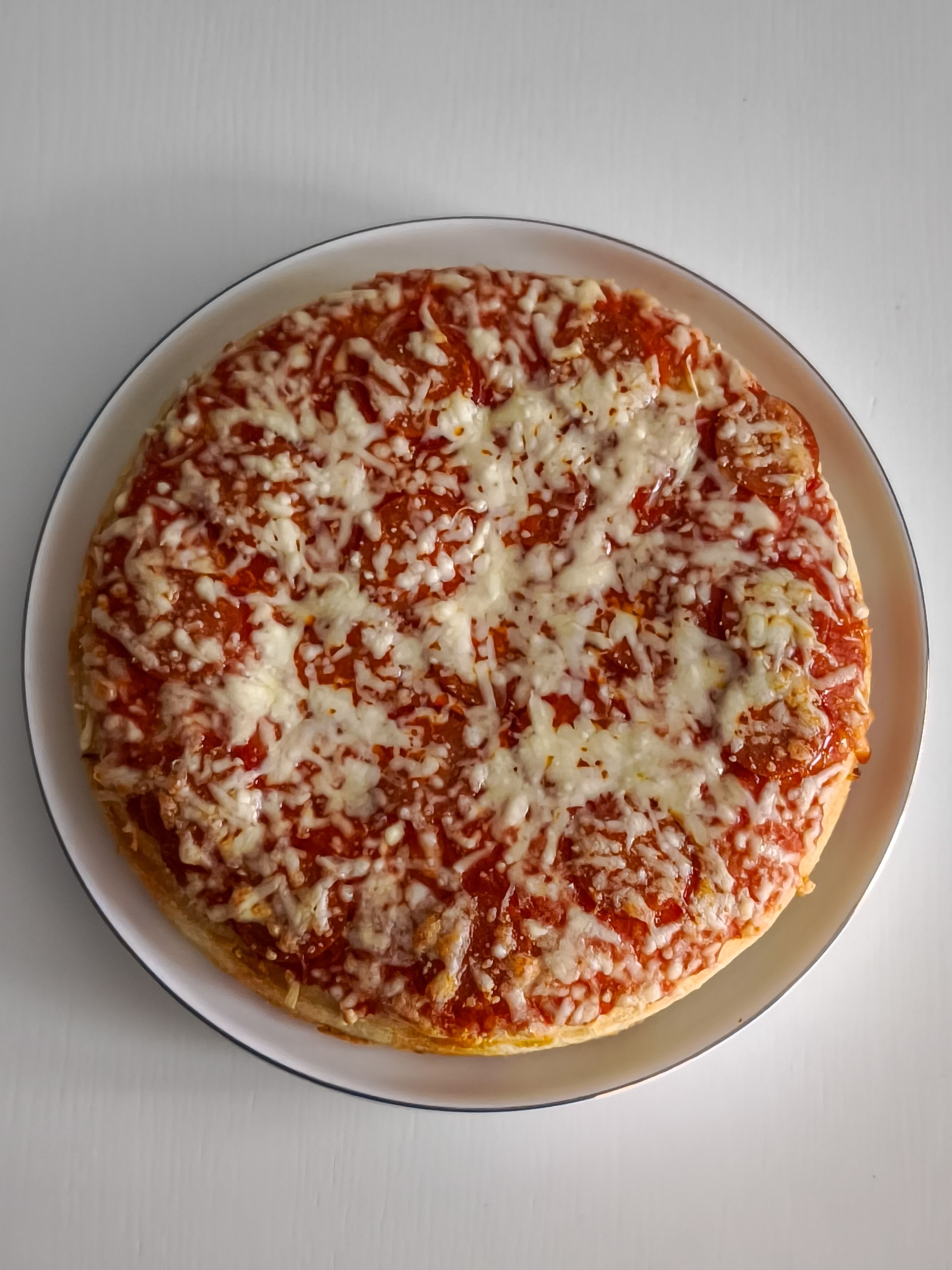
Frozen pizza
Rated by 11 diets
The diets react (see scores below)
Diet Ratings
Grain-based crust contains 30-40g net carbs per serving. Tomato sauce adds sugars. Incompatible with ketosis even in small portions.
Most frozen pizzas contain dairy cheese. Vegan varieties exist but are minority. Heavily processed. Requires careful label reading.
Multiple violations: grain crust (wheat), dairy cheese, processed toppings, seed oils, refined carbohydrates, additives, and preservatives. No paleo-compliant elements.
Highly processed with refined grains, excessive sodium, saturated fat, and added sugars. Minimal whole food content. Contradicts all core Mediterranean principles.
Grain-based crust, tomato sauce (plant), vegetable toppings likely present, seed oils, and processed ingredients. Multiple plant-based violations.
Frozen pizza violates multiple Whole30 rules: the crust is a grain-based baked good (explicitly prohibited), and pizza itself is listed as a prohibited junk food recreation. Likely contains dairy cheese and processed ingredients.
Wheat crust contains fructans. Most frozen pizzas contain garlic and onion in sauce or toppings. High-FODMAP at standard serving.
Extremely high sodium (600-1000mg per 2-3 slices). High saturated fat from cheese and processed meats. Refined grain crust. Minimal whole grain, vegetable, or fiber content. Heavily processed with additives.
Refined white flour crust (high-glycemic), processed cheese (saturated fat), processed meat. Carbs dominate; protein-to-carb ratio severely imbalanced. Inflammatory ingredients.
Refined grain crust, processed cheese (saturated fat, additives), processed meats (nitrates, inflammatory), seed oil content. Multiple inflammatory components combined.
High saturated fat (cheese), refined carbs (crust), moderate protein but offset by poor digestibility and high fat content. Ultra-processed with low nutrient density per calorie. Cheese and fat combination worsens nausea and bloating in GLP-1 patients.
Nutritional profile
Six traits that cut across every diet.
Fiber & Plants
How much whole-plant food and fiber it delivers.
Healthy Fats
The quality of its fats (unsaturated, omega-3).
Whole / Unprocessed
How close it is to its natural, unprocessed form.
Gut Gentle
How easy it is on digestion (low FODMAP, few irritants).
Low Glycemic
How little it spikes your blood sugar.
Protein Density
How much protein it packs per calorie.
Controversy Index
Score range: 1–4/10. Higher controversy = more disagreement between diets.
Diet-Specific Tips for Frozen pizza
 Vegan — 4/10
- Majority contain dairy cheese
- Vegan options available but less common
- Highly processed ingredients