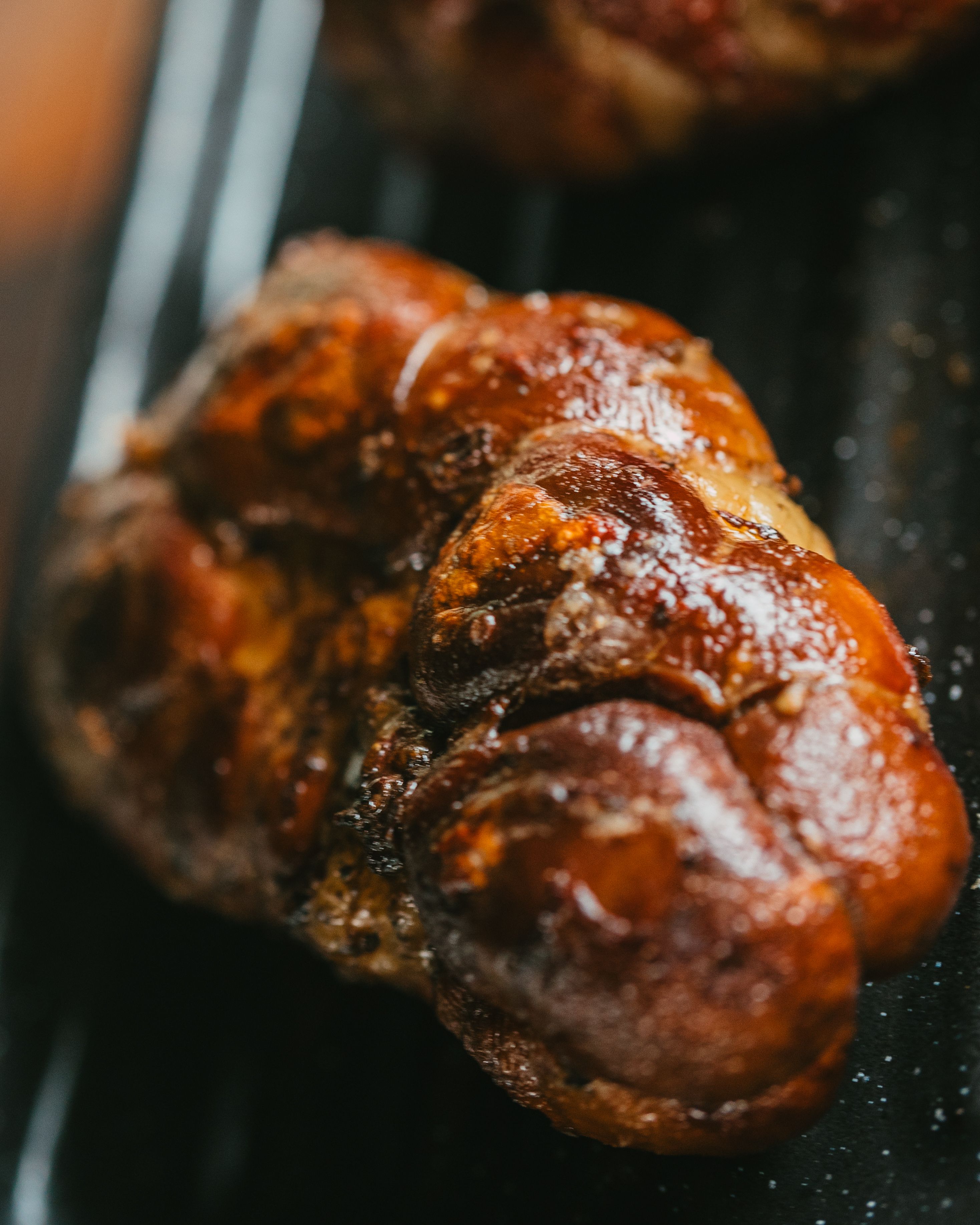
The diets react (see scores below)
Diet Ratings
Ham hock is a collagen-rich, fatty cut with virtually no carbs (0g net carbs). Excellent for keto broths, stews, and provides gelatin and minerals. High fat content supports ketosis.
Ham hock is the ankle joint of a pig, used for flavoring broths and stews. It is animal flesh and bone, explicitly non-vegan.
Unprocessed pork joint with collagen and nutrients, but often cured with salt and nitrates. If uncured and unsalted, approaches approval; commercial versions typically contain additives.
Some paleo practitioners accept uncured, unsalted ham hocks as a legitimate bone broth ingredient and collagen source, similar to other unprocessed pork cuts.
Processed pork product, cured and high in sodium and saturated fat. Used primarily as a flavoring agent in non-Mediterranean cuisines; contradicts core Mediterranean principles.
Ham hock is a pork joint rich in collagen and connective tissue, excellent for bone broth and gelatin production. Minimally processed when sourced without additives. Provides valuable micronutrients and fat.
Ham hock is a cut of pork used for flavoring broths and stews. Like ham, it is often cured with added sugar and nitrates. Uncured versions exist and are compliant, but most commercial ham hocks contain excluded ingredients. Label verification is essential.
Some Whole30 practitioners use ham hocks for bone broth bases when sourced from reputable suppliers with no added sugar, though the official program emphasizes whole meat cuts over processed varieties.
Ham hock is cured pork with minimal FODMAP content. Used primarily for flavoring broths and stews; the meat itself contains no significant FODMAPs. Standard culinary portions are safe.
Ham hock is a fatty, cured pork cut with extremely high sodium from curing and smoking processes (1000+ mg per serving). High saturated fat and cholesterol. Contradicts DASH lean protein and sodium restrictions.
Ham hock is primarily collagen and fat with minimal usable protein (~10g per 3oz). It contains very high saturated fat (8-12g per serving) and is heavily processed. It cannot be easily incorporated into a Zone-balanced meal without exceeding fat macros while failing to meet protein requirements. This is a poor Zone building block.
Processed pork product high in saturated fat and sodium. Contains nitrates and nitrites used in curing. Collagen-rich but the processing and inflammatory profile outweigh any potential benefits. Linked to increased inflammatory markers.
Ham hock is primarily connective tissue and fat (15-20g fat per 100g, mostly saturated). Protein content is moderate (12-15g per 100g) but fat-to-protein ratio is poor for GLP-1 patients. High fat content worsens nausea, bloating, and reflux. The collagen-rich nature makes it difficult to digest in the context of slowed gastric emptying.
Nutritional profile
Six traits that cut across every diet.
Fiber & Plants
How much whole-plant food and fiber it delivers.
Healthy Fats
The quality of its fats (unsaturated, omega-3).
Whole / Unprocessed
How close it is to its natural, unprocessed form.
Gut Gentle
How easy it is on digestion (low FODMAP, few irritants).
Low Glycemic
How little it spikes your blood sugar.
Protein Density
How much protein it packs per calorie.
Controversy Index
Score range: 1–9/10. Higher controversy = more disagreement between diets.
Diet-Specific Tips for Ham hock
 Keto — 9/10
- 0g net carbs
- Very high fat and collagen
- Ideal for bone broth
- Nutrient-dense
 Paleo — 5/10
- Curing method critical
- Salt content variable
- Nitrate presence in commercial versions
- Collagen-rich if unprocessed
 Carnivore — 8/10
- High collagen content
- Excellent for bone broth
- Minimal processing required
- Rich in fat and minerals
 Whole30 — 5/10
- Often cured with added sugar
- Nitrates and preservatives typical
- Uncured versions are compliant
- Requires label verification
 Low-FODMAP — 9/10
- Cured pork product with negligible FODMAP
- Typically used in small flavoring portions
- No added high-FODMAP ingredients