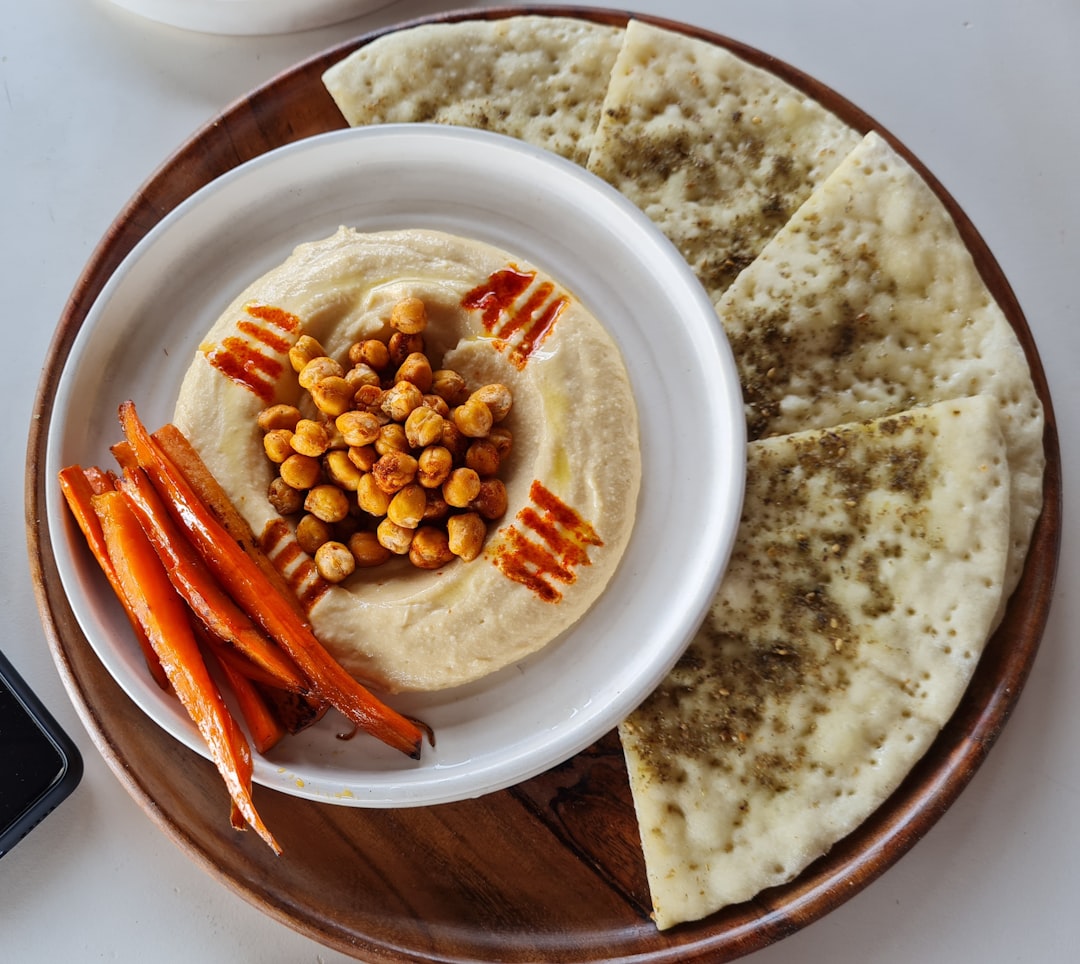
Hummus with pita
Rated by 11 diets
The diets react (see scores below)
Diet Ratings
Pita bread is refined grain (35g+ net carbs per serving). Hummus alone is moderate carbs (6g per 2oz). Combined, incompatible with keto.
Both hummus (chickpeas, tahini, lemon, garlic) and pita bread are plant-based whole foods. No animal products or derivatives.
Hummus is made from chickpeas (legumes), which are explicitly excluded from paleo diet due to lectins and anti-nutrients. Pita bread is made from wheat flour (grain), also excluded. This combination violates core paleo principles on both components.
Hummus (chickpeas, tahini, olive oil, lemon) is a Mediterranean staple legume-based food. Whole grain pita is acceptable. Both align with Mediterranean emphasis on legumes, plant-based foods, and olive oil.
Hummus is made from chickpeas (legume) and tahini (sesame seed paste). Pita is wheat bread (grain). Both are plant-derived and explicitly excluded from carnivore diet. Contains no animal products.
Hummus contains chickpeas (legumes), which are explicitly excluded. Pita is made from grains (wheat), also explicitly excluded.
Hummus is made from chickpeas (legumes high in GOS—galacto-oligosaccharides). Pita bread contains wheat (fructans). Both components are high-FODMAP.
Hummus: chickpeas provide fiber, protein, potassium, magnesium. Tahini adds unsaturated fat. Whole-wheat pita adds fiber and whole grains. Low sodium if homemade or low-sodium brand. Excellent DASH snack.
Hummus provides lean protein (chickpeas) and monounsaturated fat (tahini/olive oil), but pita is high-glycemic refined carb. Macros can balance if portion-controlled (small pita, measured hummus). Better as vegetable dip.
Whole wheat pita scores slightly higher (6); white pita scores lower (4). Some practitioners avoid pita entirely and use hummus with vegetables only.
Hummus is made from chickpeas (legumes with fiber and polyphenols), tahini (sesame seeds with antioxidants), olive oil, and garlic—all anti-inflammatory staples. Whole wheat pita adds fiber and whole grains. This combination provides plant-based protein, healthy fats, and antioxidants. Excellent anti-inflammatory snack.
Hummus provides protein (3-4g per 2 tbsp) and fiber (2-3g per 2 tbsp) from chickpeas, but also fat (5-7g per 2 tbsp, mostly unsaturated). Pita is refined carbohydrate with minimal fiber. Combined serving is moderate calorie density (200+ cal) and may feel heavy. Better as a small side with vegetables than as a main snack. Portion control essential.
Nutritional profile
Six traits that cut across every diet.
Fiber & Plants
How much whole-plant food and fiber it delivers.
Healthy Fats
The quality of its fats (unsaturated, omega-3).
Whole / Unprocessed
How close it is to its natural, unprocessed form.
Gut Gentle
How easy it is on digestion (low FODMAP, few irritants).
Low Glycemic
How little it spikes your blood sugar.
Protein Density
How much protein it packs per calorie.
Controversy Index
Score range: 1–9/10. Higher controversy = more disagreement between diets.
Diet-Specific Tips for Hummus with pita
 Vegan — 9/10
- 100% plant-based
- Whole food ingredients
- Nutritionally complete
- No animal derivatives
 Mediterranean — 8/10
- Legume-based (chickpeas)
- Contains olive oil and tahini
- Traditional Mediterranean dish
- Whole grain pita preferred
 DASH — 8/10
- Legume-based protein and fiber
- Rich in potassium and magnesium
- Whole-grain pita preferred
- Check store-bought sodium content
 Zone — 5/10
- Pita is high-glycemic
- Hummus has good protein/fat
- Portion-critical
- Better with vegetables than pita
 Anti-Inflammatory — 8/10
- legume base (chickpeas)
- tahini (sesame antioxidants)
- extra virgin olive oil
- garlic (anti-inflammatory spice)
- whole grain pita
- fiber and plant protein
 GLP-1 Friendly — 5/10
- moderate protein
- moderate fiber
- moderate fat
- refined carbohydrate (pita)
- calorie-dense
- portion-sensitive