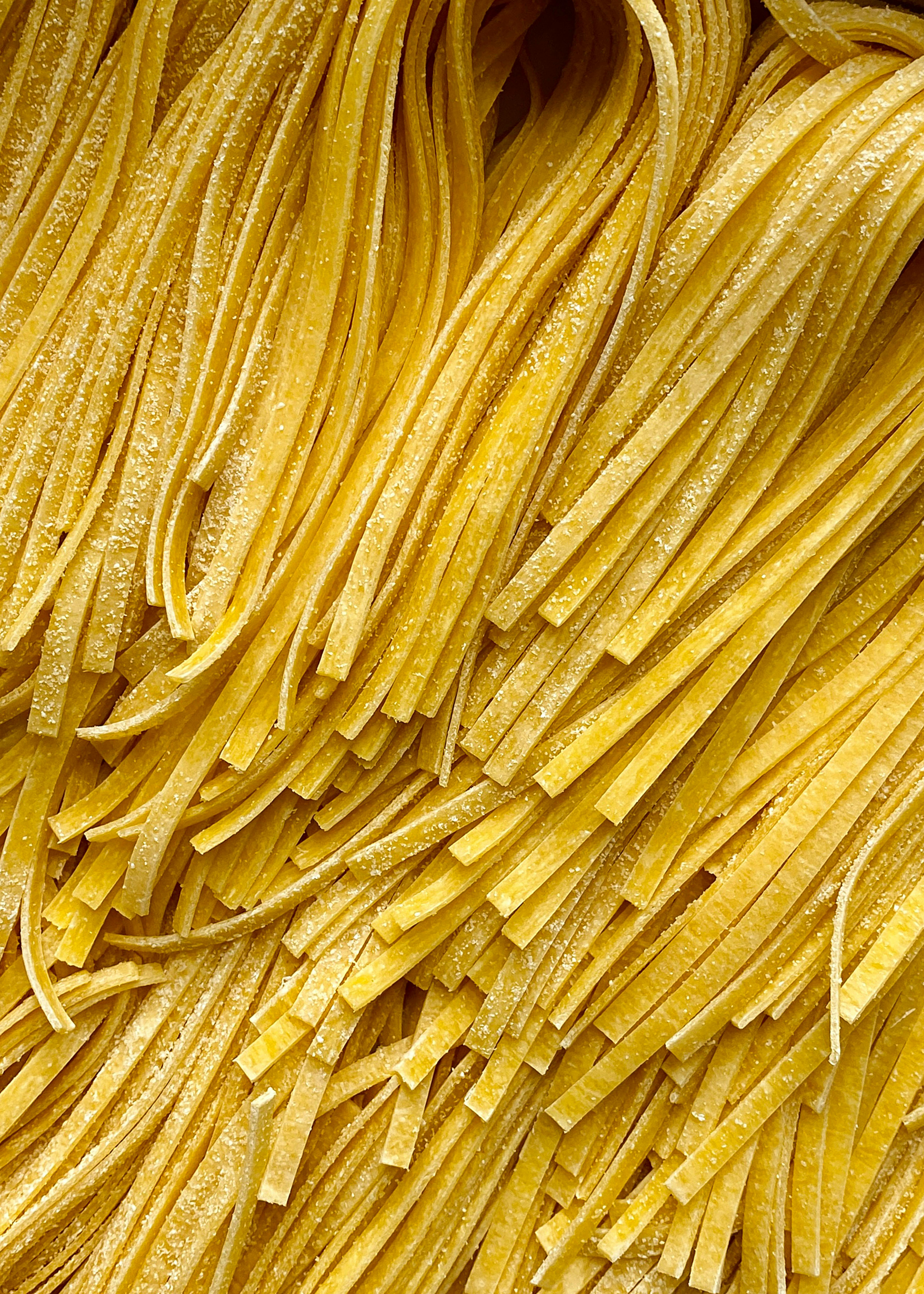
The diets react (see scores below)
Diet Ratings
Linguine is a grain-based pasta with approximately 40g net carbs per cooked cup. Directly incompatible with keto macros and will immediately disrupt ketosis. Zero tolerance for grains.
Linguine is typically made from durum wheat semolina and water (vegan), but many commercial brands add eggs. Most dried pasta is egg-free, but fresh pasta often contains eggs. Vegan versions are widely available.
Some vegans consider standard egg-containing pasta acceptable if the eggs come from backyard or ethically-treated hens, though this is a minority position and not aligned with mainstream vegan organizations.
Pasta made from wheat grain. Grains are explicitly excluded from paleo diet; linguine is a processed grain product.
Refined grain pasta. Mediterranean diet emphasizes whole grains; refined pasta lacks fiber and nutrients. However, pasta is traditional in Mediterranean cuisine (Italy, Greece). Whole grain linguine would be preferred; refined version acceptable occasionally in small portions.
Traditional Italian Mediterranean cuisine includes refined pasta regularly as a staple; modern health guidelines prefer whole grains, but some Mediterranean diet interpretations accept refined pasta in moderation as part of cultural tradition.
Linguine is a pasta made from wheat grain, a plant-derived carbohydrate source. Explicitly excluded from carnivore diet. Contains gluten and high carbohydrate content incompatible with carnivore principles.
Linguine is a pasta made from wheat, which is an explicitly excluded grain on the Whole30 program. Additionally, pasta falls under the category of recreating non-compliant baked goods and carbohydrate-heavy processed foods that the program prohibits.
Standard linguine is made from wheat flour, which is high in fructans (a type of oligosaccharide FODMAP). Monash University rates wheat pasta as high-FODMAP. Even small to moderate servings exceed safe FODMAP thresholds during elimination phase. Gluten-free pasta alternatives are recommended.
Linguine is a refined pasta (unless whole wheat). DASH emphasizes whole grains; refined pasta lacks fiber and has higher glycemic index. Acceptable in moderation as part of portion-controlled meals, but whole grain alternatives are preferred.
Linguine (pasta) is a refined grain carbohydrate with moderate-to-high glycemic index. One cup cooked linguine contains ~40g carbs (~37g net carbs) and minimal protein (~7g). It is classified as an 'unfavorable' carb in Zone. It can be used in small portions (~1/3 cup = ~1 carb block) but requires careful pairing and is not preferred compared to low-glycemic vegetables.
Refined pasta made from white wheat flour lacks the fiber and polyphenol density of whole grain alternatives. Refined carbohydrates can spike blood glucose and insulin, promoting inflammatory pathways. Whole wheat linguine would score higher. Acceptable in moderation with anti-inflammatory accompaniments (olive oil, vegetables, herbs).
Mainstream nutrition considers pasta a reasonable staple; anti-inflammatory protocols strongly prefer whole grain or legume-based pasta to minimize glycemic impact and maximize fiber and polyphenol content.
Linguine (refined pasta) provides 7-8g protein and 2g fiber per cooked cup, but is calorie-dense (220 calories per cup) with low protein density relative to volume. Refined grains lack sustained satiety compared to whole grains or protein-rich alternatives. May cause bloating in some GLP-1 patients. Whole wheat linguine is preferable (4g fiber per cup). Best used in small portions (1/4-1/3 cup) paired with high-protein sauce.
Nutritional profile
Six traits that cut across every diet.
Fiber & Plants
How much whole-plant food and fiber it delivers.
Healthy Fats
The quality of its fats (unsaturated, omega-3).
Whole / Unprocessed
How close it is to its natural, unprocessed form.
Gut Gentle
How easy it is on digestion (low FODMAP, few irritants).
Low Glycemic
How little it spikes your blood sugar.
Protein Density
How much protein it packs per calorie.
Controversy Index
Score range: 1–5/10. Higher controversy = more disagreement between diets.
Diet-Specific Tips for Linguine
 Vegan — 5/10
- Wheat-based pasta
- Dried versions typically vegan; fresh versions often contain eggs
- Check ingredient label for eggs
- Vegan alternatives readily available
 Mediterranean — 4/10
- Refined grain
- Traditional in some regions
- Lower fiber than whole grain
- Portion control important
 DASH — 5/10
- Refined grain (if not whole wheat)
- Low fiber
- Higher glycemic index
- Whole wheat version preferred
- Portion control needed
 Zone — 4/10
- Refined grain
- High glycemic index
- Low protein
- Requires careful portioning
- Unfavorable carb classification
 Anti-Inflammatory — 4/10
- refined carbohydrate
- low fiber
- low polyphenol content
- glycemic impact
- whole grain alternative preferred
 GLP-1 Friendly — 4/10
- low protein density
- refined carbohydrate
- calorie-dense for volume
- low fiber (refined version)