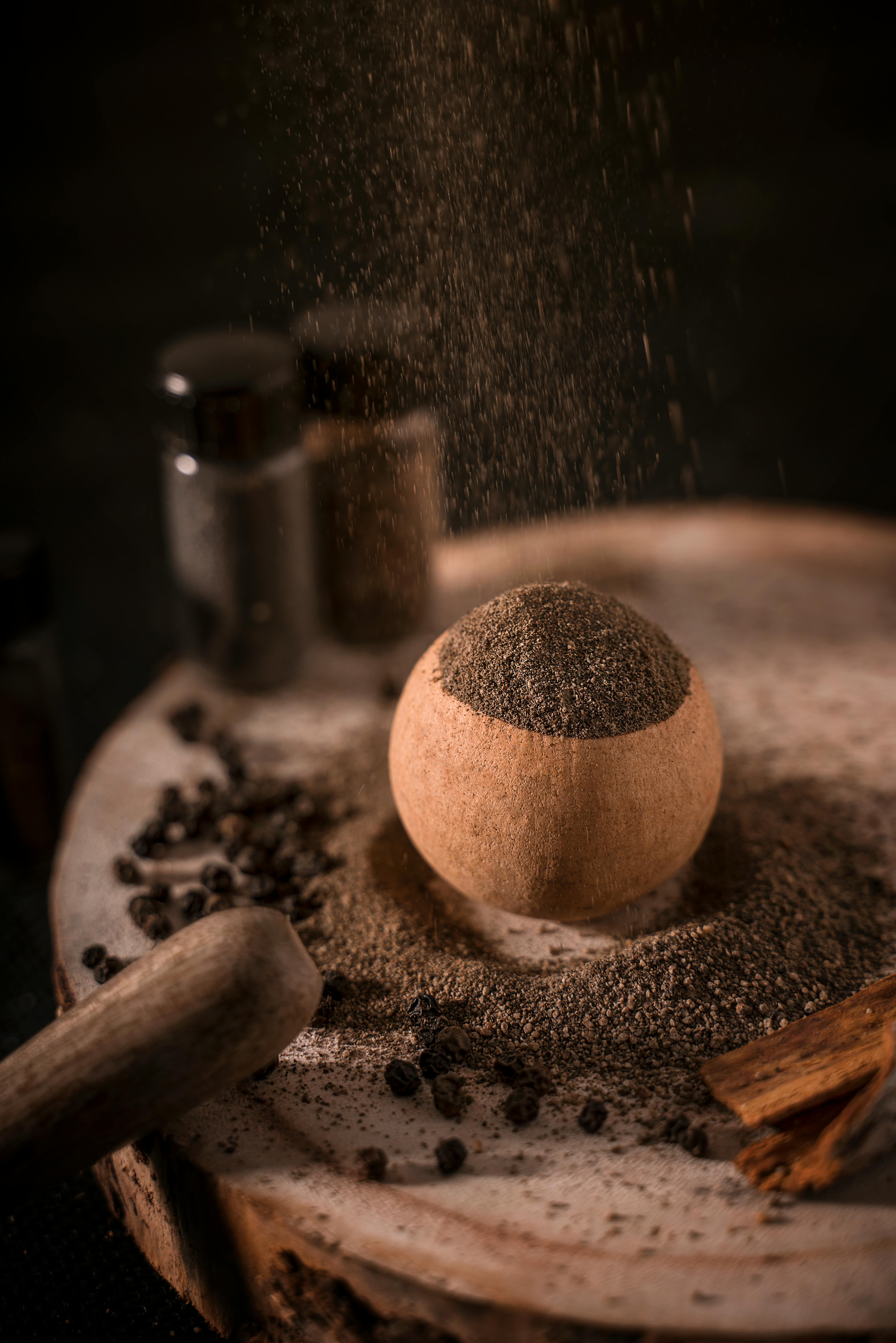
Pepper soup spice
Rated by 11 diets
The diets react (see scores below)
Diet Ratings
Pepper soup spice is a spice blend with negligible net carbs per serving (typically <1g per teaspoon). Used in small quantities for flavoring. No added sugars in pure blends. Excellent for keto cooking.
Pepper soup spice is a blend of dried peppers and spices with no animal products. Standard formulations contain only plant-based ingredients.
Pepper soup spice is a blend of dried peppers and spices (typically black pepper, cayenne, ginger, etc.). Unprocessed dried herbs and spices are paleo-approved. No grains, legumes, or additives in traditional blends.
Pepper soup spice is a blend of dried peppers and spices with no added sugars, unhealthy fats, or processing concerns. Spices are encouraged in Mediterranean diet as flavor enhancers that reduce reliance on salt and added fats. Supports plant-forward cooking.
Spice blend derived from plants (peppers, herbs, seeds). Carnivore diet excludes all spices and plant-based seasonings; salt and animal fats are the only approved seasonings.
Pepper soup spice is a blend of whole spices and seasonings with no excluded ingredients. Spices and seasonings are explicitly allowed on Whole30. As long as it contains no added sugar, MSG (now allowed per 2024 rules), or other excluded ingredients, it is fully compliant.
Pepper soup spice blends typically contain black pepper, chili, and other spices. Individual spices (black pepper, chili powder, turmeric, etc.) are low-FODMAP when used in typical culinary amounts. However, the exact composition of commercial blends may vary, and some blends might contain garlic or onion powder, which are high-FODMAP.
Without ingredient verification, some commercial pepper soup spice blends may contain garlic powder or onion powder as hidden FODMAP sources; check the label for these additives before use.
Pepper soup spice is a blend of dried spices and herbs with minimal sodium and no added sugars or fats. Spices are encouraged in DASH to enhance flavor without dietary burden. Supports the DASH principle of using seasonings instead of salt.
Pepper soup spice is a spice blend with negligible carbohydrates, protein, and fat per serving. Spices add flavor and polyphenols without macronutrient impact. Supports Zone anti-inflammatory focus.
Pepper soup spice blends typically contain black pepper (piperine), chili peppers (capsaicin), and warming spices like ginger and turmeric. All are anti-inflammatory. Piperine enhances curcumin bioavailability. The combination of multiple anti-inflammatory spices makes this a strong anti-inflammatory seasoning.
Pepper soup spice blends typically contain black pepper, cayenne, and other warming spices. While spices themselves are calorie-free and nutrient-dense, the heat level can trigger GLP-1 side effects (reflux, nausea, gastric irritation). Acceptable in very small amounts for flavoring; not recommended as a primary seasoning for patients with GI sensitivity.
Some GLP-1 clinicians note that mild spice blends do not worsen symptoms in most patients and can enhance meal enjoyment; others recommend strict avoidance of any warming spices during the first 4-6 weeks of GLP-1 therapy when GI side effects peak.
Nutritional profile
Six traits that cut across every diet.
Fiber & Plants
How much whole-plant food and fiber it delivers.
Healthy Fats
The quality of its fats (unsaturated, omega-3).
Whole / Unprocessed
How close it is to its natural, unprocessed form.
Gut Gentle
How easy it is on digestion (low FODMAP, few irritants).
Low Glycemic
How little it spikes your blood sugar.
Protein Density
How much protein it packs per calorie.
Controversy Index
Score range: 1–9/10. Higher controversy = more disagreement between diets.
Diet-Specific Tips for Pepper soup spice
 Keto — 8/10
- Minimal net carbs per serving
- Whole spice blend
- No added sugars
- Used in small portions
 Vegan — 9/10
- Plant-based spice blend
- No animal derivatives
- Whole food ingredients
 Paleo — 8/10
- Dried spices and peppers
- Unprocessed
- No additives in traditional form
- Paleo-compatible seasoning
 Mediterranean — 8/10
- spice blend
- plant-based
- minimal processing
- no added sugars or unhealthy fats
- flavor enhancement
 Whole30 — 9/10
- Spice blend
- No excluded ingredients
- Whole30-approved category
 Low-FODMAP — 8/10
- Spices are generally low-FODMAP in culinary amounts
- Risk of garlic or onion powder in commercial blends
- Label verification recommended
 DASH — 8/10
- Minimal sodium
- Zero calories per serving
- Herb and spice-based
- Enhances flavor without salt
 Zone — 8/10
- Spice blend
- Negligible macronutrients
- Polyphenol-rich
- Anti-inflammatory
 Anti-Inflammatory — 8/10
- piperine (black pepper)
- capsaicin (chili)
- likely contains ginger and turmeric
- synergistic anti-inflammatory effects
 GLP-1 Friendly — 4/10
- heat-based spice blend
- may trigger reflux/nausea
- zero calorie in condiment amounts
- individual tolerance critical
- timing relative to injection may matter