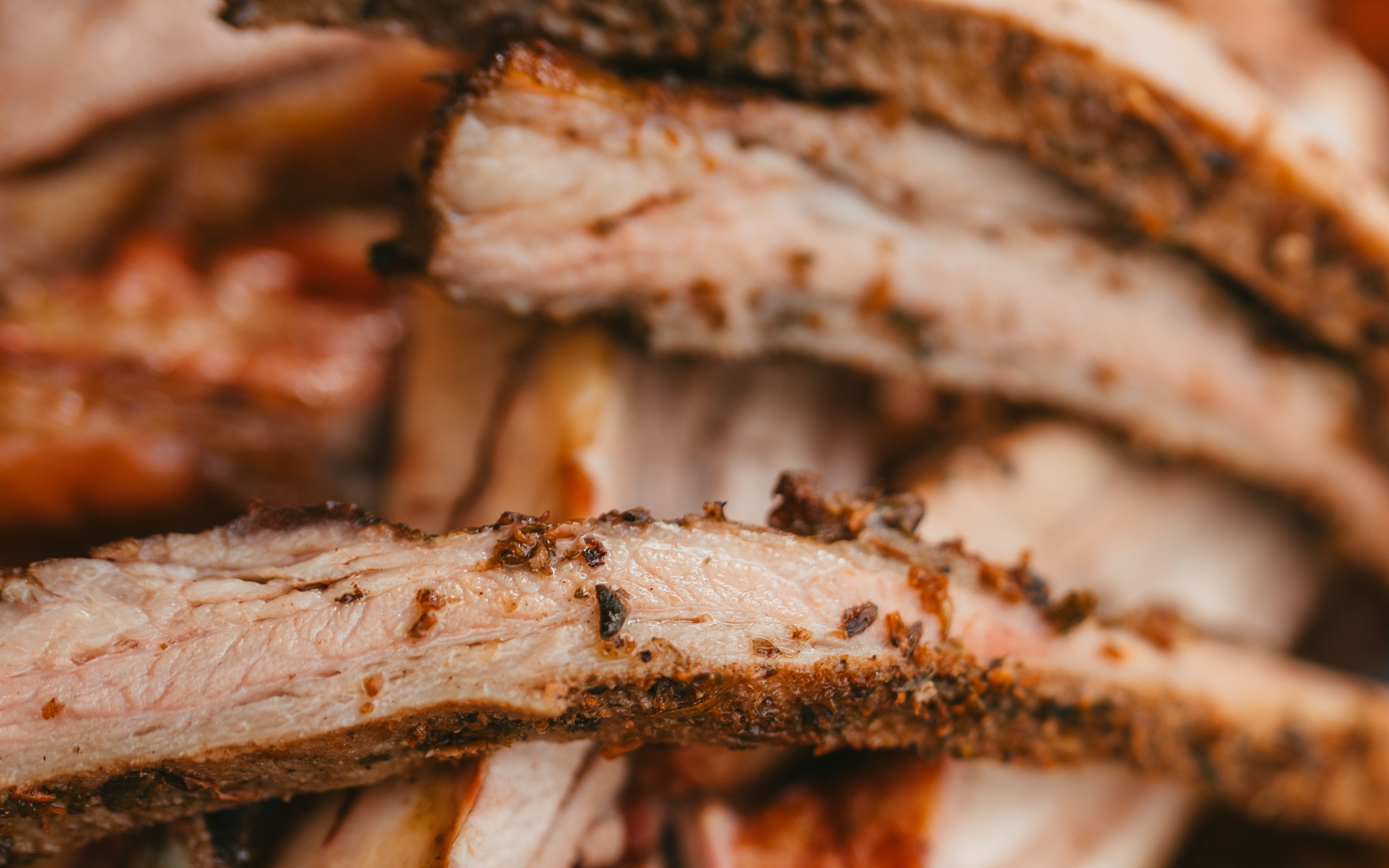
The diets react (see scores below)
Diet Ratings
Zero carbs, high fat content (15-20g per 3oz), excellent protein. Fatty cut ideal for keto macros.
Pork brisket is a cut of pork meat, an animal product explicitly excluded from the vegan diet.
Pork brisket is an unprocessed cut of pork meat. Rich in protein, fat, and collagen. Excellent for paleo diet when not cured or processed.
Pork brisket is a fatty cut of red meat high in saturated fat. Mediterranean diet limits red meat to a few times monthly; brisket's high fat content makes it particularly misaligned with dietary principles. Lean poultry or fish are preferred alternatives.
Pork brisket is a fatty cut of pork meat that is ideal for the carnivore diet. It provides excellent protein, fat content, and micronutrients. It is minimally processed and aligns perfectly with carnivore principles.
Pork brisket is a whole cut of pork meat with no added ingredients. Meat is explicitly allowed and encouraged on Whole30.
Plain pork brisket (unprocessed, unseasoned) is low-FODMAP. Meat contains no fructans, GOS, lactose, excess fructose, or polyols. Standard serving (100-150g) is safe during elimination phase. Monash rates all plain meats as low-FODMAP.
Fatty cut of pork with high saturated fat content (8-10g per 3oz cooked). DASH limits red meat and saturated fat. Brisket is among the fattiest pork cuts and conflicts with DASH emphasis on lean proteins.
Pork brisket is a fattier cut with ~20–25g protein and ~15–18g fat per 3 oz cooked (depending on trim). The saturated fat content (~6–7g per 3 oz) exceeds Zone preferences for monounsaturated sources. Can be used in smaller portions (2 oz) as a protein block, but requires careful integration with monounsaturated fats to maintain 40/30/30 ratio without excessive saturated fat.
Pork brisket is a fatty cut of red meat with high saturated fat and arachidonic acid content. It is explicitly the type of food the anti-inflammatory diet recommends limiting. Regular consumption is associated with elevated inflammatory markers. This cut should be avoided or consumed very rarely.
Pork brisket is a fatty cut with high saturated fat (17g per 3 oz cooked) and calories (310 per 3 oz). It's difficult to digest and will worsen nausea, bloating, and reflux in GLP-1 patients. The fat-to-protein ratio is unfavorable for this population.
Nutritional profile
Six traits that cut across every diet.
Fiber & Plants
How much whole-plant food and fiber it delivers.
Healthy Fats
The quality of its fats (unsaturated, omega-3).
Whole / Unprocessed
How close it is to its natural, unprocessed form.
Gut Gentle
How easy it is on digestion (low FODMAP, few irritants).
Low Glycemic
How little it spikes your blood sugar.
Protein Density
How much protein it packs per calorie.
Controversy Index
Score range: 1–10/10. Higher controversy = more disagreement between diets.
Diet-Specific Tips for Pork brisket
 Keto — 9/10
- 0g net carbs
- High fat content
- High protein
- Supports ketosis
 Paleo — 9/10
- unprocessed meat cut
- high protein and fat
- collagen-rich
- nutrient-dense
 Carnivore — 9/10
- Animal-derived meat
- Fatty cut preferred on carnivore
- Complete protein and fat source
- Minimally processed
- Nutrient-dense
 Whole30 — 10/10
- Whole meat protein
- No processing or additives
- Explicitly allowed category
 Low-FODMAP — 9/10
- Protein-based — no fermentable carbohydrates
- Monash-approved
- Avoid processed/seasoned varieties with garlic/onion
- Standard serving size is low-FODMAP
 Zone — 5/10
- High saturated fat (~6–7g per 3 oz)
- Moderate protein (~20–25g per 3 oz)
- Fattier cut (unfavorable for Zone)
- Requires portion control
- Better as occasional protein choice