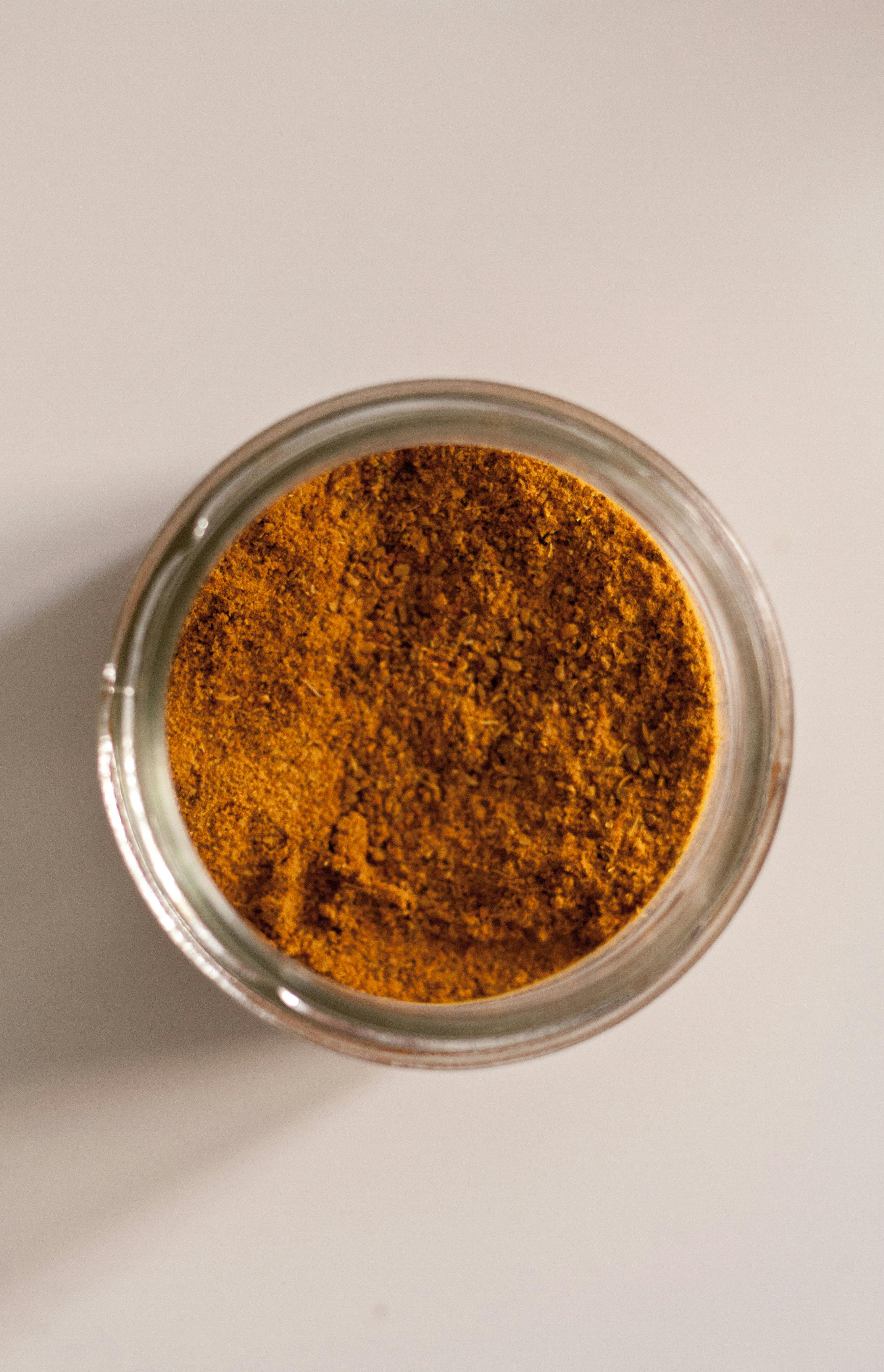
Ras el hanout
Rated by 11 diets
The diets react (see scores below)
Diet Ratings
Ras el hanout is a spice blend with negligible net carbs per serving (<1g per teaspoon). No added sugars in pure blends. Excellent for flavoring keto meals. Used in small quantities.
Ras el hanout is a North African spice blend made from dried spices and herbs with no animal products. Standard formulations contain only plant-based ingredients.
Ras el hanout is a traditional spice blend of dried herbs and spices (cumin, coriander, paprika, cinnamon, etc.). Unprocessed dried spices are paleo-approved. No grains, legumes, or additives in traditional blends.
Ras el hanout is a North African spice blend (cumin, coriander, cinnamon, paprika, etc.) with no added sugars, unhealthy fats, or processing concerns. Spices are encouraged in Mediterranean diet as flavor enhancers. North African Mediterranean cuisines traditionally use such blends. Supports plant-forward cooking.
Complex spice blend containing multiple plant-derived spices (cumin, coriander, cinnamon, turmeric, paprika, etc.). Carnivore diet excludes all spices and plant-based seasonings.
Ras el hanout is a North African spice blend typically containing spices like cumin, coriander, paprika, cinnamon, and others with no excluded ingredients. Spices and seasonings are explicitly allowed on Whole30. As long as it contains no added sugar or other excluded ingredients, it is fully compliant.
Ras el hanout is a North African spice blend typically containing cumin, coriander, paprika, turmeric, cinnamon, and other spices. Individual spices are low-FODMAP in culinary amounts. However, some commercial blends may contain garlic powder or onion powder, which are high-FODMAP.
Commercial ras el hanout blends vary widely; some may contain hidden garlic powder or onion powder as FODMAP sources. Label verification is essential before use during the elimination phase.
Ras el hanout is a spice blend with minimal sodium and no added sugars or fats. It contains beneficial spices like cumin, coriander, and turmeric with anti-inflammatory properties. Aligns with DASH principle of using herbs and spices to enhance flavor without dietary burden.
Ras el hanout is a spice blend with negligible macronutrients per serving. Contains polyphenol-rich spices (cumin, coriander, cinnamon, etc.) that support Zone anti-inflammatory principles. Adds flavor without macronutrient impact.
Ras el hanout is a North African spice blend typically containing turmeric, ginger, cinnamon, cumin, coriander, paprika, and chili peppers. Nearly all components are potent anti-inflammatory spices with curcumin, gingerol, cinnamaldehyde, and capsaicin. Synergistic anti-inflammatory effects make this an excellent seasoning choice.
Ras el hanout is a spice blend (cumin, coriander, cinnamon, ginger, turmeric, etc.) with zero calories, zero fat, zero sugar, and no protein but adds significant flavor to dishes. Supports nutrient-dense meal preparation without caloric burden. Most spices in the blend are mild; not typically very spicy. Aids palatability of GLP-1-friendly foods.
Nutritional profile
Six traits that cut across every diet.
Fiber & Plants
How much whole-plant food and fiber it delivers.
Healthy Fats
The quality of its fats (unsaturated, omega-3).
Whole / Unprocessed
How close it is to its natural, unprocessed form.
Gut Gentle
How easy it is on digestion (low FODMAP, few irritants).
Low Glycemic
How little it spikes your blood sugar.
Protein Density
How much protein it packs per calorie.
Controversy Index
Score range: 1–9/10. Higher controversy = more disagreement between diets.
Diet-Specific Tips for Ras el hanout
 Keto — 9/10
- Minimal net carbs per serving
- Whole spice blend
- No added sugars
- Used in small portions
 Vegan — 9/10
- Plant-based spice blend
- No animal derivatives
- Whole food spices
 Paleo — 9/10
- Dried spices and herbs
- Unprocessed
- No additives in traditional form
- Paleo-compatible seasoning
 Mediterranean — 8/10
- spice blend
- plant-based
- no added sugars or unhealthy fats
- traditional North African Mediterranean
- flavor enhancement
 Whole30 — 9/10
- Spice blend
- No excluded ingredients
- Whole30-approved category
 Low-FODMAP — 7/10
- Spices are generally low-FODMAP in culinary amounts
- Risk of garlic or onion powder in commercial blends
- Label verification recommended
 DASH — 8/10
- Minimal sodium
- Zero calories per serving
- Herb and spice-based
- Anti-inflammatory spices
 Zone — 8/10
- Spice blend
- Negligible macronutrients
- Polyphenol-rich
- Anti-inflammatory
 Anti-Inflammatory — 9/10
- turmeric (curcumin)
- ginger (gingerol)
- cinnamon (cinnamaldehyde)
- chili peppers (capsaicin)
- synergistic anti-inflammatory effects
 GLP-1 Friendly — 8/10
- zero calorie flavoring
- mild spice blend (not very hot)
- aids palatability
- easy to digest
- no fat or sugar