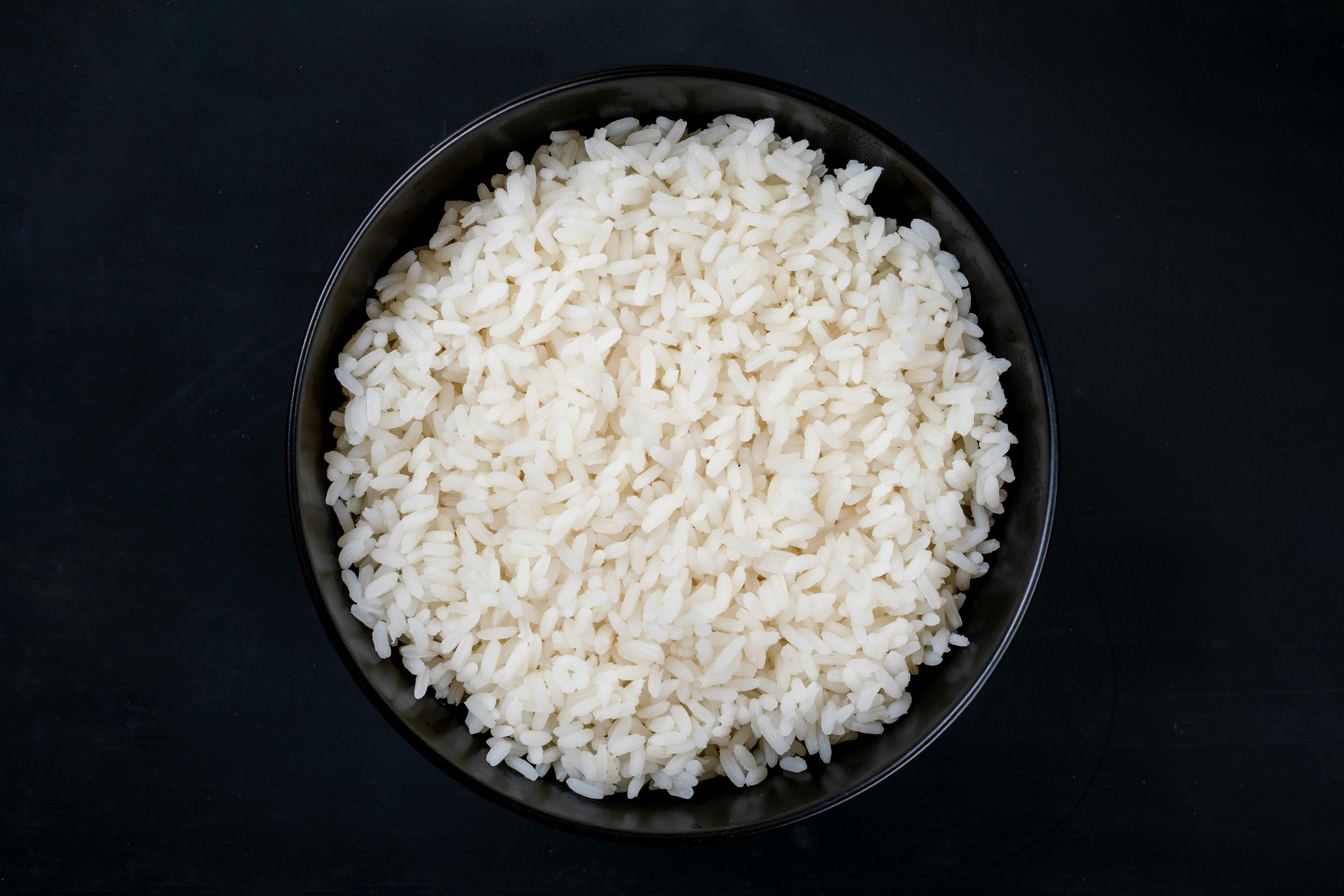
The diets react (see scores below)
Diet Ratings
Refined grain with ~28g net carbs per cooked cup. Rapidly absorbed carbohydrates spike blood glucose and insulin, incompatible with ketosis.
Whole grain staple with no animal products or derivatives. Unprocessed plant food.
Rice is a grain and explicitly excluded from paleo diet. However, Paul Jaminet's Perfect Health Diet (respected in paleo community) includes white rice as a 'safe starch' due to low anti-nutrient content compared to other grains.
Paul Jaminet's Perfect Health Diet specifically recommends white rice as a safe starch, arguing it is lower in anti-nutrients than other grains and provides beneficial carbohydrates. Some paleo practitioners follow this protocol.
White rice is refined grain with lower fiber and nutrient density than whole grains. Some traditional Mediterranean cuisines include rice (Spain, Italy risotto), but modern guidelines emphasize whole grains.
Traditional Mediterranean regions, particularly Spain and southern Italy, have long histories of white rice consumption in paella and risotto dishes, making white rice acceptable in moderation within authentic Mediterranean practice.
Grain crop, plant-derived carbohydrate. Directly excluded from carnivore diet. No animal component. Pure plant food incompatible with carnivore principles.
Rice is a grain and explicitly excluded from Whole30 for the full 30 days. All grains including rice, white rice, and brown rice are not permitted.
White and brown rice are low-FODMAP staples. Monash University rates rice as low-FODMAP at generous servings (1 cup cooked). Rice contains no fructans, GOS, lactose, or polyols. It is a safe carbohydrate base during the elimination phase and is widely recommended by FODMAP practitioners.
White rice is refined grain; DASH emphasizes whole grains. Brown rice is acceptable but less emphasized than oats or whole wheat. White rice lacks fiber and has higher glycemic index. Portion control essential.
White rice is classified as 'unfavorable' in Zone due to high glycemic index and rapid blood sugar spike. Brown rice is slightly better but still higher-GI than Zone-preferred low-glycemic carbs (vegetables, legumes). Can fit in small portions (1/3 cup cooked ≈ 1 carb block) but vegetables are strongly preferred as primary carb source.
White rice is a refined carbohydrate with high glycemic index, which can promote inflammation through insulin spikes. Brown rice and wild rice retain fiber and some antioxidants, making them preferable. The anti-inflammatory framework emphasizes whole grains, but rice is a staple in many anti-inflammatory cuisines (Mediterranean, Asian). Context and type matter significantly.
Mainstream anti-inflammatory nutrition (Dr. Weil's pyramid) includes rice as acceptable in moderation, particularly brown rice. However, strict anti-inflammatory and low-glycemic protocols recommend minimizing white rice due to rapid glucose elevation and inflammatory response.
White rice is refined grain with low fiber (0.4g per 100g cooked) and moderate glycemic index. Brown rice is better (1.8g fiber) but both are calorie-dense relative to protein (2.7g per 100g cooked) and volume-dependent for satiety. Acceptable in small portions as part of balanced meal with protein and vegetables.
Nutritional profile
Six traits that cut across every diet.
Fiber & Plants
How much whole-plant food and fiber it delivers.
Healthy Fats
The quality of its fats (unsaturated, omega-3).
Whole / Unprocessed
How close it is to its natural, unprocessed form.
Gut Gentle
How easy it is on digestion (low FODMAP, few irritants).
Low Glycemic
How little it spikes your blood sugar.
Protein Density
How much protein it packs per calorie.
Controversy Index
Score range: 1–10/10. Higher controversy = more disagreement between diets.
Diet-Specific Tips for Rice
 Vegan — 10/10
- Whole plant food
- No processing
- Staple grain
 Mediterranean — 5/10
- refined grain
- lower fiber than whole grains
- traditional in some regions
- portion control important
 Low-FODMAP — 9/10
- No fructans (unlike wheat)
- No GOS (unlike legumes)
- No lactose or polyols
- Safe at standard meal portions (1+ cups cooked)
 DASH — 5/10
- Refined grain (white rice) vs. whole grain (brown rice)
- Low sodium
- Moderate fiber only in brown rice
- Portion-dependent impact on blood sugar
 Zone — 4/10
- High glycemic index (white rice especially)
- Low fiber relative to carb content
- Displaces preferred low-GI carbs
- Portion: ~1/3 cup cooked = 1 carb block
 Anti-Inflammatory — 5/10
- refined carbohydrate (white rice)
- high glycemic index (white)
- low fiber (white)
- brown rice preferable
- portion control important
 GLP-1 Friendly — 5/10
- low protein density
- refined grain (white rice)
- moderate glycemic load
- portion-dependent satiety
- better as brown rice