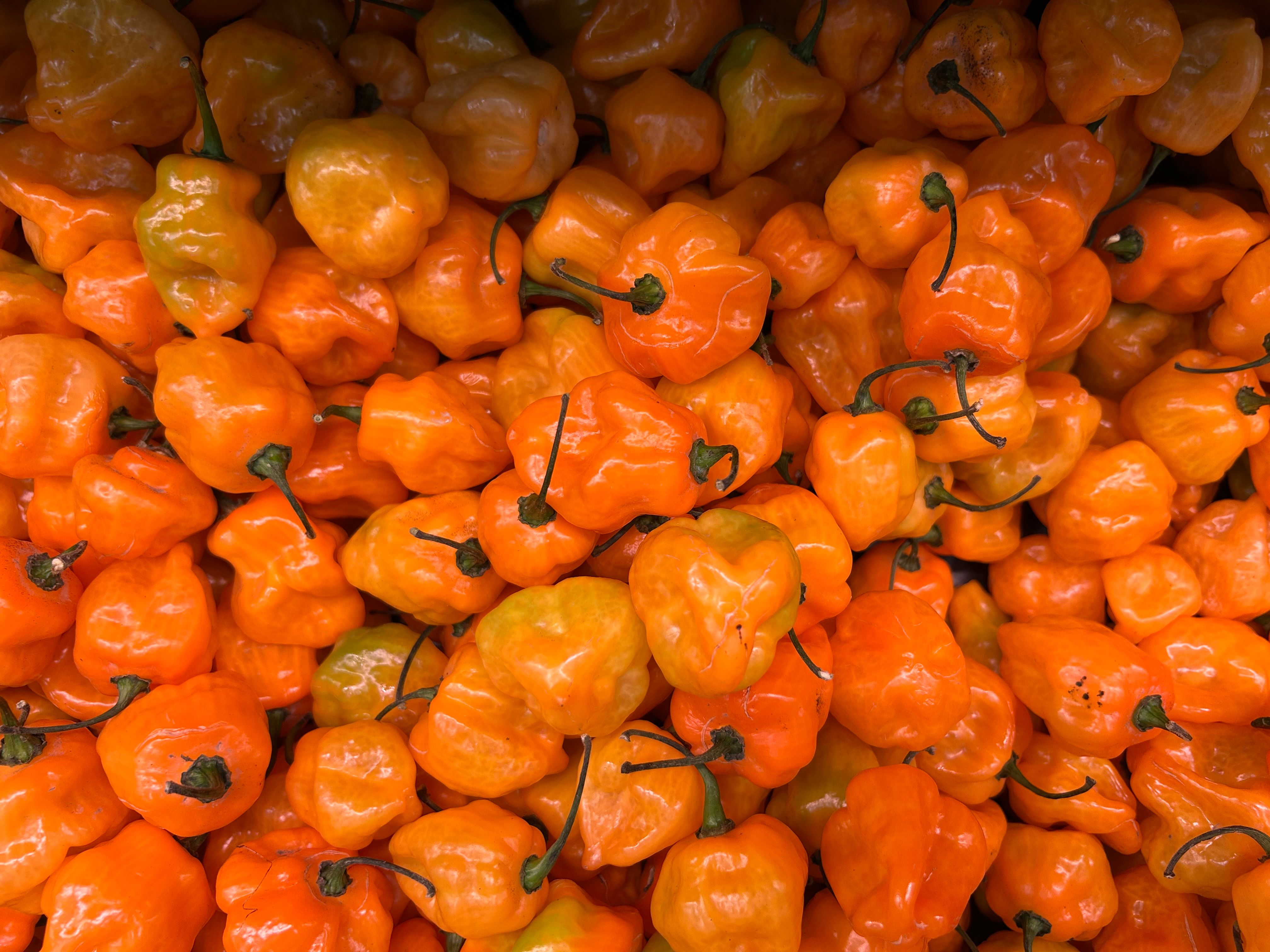
The diets react (see scores below)
Diet Ratings
Hot pepper with ~5g net carbs per 100g, but typically consumed in small amounts (1-2 peppers). Minimal carb impact, adds flavor, supports metabolism.
Whole plant food (chili pepper) with no animal products or derivatives. Unprocessed, nutrient-dense vegetable.
Scotch bonnet is a fresh chili pepper, an unprocessed vegetable available to hunter-gatherers. It contains no anti-nutrients, grains, legumes, or processing concerns. Rich in vitamin C and beneficial compounds.
Fresh chili pepper rich in vitamin C, antioxidants, and phytonutrients. While not traditionally Mediterranean, it aligns perfectly with principles of whole plant foods and adds flavor without salt or fat.
Plant-derived chili pepper. Carnivore diet excludes all vegetables, fruits, and plant foods. Peppers are a primary excluded category regardless of heat level or culinary use.
Scotch bonnet is a whole chili pepper with no excluded ingredients. Peppers and spices are fully compliant with Whole30.
Scotch bonnet peppers are low-FODMAP. Monash rates hot peppers (including scotch bonnets) as low-FODMAP at standard serving sizes. Peppers contain no fructans, GOS, lactose, or polyols. The capsaicin (heat compound) does not affect FODMAP status. They are safe during elimination, though individual tolerance to spice varies.
Hot pepper with negligible sodium and calories. Rich in vitamin C and capsaicin. Supports DASH-friendly seasoning without salt. Enhances flavor of vegetables and lean proteins.
Scotch bonnet peppers are low-glycemic vegetables with minimal carbohydrates (~3g per pepper) and high polyphenol content. Excellent Zone vegetable choice. Can be used freely as part of the 8 daily vegetable servings. Capsaicin provides anti-inflammatory benefits.
Scotch bonnet peppers are chili peppers rich in capsaicin, a potent anti-inflammatory compound that reduces inflammatory markers (TNF-α, IL-6). They also contain high levels of vitamin C and carotenoids. Chili peppers are explicitly emphasized in anti-inflammatory frameworks for their anti-inflammatory and antioxidant properties.
Extremely spicy chile (100,000–350,000 Scoville units). Very spicy foods trigger reflux, nausea, and gastric irritation in GLP-1 patients, especially those with slowed gastric emptying. While capsaicin has metabolic benefits in general populations, GLP-1 patients report consistent worsening of GI side effects with hot peppers.
Controversy Index
Score range: 1–10/10. Higher controversy = more disagreement between diets.
Diet-Specific Tips for Scotch bonnet
 Keto — 9/10
- Low net carbs in typical portions
- High capsaicin content
- Minimal carb impact
- Flavor-dense
 Vegan — 10/10
- Whole plant food
- No processing
- Nutrient-dense
 Paleo — 9/10
- unprocessed vegetable
- nutrient-dense
- no anti-nutrients
- available to hunter-gatherers
 Mediterranean — 8/10
- whole plant food
- nutrient-dense
- no processing
- flavor enhancement
 Whole30 — 10/10
- Whole vegetable/spice
- No excluded ingredients
- Unprocessed
 Low-FODMAP — 8/10
- No fructans, GOS, lactose, or polyols
- Capsaicin does not affect FODMAP status
- Safe at standard culinary portions
- Heat/spice may trigger symptoms in some individuals (not FODMAP-related)
 DASH — 9/10
- Negligible sodium
- High vitamin C content
- Capsaicin may support metabolism
- Excellent salt-free flavoring
 Zone — 8/10
- Low glycemic index
- Minimal net carbs
- High polyphenol content
- Anti-inflammatory capsaicin
- Unlimited portion in Zone context
 Anti-Inflammatory — 8/10
- high capsaicin content
- reduces inflammatory markers
- rich in vitamin C
- carotenoids
- antioxidant-dense