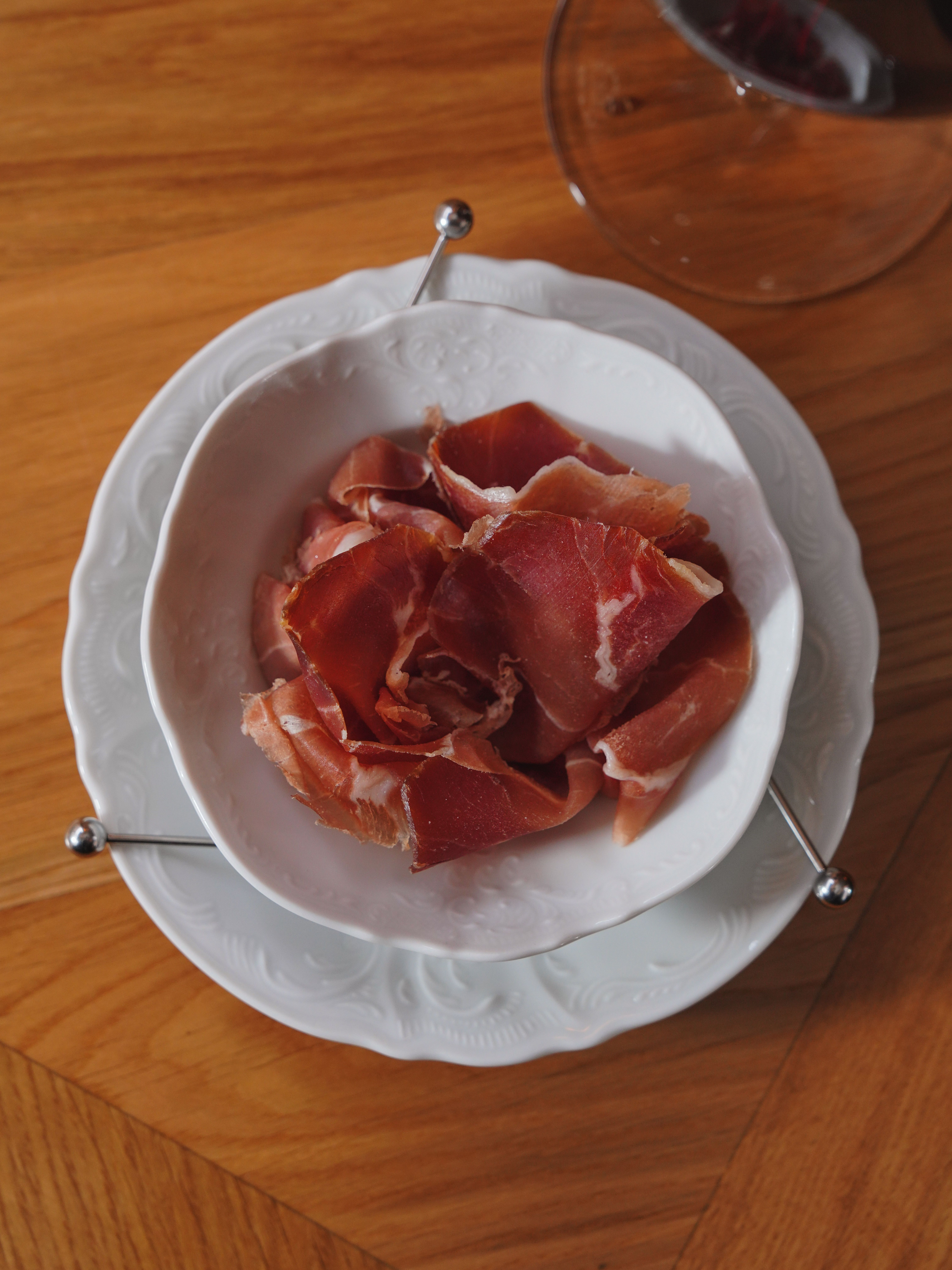
The diets react (see scores below)
Diet Ratings
Cured pork with ~0g net carbs and ~28g protein per 100g. High-quality fat and protein, no carbs. Excellent keto protein source.
Cured pork product. Contains meat (animal product) and is explicitly non-vegan.
Serrano ham is cured pork meat, an unprocessed animal protein available to Paleolithic humans. While curing is a preservation method, it uses salt and time without modern additives. Excellent source of protein and fat.
Cured processed meat high in sodium and saturated fat. While Spanish ham is traditional, red meat and processed meats should be limited to a few times monthly. Use sparingly as flavoring.
Cured pork product from Spain, made from pork meat and salt. Animal-derived, minimally processed. Serrano ham is pure meat with salt curing, containing no plant-based additives or sugar. Excellent carnivore food. Slightly lower score than fresh meat due to processing/curing, but still highly approved.
Serrano ham is cured pork meat with no grains, legumes, dairy, or added sugar (in traditional versions). It is technically compliant as a meat product. However, the Whole30 program discourages relying on processed meats and emphasizes whole foods, so while technically allowed, it tests the spirit of the program.
Official Whole30 guidelines permit uncured and cured meats without added sugar, but the program emphasizes whole, minimally processed foods. Some practitioners argue that daily consumption of cured meats like serrano ham contradicts the whole-food philosophy, though Melissa Urban does not explicitly prohibit it.
Serrano ham is low-FODMAP. It is cured pork with no added carbohydrates, fructans, GOS, lactose, or polyols. Monash rates cured meats and processed meats (without added garlic, onion, or high-fructose ingredients) as low-FODMAP. Serrano ham is safe at standard serving sizes during elimination.
Cured processed meat with very high sodium (approximately 900-1,100mg per ounce). DASH limits sodium and processed red meat. High saturated fat. Minimal nutritional benefit relative to sodium and fat content.
Serrano ham is a lean cured pork product with good protein (~7g per ounce) and minimal carbs. However, it is high in sodium and contains some saturated fat (~3g per ounce). Can serve as a protein block but is not ideal compared to fresh lean proteins. Processed nature and sodium content warrant caution despite acceptable macros.
Some Zone practitioners accept cured meats like serrano ham as reasonable protein sources given their leanness and convenience. Dr. Sears emphasizes whole, unprocessed foods, which would suggest fresh lean proteins are preferable, but serrano ham's macro profile technically fits Zone blocks.
Serrano ham is processed red meat, high in saturated fat and sodium, with potential pro-inflammatory compounds (heme iron, advanced glycation end products from curing). Anti-inflammatory frameworks limit red meat. However, small portions as a flavoring agent may be acceptable. The processing and curing methods add inflammatory concerns beyond fresh red meat.
Some anti-inflammatory sources allow small portions of lean red meat occasionally. Others argue that processed cured meats like serrano ham should be strictly avoided due to nitrates, sodium, and oxidized lipids. The evidence leans toward minimization rather than complete avoidance for general populations.
Excellent protein (29g per 100g) and low carb, but very high fat (28g per 100g, mostly saturated) and sodium (2400mg per 100g). High fat worsens GLP-1 side effects (nausea, bloating). Small portions (1 oz/28g) provide 8g protein with manageable fat. Some RDs recommend it as flavor-dense protein; others limit all processed cured meats due to fat and sodium.
Some GLP-1 specialists view small portions of cured meat as acceptable protein source; others recommend avoiding processed cured meats entirely due to high saturated fat, sodium, and nitrate content, preferring fresh lean proteins.
Controversy Index
Score range: 1–9/10. Higher controversy = more disagreement between diets.
Diet-Specific Tips for Serrano ham
 Keto — 9/10
- Zero net carbs
- High protein
- High fat
- Minimal processing
 Paleo — 8/10
- unprocessed meat
- cured with salt
- no added sugars or nitrates
- nutrient-dense protein
 Mediterranean — 4/10
- processed meat
- high sodium
- high saturated fat
- red meat category
 Carnivore — 8/10
- animal-derived
- pork meat
- salt-cured
- minimal processing
- no plant additives
- no sugar
 Whole30 — 9/10
- Meat product
- No excluded ingredients in traditional versions
- Processed/cured meat
- Label-reading required for added sugars
 Low-FODMAP — 9/10
- Cured pork with minimal carbohydrates
- No fructans, GOS, lactose, or polyols
- No added high-FODMAP ingredients (garlic, onion)
- Safe at standard meat portions
 Zone — 5/10
- Good protein content
- Minimal carbohydrates
- High sodium content
- Processed/cured product
- Moderate saturated fat
 Anti-Inflammatory — 4/10
- processed red meat
- high saturated fat
- high sodium
- curing compounds (nitrates)
- portion control critical
 GLP-1 Friendly — 5/10
- high protein
- very high saturated fat
- very high sodium
- triggers nausea/bloating
- portion-dependent tolerance
- processed meat