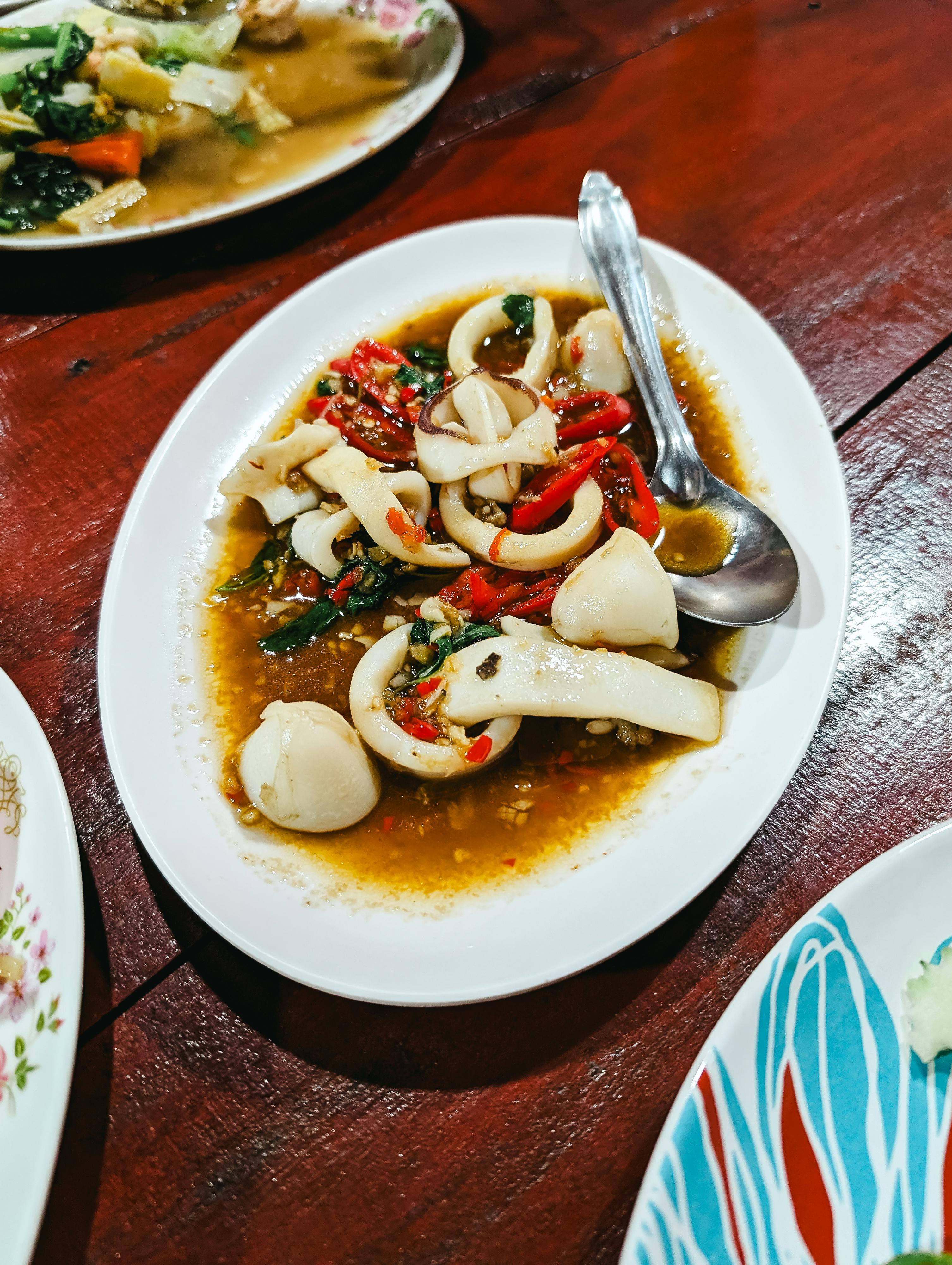
The diets react (see scores below)
Diet Ratings
Squid is a lean protein with minimal carbs (1g net carbs per 100g cooked). Low fat content means it should be paired with fat sources, but nutritionally compatible with keto macros.
Squid is a marine animal (cephalopod). Consuming it violates the core vegan principle of excluding all animal flesh. No ambiguity.
Squid is a marine cephalopod and unprocessed seafood, rich in protein and available to coastal hunter-gatherers. Contains no grains, legumes, or problematic additives when fresh or frozen without added ingredients.
Squid is a seafood staple in Mediterranean cuisine, particularly in Greek, Italian, Spanish, and Portuguese traditions. It is lean, protein-rich, and aligns perfectly with the recommendation to eat fish and seafood 2-3 times weekly. Squid is a traditional Mediterranean ingredient.
Seafood product, pure animal-derived protein and fat. Squid is a complete animal food with micronutrients including selenium, copper, and B vitamins. Minimally processed when fresh.
Squid is seafood, which is explicitly allowed on Whole30. It is a whole, unprocessed protein source.
Squid is a protein-based seafood with negligible FODMAP content. Contains no significant fructans, GOS, lactose, excess fructose, or polyols. Safe at standard serving sizes during elimination phase.
Squid is a lean protein source rich in B vitamins and minerals, but contains moderate sodium (typically 250-350mg per 3oz cooked) and cholesterol. DASH emphasizes lean seafood, but squid's sodium and cholesterol content warrant moderation.
Updated DASH interpretations increasingly recognize that dietary cholesterol has minimal impact on blood cholesterol for most individuals (2020-2025 Dietary Guidelines), and squid's lean protein and micronutrient profile may warrant a higher rating in modern practice.
Squid (calamari) is a lean protein source with ~19g protein per 3 oz cooked serving, minimal carbs (~1g), and low fat (~1.5g). It fits cleanly into Zone protein blocks and is an excellent low-glycemic protein choice. Slightly higher in cholesterol than white fish but still favorable for Zone.
Squid is a lean protein with some omega-3 content, but also contains arachidonic acid (pro-inflammatory in excess). It is lower in omega-3s than fatty fish. Acceptable in moderation as part of a varied protein intake, but not a primary anti-inflammatory protein source.
Some anti-inflammatory frameworks emphasize squid's selenium and B vitamins as beneficial; others flag arachidonic acid as problematic for those with autoimmune conditions or high baseline inflammation.
Squid is high in protein (15-20g per 3oz) and low in fat when prepared simply, but has a chewy, dense texture that may be difficult to digest given GLP-1-induced slowed gastric emptying. Fried squid is high-fat and should be avoided. Grilled or steamed squid is acceptable but requires careful chewing and may cause discomfort.
Some clinicians recommend squid as a lean protein source; others suggest avoiding it during early GLP-1 treatment due to texture-related digestive strain, particularly if patients experience nausea or early satiety.
Nutritional profile
Six traits that cut across every diet.
Fiber & Plants
How much whole-plant food and fiber it delivers.
Healthy Fats
The quality of its fats (unsaturated, omega-3).
Whole / Unprocessed
How close it is to its natural, unprocessed form.
Gut Gentle
How easy it is on digestion (low FODMAP, few irritants).
Low Glycemic
How little it spikes your blood sugar.
Protein Density
How much protein it packs per calorie.
Controversy Index
Score range: 1–9/10. Higher controversy = more disagreement between diets.
Diet-Specific Tips for Squid
 Keto — 8/10
- 1g net carbs per 100g
- High protein (12-15g per 100g)
- Low fat (requires added fat for macro balance)
- No sugar or additives
 Paleo — 9/10
- Unprocessed seafood
- High protein
- No grains or legumes
- Ancestrally available to coastal populations
 Mediterranean — 8/10
- Seafood (encouraged 2-3x weekly)
- Traditional Mediterranean ingredient
- Lean protein
- Low in saturated fat
 Carnivore — 8/10
- animal-derived
- seafood
- high protein
- micronutrient-rich
- minimally processed
 Whole30 — 9/10
- Seafood
- Whole protein
- No excluded ingredients
 Low-FODMAP — 9/10
- protein-based food
- minimal carbohydrates
- no FODMAP-containing compounds
 DASH — 5/10
- lean protein source
- moderate sodium
- moderate cholesterol
- rich in B vitamins and minerals
 Zone — 8/10
- Lean protein source (~19g per 3 oz)
- Minimal carbohydrate content
- Low fat profile
- Excellent Zone protein block building material
 Anti-Inflammatory — 5/10
- lean protein
- moderate omega-3 content
- arachidonic acid present
- low saturated fat
 GLP-1 Friendly — 5/10
- high protein density
- chewy texture challenges
- preparation method critical
- slowed gastric emptying concern