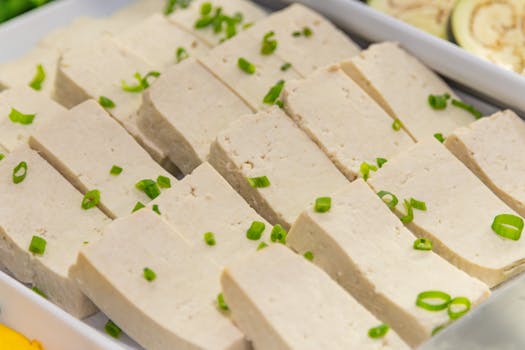
The diets react (see scores below)
Diet Ratings
Firm tofu contains ~2g net carbs per 100g and moderate protein (15g per 100g), but is relatively low in fat (~8g per 100g). Requires added fat sources to meet keto macros. Acceptable in moderation but not ideal compared to animal proteins.
Strict keto practitioners avoid tofu due to its processing, phytoestrogen content, and preference for whole animal proteins. Some also cite concerns about soy's potential inflammatory effects.
Tofu is a whole plant-based protein made from soybeans. Minimally processed, nutrient-dense, and universally accepted in vegan diets.
Tofu is made from soybeans, which are legumes explicitly excluded from paleo diet. Soy is also heavily processed and contains phytoestrogens and anti-nutrients.
Tofu is a plant-based protein source made from soybeans, aligning with Mediterranean emphasis on legumes and plant-based foods. It is minimally processed, contains no added sugars, and provides complete protein. Fits well as a meat alternative.
Tofu is plant-derived (soy), directly violating the core carnivore principle of consuming only animal products. Contains plant compounds and phytoestrogens incompatible with carnivore diet.
Tofu is made from soybeans, which are legumes. Legumes are explicitly excluded from Whole30 for the full 30 days.
Firm tofu is low-FODMAP at standard servings per Monash University. It is a soy-based protein with minimal fermentable carbohydrates when prepared without high-FODMAP additives.
Excellent plant-based protein source aligned with DASH principles. Low sodium (if unsalted), minimal saturated fat, rich in minerals. Versatile and supports reduced red meat consumption.
Excellent vegetarian protein source with favorable macro profile. Low-glycemic carbs, complete protein. Requires slightly higher fat portion due to lower fat content in tofu itself.
Whole soy foods like tofu are explicitly emphasized in Dr. Weil's anti-inflammatory pyramid. Excellent plant-based protein, contains isoflavones with anti-inflammatory properties, low saturated fat, versatile for anti-inflammatory cooking.
Complete protein (15-20g per 3.5oz serving), low fat (5g), easy to digest, versatile, nutrient-dense. Excellent plant-based protein source for GLP-1 patients. Works well in small portions.
Nutritional profile
Six traits that cut across every diet.
Fiber & Plants
How much whole-plant food and fiber it delivers.
Healthy Fats
The quality of its fats (unsaturated, omega-3).
Whole / Unprocessed
How close it is to its natural, unprocessed form.
Gut Gentle
How easy it is on digestion (low FODMAP, few irritants).
Low Glycemic
How little it spikes your blood sugar.
Protein Density
How much protein it packs per calorie.
Controversy Index
Score range: 1–9/10. Higher controversy = more disagreement between diets.
Diet-Specific Tips for Tofu (firm)
 Keto — 5/10
- 2g net carbs per 100g
- Moderate protein, low fat
- Processed food
- Requires added fat
 Vegan — 9/10
- Whole plant food
- Complete protein
- Soy-based
- Minimal processing
 Mediterranean — 8/10
- Plant-based protein
- Legume-derived
- Minimal processing
- No added sugars
- Versatile preparation
 Low-FODMAP — 8/10
- Soy protein isolate base
- Low fermentable carbohydrate content
- Monash-tested at 150g serving
 DASH — 8/10
- Plant-based protein
- Low sodium (unsalted varieties)
- Minimal saturated fat
- Rich in minerals
 Zone — 8/10
- ~15-20g protein per 3.5oz
- ~5g fat per serving
- ~2g carbs per serving
- Versatile for Zone meals
 Anti-Inflammatory — 9/10
- complete plant protein
- isoflavones with anti-inflammatory effects
- low saturated fat
- minimal omega-6 content
- good bioavailability when prepared properly
 GLP-1 Friendly — 8/10
- Complete plant protein
- Low fat
- Easy to digest
- Versatile preparation