The diets react (see scores below)
Diet Ratings
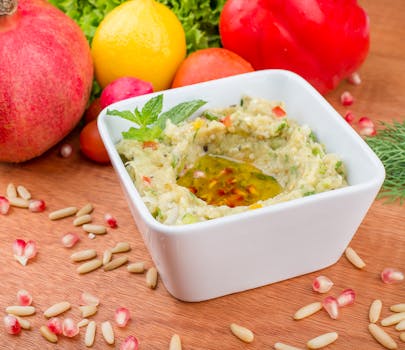
Baba ganoush (eggplant dip) contains approximately 5-7g net carbs per quarter cup with moderate fat from tahini and olive oil. Acceptable in small portions but carb-sensitive and requires portion control.
Some keto practitioners avoid baba ganoush due to eggplant's carb content and prefer pure tahini or oil-based dips with lower carb profiles.
Eggplant-based dip, typically plant-based. Usually made with tahini, lemon, garlic. May contain minor processing.
Some commercial versions may contain small amounts of dairy or use non-vegan oils; check ingredient labels for confirmation.
Eggplant-based dip with tahini (sesame seed paste), garlic, and lemon. Eggplant is a vegetable; tahini is seed-based but acceptable in paleo. Verify no added seed oils or grains.
Eggplant-based dip with tahini and olive oil. Emphasizes vegetables and healthy fats. Traditional Mediterranean/Middle Eastern preparation. Minimal processing.
Plant-based dip made from eggplant and tahini (sesame). Both primary ingredients are plant-derived. Contains seed oil. Completely incompatible with carnivore diet.
Baba ganoush is primarily eggplant (compliant vegetable), but traditionally contains tahini (sesame seed paste, compliant) and olive oil (compliant). However, many commercial versions contain added sugar, lemon juice concentrate, or other additives. Homemade versions with compliant ingredients are acceptable.
Official Whole30 allows compliant versions, but community members debate whether the traditional preparation with tahini and spices aligns with the program's spirit. Commercial versions often contain non-compliant additives.
Baba ganoush is eggplant-based (low-FODMAP) but traditionally contains tahini, garlic, and lemon. Garlic is high-FODMAP. Homemade versions without garlic are low-FODMAP; commercial varieties often contain it.
Monash University rates eggplant as low-FODMAP, but clinical practitioners emphasize that traditional baba ganoush recipes include garlic, making most commercial versions high-FODMAP. Garlic-free versions are safe.
Eggplant-based dip with beneficial vegetables and olive oil. Good source of fiber and potassium. However, tahini and olive oil add calories and fat. Sodium varies by preparation (store-bought often higher). Acceptable in moderation with portion awareness.
NIH DASH guidelines emphasize vegetable-based dishes; however, updated clinical interpretation notes tahini and oil content may exceed recommended fat intake if consumed liberally. Homemade versions with controlled oil are preferred.
Baba ganoush (eggplant dip) is primarily eggplant (low-glycemic vegetable) with tahini (sesame fat). Typical recipe: 3g carbs, 2g protein, 5g fat per 2 tbsp. Monounsaturated fat from tahini is favorable, but calorie-dense. Usable as vegetable + fat component, requires portion control to avoid fat excess.
Eggplant-based dip rich in antioxidants (nasunin), fiber, and polyphenols. Made with tahini (sesame) and olive oil, providing additional anti-inflammatory compounds. Minimal processing, whole-food ingredients.
Eggplant-based dip with moderate fat (10-15g per 1/4 cup) from tahini/olive oil, minimal protein (2-3g per 1/4 cup), and moderate fiber (3g per 1/4 cup). While not fried, the fat content and low protein density make it suboptimal. Better as a small side with protein-rich foods.
Some RDs view baba ganoush favorably as a vegetable-based option with unsaturated fats and fiber, suitable in small portions alongside protein. Others prioritize the low protein content and fat density as drawbacks for GLP-1 patients.
Nutritional profile
Six traits that cut across every diet.
Fiber & Plants
How much whole-plant food and fiber it delivers.
Healthy Fats
The quality of its fats (unsaturated, omega-3).
Whole / Unprocessed
How close it is to its natural, unprocessed form.
Gut Gentle
How easy it is on digestion (low FODMAP, few irritants).
Low Glycemic
How little it spikes your blood sugar.
Protein Density
How much protein it packs per calorie.
Controversy Index
Score range: 1–8/10. Higher controversy = more disagreement between diets.
Diet-Specific Tips for Baba ganoush
 Keto — 6/10
- 5-7g net carbs per quarter cup
- Eggplant base (moderate carbs)
- Tahini and olive oil provide fat
- Portion control critical
 Vegan — 8/10
- vegetable-based
- tahini ingredient
- verify commercial versions
 Paleo — 8/10
- vegetable base
- sesame seed paste acceptable
- check for added seed oils
- verify no additives
 Mediterranean — 8/10
- vegetable-based
- olive oil and tahini
- traditional Mediterranean
- minimal processing
 Whole30 — 6/10
- Vegetable base (eggplant) is compliant
- Tahini (sesame) is compliant
- Commercial versions often contain added sugar
- Homemade with verified ingredients preferred
 Low-FODMAP — 6/10
- Garlic typically present
- Eggplant base is low-FODMAP
- Recipe-dependent safety
 DASH — 6/10
- Vegetable-based
- Contains olive oil (beneficial fat)
- Tahini adds calories
- Variable sodium (preparation-dependent)
- Good fiber source
 Zone — 6/10
- Low-glycemic vegetable base
- Monounsaturated fat (tahini)
- Calorie-dense
- Minimal protein
- Portion-sensitive
 Anti-Inflammatory — 8/10
- eggplant antioxidants (nasunin)
- sesame tahini (lignans, minerals)
- extra virgin olive oil
- high fiber
- whole food preparation
 GLP-1 Friendly — 5/10
- low protein
- moderate fat (unsaturated)
- moderate fiber
- nutrient-sparse per calorie
- portion-dependent