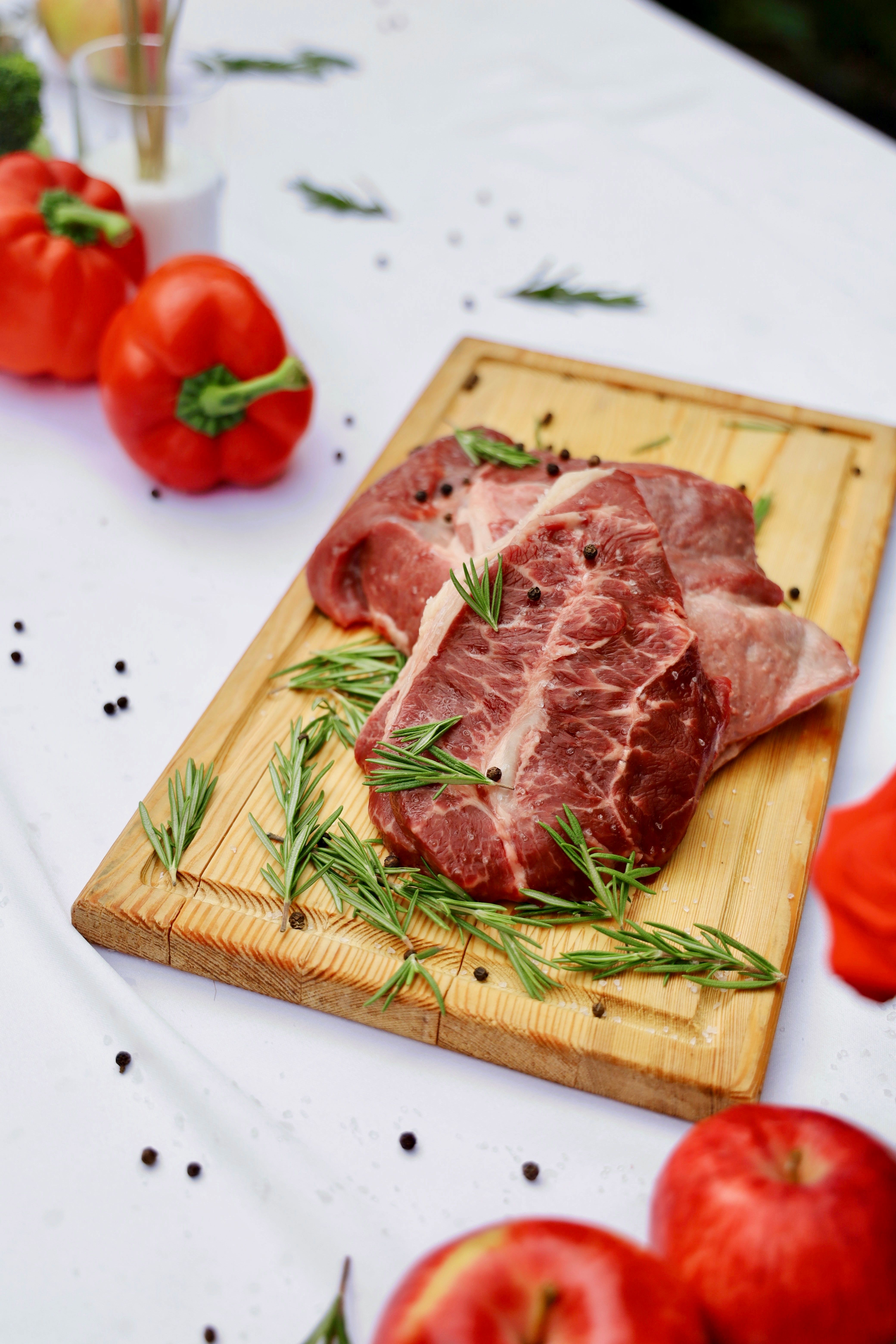
The diets react (see scores below)
Diet Ratings
Beef chuck is a fattier cut ideal for keto, containing approximately 15-20% fat by weight. Zero carbs, excellent protein, and high fat content align perfectly with ketogenic macros.
Beef chuck is a cut of beef meat from cattle. It is an animal product obtained through slaughter and is explicitly excluded from the vegan diet.
Beef chuck is a cut of unprocessed beef from the shoulder. It is nutrient-dense, rich in protein and fat, and a staple meat source available to hunter-gatherers. Grass-fed is preferable but all beef chuck is paleo-compliant.
Fatty cut of beef, high in saturated fat. Red meat should be rare in Mediterranean diet; beef chuck is particularly high in fat and should be avoided.
Beef chuck is a fatty cut of ruminant meat from the shoulder region. It is nutrient-dense, contains beneficial fatty acids, and is highly approved in carnivore diet for its fat content and satiety value.
Beef chuck is a cut of beef, a whole, unprocessed animal protein explicitly allowed on Whole30. It contains no excluded ingredients.
Beef chuck is a cut of beef with no FODMAP content. Like all plain beef, it is low-FODMAP at any reasonable serving size. Safe during elimination phase when prepared without high-FODMAP seasonings or sauces.
Fatty cut of beef with high saturated fat content. DASH emphasizes lean meats; chuck is not a lean option and should be avoided or used very sparingly.
Beef chuck is a fattier cut with significant saturated fat content (approximately 15-20% fat). While it provides protein, the high saturated fat conflicts with Zone anti-inflammatory principles. Can be used in small portions if fat is trimmed, but leaner cuts are preferred.
Beef chuck is a fatty cut of red meat with high saturated fat and arachidonic acid content. More inflammatory than lean cuts. The anti-inflammatory framework limits red meat, especially fatty cuts. Contains iron and B vitamins but does not offset the pro-inflammatory fat profile. Should be minimized.
Beef chuck is a fatty cut (20g fat per 3 oz) with high saturated fat content. Worsens GLP-1 side effects (nausea, bloating, reflux). Poor choice despite adequate protein. Difficult to digest due to fat content.
Nutritional profile
Six traits that cut across every diet.
Fiber & Plants
How much whole-plant food and fiber it delivers.
Healthy Fats
The quality of its fats (unsaturated, omega-3).
Whole / Unprocessed
How close it is to its natural, unprocessed form.
Gut Gentle
How easy it is on digestion (low FODMAP, few irritants).
Low Glycemic
How little it spikes your blood sugar.
Protein Density
How much protein it packs per calorie.
Controversy Index
Score range: 1–10/10. Higher controversy = more disagreement between diets.
Diet-Specific Tips for Beef chuck
 Keto — 10/10
- Zero net carbs
- 15-20% fat content
- Affordable fattier cut
- Ideal for slow-cooking and stews
 Paleo — 10/10
- Whole unprocessed meat
- Complete protein
- Nutrient-dense
- Ancestral food
 Carnivore — 9/10
- ruminant meat
- fatty cut
- nutrient-dense
- high satiety
 Whole30 — 10/10
- whole animal protein
- unprocessed
- explicitly allowed
 Low-FODMAP — 9/10
- Pure protein source
- No FODMAP compounds
- Safe at any standard serving
 Zone — 4/10
- high saturated fat content
- fattier cut
- requires trimming
- conflicts with anti-inflammatory focus
- lean cuts preferred
 Anti-Inflammatory — 5/10
- high saturated fat
- arachidonic acid
- pro-inflammatory omega-6
- iron and B vitamins