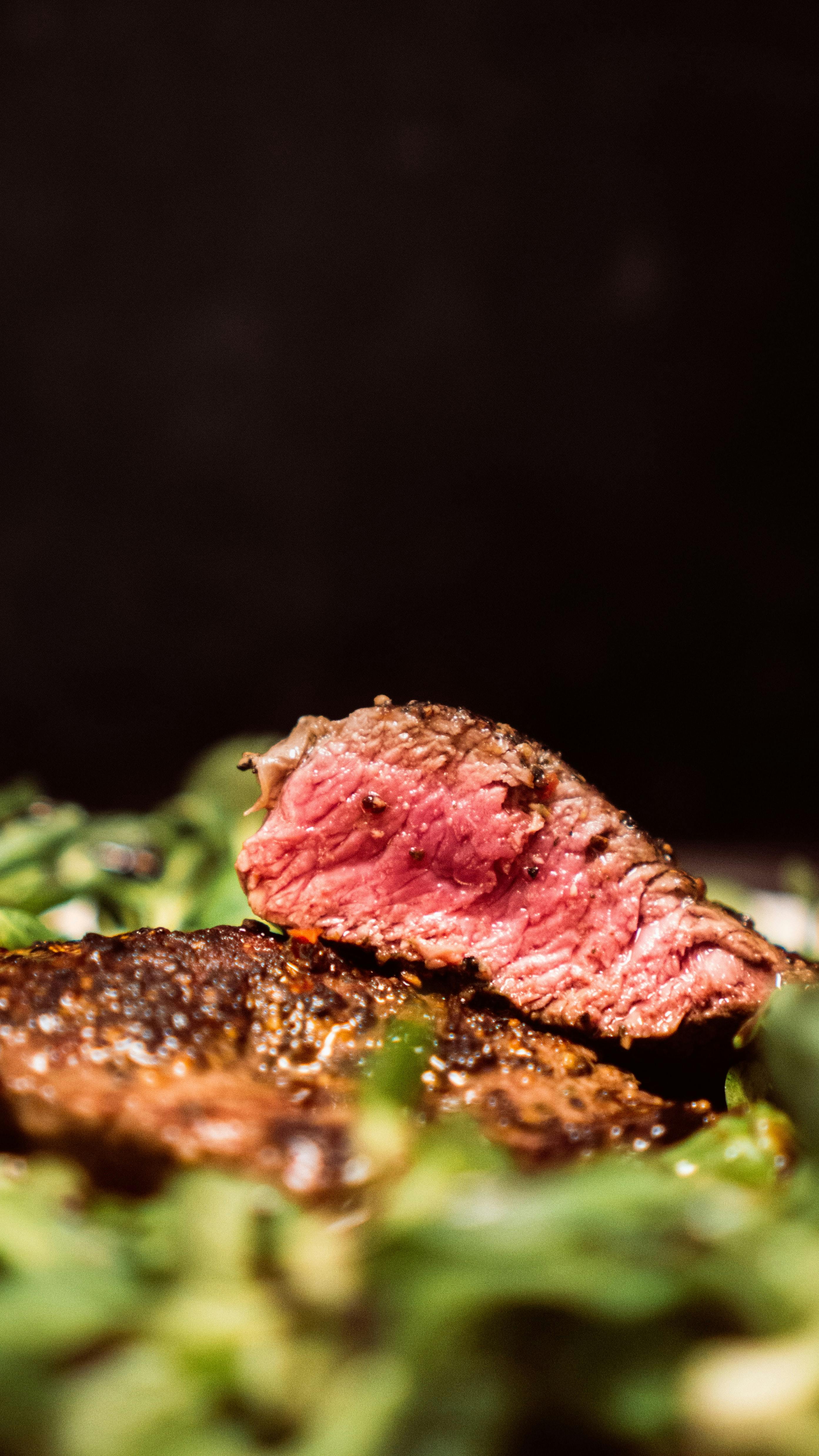
The diets react (see scores below)
Diet Ratings
Bison steak contains zero net carbs, excellent protein (approximately 24g per 100g), and good fat content. Leaner than beef but still keto-appropriate. Whole, unprocessed meat with no additives.
Red meat from animal flesh. Violates vegan diet regardless of source or sustainability claims.
Bison steak is unprocessed, nutrient-dense meat. Bison is an excellent paleo protein source, often leaner than beef with favorable omega-3 to omega-6 ratios. Represents foods available to Paleolithic humans.
Red meat but leaner than beef with lower saturated fat and higher omega-3 content. Still should be limited to few times monthly per Mediterranean guidelines, but superior to conventional beef.
Some Mediterranean diet practitioners argue bison's nutritional profile (lower fat, higher omega-3) makes it more acceptable than conventional red meat, though traditional Mediterranean regions did not consume it.
Bison steak is ruminant meat, unprocessed, and highly valued in carnivore community for superior nutrient density and favorable fatty acid profile compared to conventional beef. Excellent source of protein, fat, and micronutrients.
Bison steak is whole, unprocessed meat. All meat is explicitly allowed on Whole30. No excluded ingredients present.
Plain bison steak is low-FODMAP. All plain red meats are safe on the low-FODMAP diet.
Lean red meat with lower saturated fat and cholesterol than beef. Higher in omega-3 fatty acids. DASH allows lean meats in moderation. Excellent protein source.
NIH DASH guidelines emphasize limiting red meat generally; updated clinical interpretation recognizes bison as superior to conventional beef due to favorable lipid profile and lower saturated fat content.
Excellent lean protein (~24g per 100g) with lower saturated fat than beef (~2.4g vs 4.5g per 100g). Higher in omega-3s and CLA. Minimal processing. Ideal Zone protein choice. Fits perfectly into 30% protein macronutrient target.
Lean red meat with lower saturated fat and higher omega-3 content than beef. Unprocessed and nutrient-dense (iron, B12, zinc). However, still red meat with inflammatory potential if consumed frequently. Acceptable occasionally but not a staple.
Dr. Weil's pyramid limits red meat; some strict anti-inflammatory approaches minimize all red meat. However, bison's superior omega-3 profile and leanness make it preferable to conventional beef when red meat is consumed.
Lean red meat with 24g protein and only 2.4g fat per 100g (lower than beef). High in iron, B12, and omega-3 fatty acids. Easy to digest, nutrient-dense. Satisfying in small portions. Excellent alternative to fatty beef cuts for GLP-1 patients who tolerate red meat.
Nutritional profile
Six traits that cut across every diet.
Fiber & Plants
How much whole-plant food and fiber it delivers.
Healthy Fats
The quality of its fats (unsaturated, omega-3).
Whole / Unprocessed
How close it is to its natural, unprocessed form.
Gut Gentle
How easy it is on digestion (low FODMAP, few irritants).
Low Glycemic
How little it spikes your blood sugar.
Protein Density
How much protein it packs per calorie.
Controversy Index
Score range: 1–10/10. Higher controversy = more disagreement between diets.
Diet-Specific Tips for Bison steak
 Keto — 9/10
- Zero net carbs
- High protein quality
- Good fat content
- Whole, unprocessed
- Nutrient-dense
 Paleo — 10/10
- unprocessed meat
- excellent protein source
- nutrient-dense
- favorable fat profile
- available to hunter-gatherers
 Mediterranean — 6/10
- red meat category
- lower saturated fat than beef
- higher omega-3 content
- frequency should be limited
 Carnivore — 9/10
- Ruminant meat
- Unprocessed
- Superior fatty acid profile
- High nutrient density
- Preferred over conventional beef
 Whole30 — 9/10
- Whole meat
- Unprocessed
- Explicitly allowed protein
 Low-FODMAP — 10/10
- Plain protein source
- No fermentable carbohydrates
- No FODMAP additives
 DASH — 8/10
- Lean red meat
- Lower saturated fat than beef
- Higher omega-3 content
- Excellent protein
- Low sodium if unseasoned
 Zone — 8/10
- Lean protein
- Lower saturated fat than beef
- Higher omega-3 content
- Minimal processing
- Anti-inflammatory profile
 Anti-Inflammatory — 6/10
- lean red meat
- higher omega-3 than beef
- lower saturated fat
- unprocessed
- nutrient-dense
 GLP-1 Friendly — 8/10
- high protein
- low fat
- nutrient-dense
- omega-3 rich
- small portion friendly