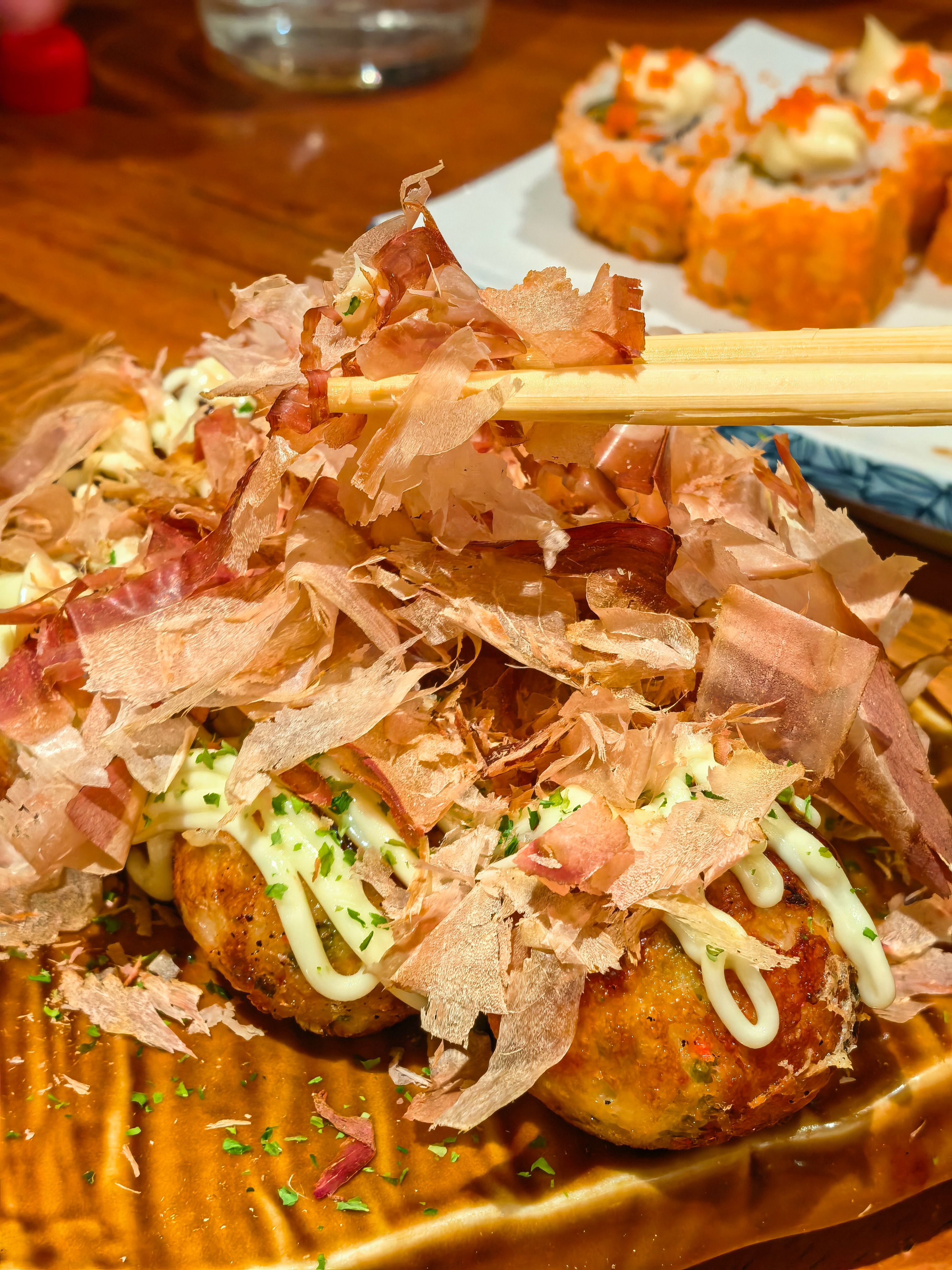
The diets react (see scores below)
Diet Ratings
Dried fish product with negligible carbs (less than 1g per serving) and high protein. Whole food, no additives. Excellent keto-compatible protein source.
Bonito flakes are dried, fermented fish (bonito) commonly used in Japanese cuisine. They are an animal product and therefore not vegan.
Dried, fermented bonito fish (skipjack tuna). While the base protein is paleo-approved, the fermentation and drying process, combined with typical high sodium content in commercial products, places it in caution. Pure, unsalted bonito flakes would be approved.
Strict paleo practitioners may approve bonito flakes as a minimally processed fish product, similar to other dried fish. The fermentation process is traditional and does not introduce non-paleo ingredients.
Bonito flakes are dried, fermented fish (bonito) used in Japanese cuisine. While fish is encouraged in Mediterranean diet (2-3 times weekly), bonito flakes are a processed, dried product used primarily as a seasoning or garnish in small quantities. The fermentation and drying process is minimally invasive, but the product is not traditional to Mediterranean cuisine.
Some Mediterranean diet authorities accept fermented and dried fish products as compatible with the emphasis on seafood, particularly when used in small quantities as flavor enhancers, drawing parallels to traditional Mediterranean fish preparations.
Bonito flakes are dried, fermented fish (bonito tuna), a pure animal product. Minimally processed and nutrient-dense. Widely accepted in carnivore diet.
Bonito flakes are dried, fermented bonito fish. While the base ingredient (fish) is compliant, the fermentation process and potential additives require label verification. Some commercial versions may contain added sugar or processing agents.
Official Whole30 guidelines allow unprocessed seafood, but fermented fish products occupy a gray area. Some practitioners consider fermented foods acceptable if no added sugar is present; others view the processing as inconsistent with whole-food philosophy.
Bonito flakes are dried, fermented bonito fish (a type of tuna). As a protein-based food with no carbohydrates, they contain no FODMAPs and are safe during the elimination phase.
Dried fish product with moderate to high sodium depending on processing and salt addition. Good source of lean protein and omega-3 fatty acids, but sodium content requires moderation. Standard DASH allows fish but sodium must be monitored.
Some DASH practitioners emphasize bonito's omega-3 content and minimal saturated fat, viewing it as acceptable in small quantities despite sodium; however, NIH DASH guidelines recommend limiting processed fish products due to sodium content.
Lean fish protein source (approximately 25g protein per ounce) with minimal carbohydrates and fat. Excellent Zone protein block building material. Rich in omega-3 fatty acids supporting Sears' anti-inflammatory focus. Minimal processing in traditional form.
Bonito flakes are dried, fermented fish (bonito) rich in omega-3 fatty acids (EPA and DHA), high-quality protein, and B vitamins. Fermentation adds probiotic potential. Omega-3s are central to anti-inflammatory diet principles. Used as a seasoning or in broths, bonito provides anti-inflammatory benefit.
Bonito flakes are dried, shredded bonito fish—a concentrated protein source (~60g protein per 100g). They're low in carbs, contain omega-3 fatty acids, and are easy to digest. A small serving (10-15g) provides 6-9g protein with minimal calories. They're nutrient-dense, portion-friendly, and ideal for GLP-1 patients. Commonly used as a topping or flavoring agent, making them practical for small-portion eating.
Nutritional profile
Six traits that cut across every diet.
Fiber & Plants
How much whole-plant food and fiber it delivers.
Healthy Fats
The quality of its fats (unsaturated, omega-3).
Whole / Unprocessed
How close it is to its natural, unprocessed form.
Gut Gentle
How easy it is on digestion (low FODMAP, few irritants).
Low Glycemic
How little it spikes your blood sugar.
Protein Density
How much protein it packs per calorie.
Controversy Index
Score range: 1–9/10. Higher controversy = more disagreement between diets.
Diet-Specific Tips for Bonito flakes
 Keto — 9/10
- Negligible carbs
- High protein
- Whole food
- No added sugars
- Minimal processing
 Paleo — 6/10
- Fish-based protein (paleo source)
- Fermented/dried processing
- Often high in sodium
- Minimal additives in pure form
 Mediterranean — 5/10
- fish-based product
- fermented and dried
- used in small quantities
- not Mediterranean traditional
- minimal added ingredients
 Carnivore — 8/10
- Animal-derived (fish)
- Minimally processed
- Fermented
- Nutrient-dense
- Pure animal product
 Whole30 — 6/10
- Fermented seafood
- Requires label verification
- May contain additives
- Processing method
 Low-FODMAP — 9/10
- Protein-based food with no fermentable carbohydrates
- No lactose, fructose, fructans, GOS, or polyols
- Safe at any portion
 DASH — 5/10
- Moderate to high sodium
- Lean protein source
- Omega-3 fatty acids
- Processed fish product
 Zone — 9/10
- Lean protein source
- Omega-3 fatty acids
- Minimal carbohydrates
- Minimal processing
- Supports anti-inflammatory protocol
 Anti-Inflammatory — 8/10
- omega-3 fatty acids (EPA, DHA)
- fermented
- high-quality protein
- B vitamins
- probiotic potential
 GLP-1 Friendly — 8/10
- Very high protein density (60g per 100g)
- Omega-3 fatty acids
- Portion-friendly; small amounts provide significant protein
- Easy to digest; minimal GI risk