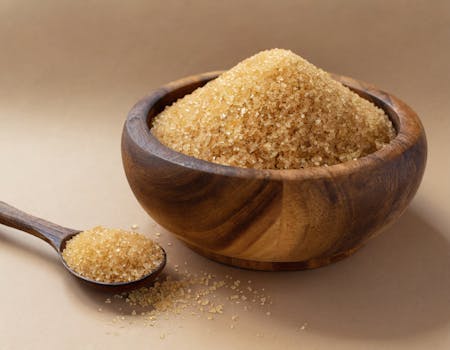
The diets react (see scores below)
Diet Ratings
Essentially white sugar with molasses; same carb content (4g per teaspoon) and glycemic impact. Incompatible with ketosis.
Brown sugar is typically not processed with bone char, making it reliably vegan. Plant-based sweetener without animal derivatives.
Brown sugar is refined white sugar with molasses added back for color and flavor. It is equally processed and has the same metabolic effects as white sugar. Not available to Paleolithic humans and explicitly excluded from paleo diet.
Essentially white sugar with molasses added. Still refined, processed sugar with minimal nutritional difference. Mediterranean diet minimizes added sugars.
Refined sugar with molasses added for color and flavor. Still plant-derived and a refined carbohydrate. Identical metabolic impact to white sugar despite marketing as 'natural.'
Added sugar is explicitly excluded from Whole30. Brown sugar is white sugar with molasses and is still an added sugar.
Brown sugar is sucrose with molasses. While molasses contains some fructose, brown sugar at standard culinary portions (teaspoons to tablespoons) is considered low-FODMAP by Monash.
Functionally identical to white sugar with molasses added for color/flavor. Still pure added sugar. DASH limits added sugars. No meaningful nutritional advantage.
Functionally identical to white sugar with minimal molasses addition. Same high-glycemic impact and insulin response. No meaningful nutritional advantage. Incompatible with Zone carb requirements.
Brown sugar is essentially white sugar with molasses added for color and minimal mineral content. Glycemic and inflammatory profiles are nearly identical to white sugar. The trace minerals from molasses do not offset the inflammatory effects of refined sucrose.
Functionally identical to white sugar (molasses added for color/flavor, negligible nutritional difference). Zero protein, fiber, or meaningful micronutrients. Rapid blood sugar spike, empty calories, triggers nausea. No place in GLP-1-friendly eating.
Nutritional profile
Six traits that cut across every diet.
Fiber & Plants
How much whole-plant food and fiber it delivers.
Healthy Fats
The quality of its fats (unsaturated, omega-3).
Whole / Unprocessed
How close it is to its natural, unprocessed form.
Gut Gentle
How easy it is on digestion (low FODMAP, few irritants).
Low Glycemic
How little it spikes your blood sugar.
Protein Density
How much protein it packs per calorie.
Controversy Index
Score range: 1–9/10. Higher controversy = more disagreement between diets.
Diet-Specific Tips for Brown sugar
 Vegan — 8/10
- Avoids bone char processing
- Plant-based
- Reliable vegan option
 Low-FODMAP — 9/10
- Primarily sucrose
- Molasses adds minimal excess fructose at typical serving sizes
- Monash-tested as low-FODMAP