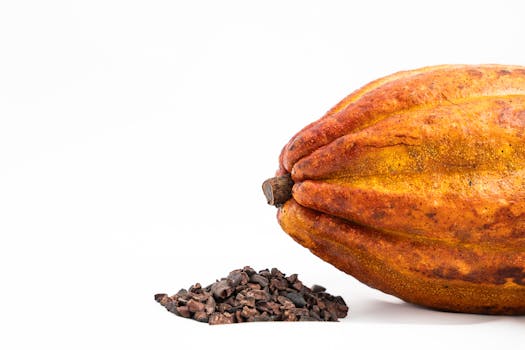
The diets react (see scores below)
Diet Ratings
Cacao nibs contain ~1-2g net carbs per ounce with healthy fats and polyphenols. Minimal processing, no added sugar, and excellent nutrient profile. Ideal keto snack in standard portions.
Cacao nibs are fermented and roasted pieces of cacao beans with no processing that introduces animal products. They are a whole plant food and fully vegan-compliant.
Minimally processed cacao product with no added sugar. Generally accepted in modern paleo, but strict interpretations exclude all processed cacao products.
Strict Cordain-school paleo excludes cacao as a processed food; however, Mark Sisson and most contemporary paleo practitioners accept unsweetened cacao nibs as a whole-food derivative with minimal processing.
Minimally processed cacao product rich in antioxidants and minerals. Fits Mediterranean emphasis on whole foods. Dark chocolate/cacao encouraged in moderation. Choose unsweetened varieties.
Cacao is not native to Mediterranean region and is a modern addition. Some traditional interpretations may not include it, though contemporary Mediterranean diet embraces it for health benefits.
Plant-derived product from cacao bean. Contains plant compounds, caffeine, and theobromine. Explicitly excluded from strict carnivore diet. While some practitioners consume chocolate, cacao nibs are pure plant product with no animal origin.
Cacao nibs are unprocessed pieces of cacao bean with no added sugar or other excluded ingredients. They are a whole food allowed on Whole30.
Cacao nibs are fermented cacao bean fragments with minimal carbohydrates. Monash University confirms cocoa/cacao products as low-FODMAP. No significant FODMAP content at standard serving sizes.
Cacao nibs are minimally processed, rich in antioxidants, magnesium, and fiber. They contain no added sugar if unsweetened. However, they are calorie-dense and not explicitly emphasized in traditional DASH guidelines. Portion control (1-2 tbsp) is essential.
NIH DASH guidelines focus on whole grains and fruits rather than cacao products. Updated clinical interpretation recognizes unsweetened cacao nibs as a nutrient-dense, low-sodium option with cardiovascular benefits, though moderation is advised due to caloric density.
Cacao nibs are low in sugar (unsweetened) and rich in polyphenols and magnesium. However, they contain some carbs and fat that must be portioned carefully. Best used as a small flavor accent rather than primary ingredient.
Cacao nibs are minimally processed cacao with exceptional polyphenol and antioxidant content, including flavonoids and theobromine. They provide anti-inflammatory benefits without added sugars (unlike chocolate). Align perfectly with anti-inflammatory principles as emphasized in Dr. Weil's guidance on dark chocolate.
Cacao nibs are nutrient-dense (antioxidants, magnesium, fiber) and low in sugar if unsweetened. However, they contain caffeine (12mg per tablespoon), which may worsen nausea on an empty stomach or in sensitive individuals. Fat content is moderate (12g per ounce). Work well as a small flavor accent (1-2 teaspoons) rather than eaten by the handful.
Some RDs view unsweetened cacao nibs as acceptable nutrient-dense snacks; others recommend limiting due to caffeine content and fat density in the context of GLP-1 side effects.
Controversy Index
Score range: 2–9/10. Higher controversy = more disagreement between diets.
Diet-Specific Tips for Cacao nibs
 Keto — 8/10
- 1-2g net carbs per ounce
- High fat content
- Minimal processing
- Polyphenol antioxidants
- No added sugar
 Vegan — 9/10
- 100% plant-based
- Whole food
- No animal-derived additives
 Paleo — 6/10
- Minimal processing
- No added sugar
- Whole food derivative
- Caffeine content
 Mediterranean — 7/10
- minimally processed
- high antioxidant content
- no added sugar (if unsweetened)
- nutrient-dense
- portion control important
 Whole30 — 9/10
- Whole food
- Unprocessed
- No added sugar
- No excluded ingredients
 Low-FODMAP — 8/10
- Fermented cacao product
- Minimal fermentable carbohydrates
- Monash-approved
 DASH — 6/10
- Rich in magnesium and antioxidants
- Low sodium if unsweetened
- Calorie-dense
- No added sugar in pure form
- Limited emphasis in traditional DASH
 Zone — 6/10
- Polyphenol-rich
- Low sugar when unsweetened
- Moderate carb content
- Requires small portions
 Anti-Inflammatory — 9/10
- Extremely high in polyphenols and flavonoids
- Minimal processing
- No added sugars in pure form
- Powerful antioxidant profile
- Supports cardiovascular health
 GLP-1 Friendly — 6/10
- caffeine content (12mg per tbsp)
- moderate fat (12g per ounce)
- high in antioxidants and magnesium
- low sugar if unsweetened
- portion-sensitive