The diets react (see scores below)
Diet Ratings
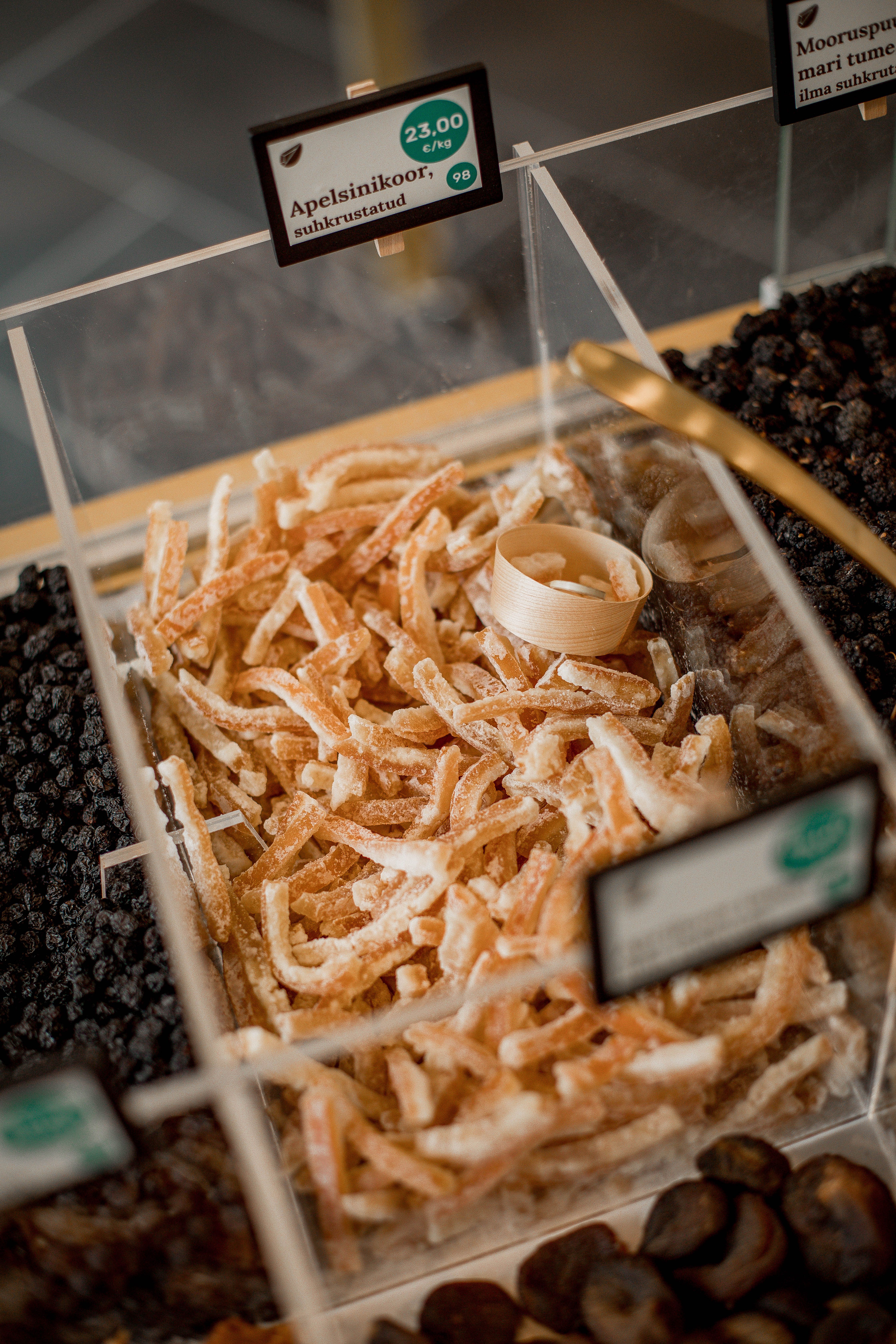
Candied citrus peel contains approximately 60-70g carbs per 100g due to added sugar coating. Directly incompatible with ketosis. High sugar content makes it strictly prohibited.
Candied peel (citrus peel) is typically plant-based, made from fruit peel and sugar. However, some commercial versions may use gelatin or other animal-derived binders or glazes. Most modern versions are vegan, but ingredient verification is recommended.
Some whole-food plant-based advocates avoid candied peel due to its high sugar content and processing, though it is technically vegan.
Citrus peel preserved in refined sugar. Violates paleo guidelines against refined sugar and processed foods. The high sugar content and processing make it incompatible with paleo diet principles.
Candied peel is citrus peel coated with sugar, making it a processed food with added sugars. The Mediterranean diet minimizes added sugars and processed foods. While citrus fruits are encouraged, candying them with sugar contradicts core Mediterranean principles.
Candied peel is plant-derived (citrus peel) coated with sugar. Carnivore diet excludes all plant foods and sugar.
Candied peel is fruit that has been preserved in sugar syrup. It contains added sugar, which is explicitly excluded from Whole30.
Candied peel (candied citrus peel) is made by coating fruit peel in sugar or honey. The high sugar content and potential use of high-fructose corn syrup or honey makes it high-FODMAP. Excess fructose and polyols from the candying process are problematic during elimination.
High added sugar content (typically 60-80% sugar by weight). Contradicts DASH goal of limiting sweets and added sugars. Minimal nutritional benefit despite citrus origin.
Processed fruit peel coated in sugar with extremely high glycemic index and carbohydrate content (approximately 70-80g carbs per 100g). Virtually impossible to incorporate into Zone 40/30/30 ratio without exceeding carbohydrate blocks. Contradicts Zone protocol fundamentally.
Candied peel is fruit peel coated in sugar and often corn syrup, making it high in added sugars and refined carbohydrates. Added sugars promote inflammatory markers (CRP, IL-6) and provide no meaningful anti-inflammatory benefit. It directly conflicts with anti-inflammatory principles limiting added sugars.
Candied peel (citrus peel coated in sugar) is high in added sugar (~70g per 100g) and calories (~316 cal per 100g) with minimal protein or fiber. It's essentially empty calories that conflict with GLP-1 goals of nutrient density and blood sugar stability. The high sugar content may trigger nausea or worsen cravings. Not recommended.
Nutritional profile
Six traits that cut across every diet.
Fiber & Plants
How much whole-plant food and fiber it delivers.
Healthy Fats
The quality of its fats (unsaturated, omega-3).
Whole / Unprocessed
How close it is to its natural, unprocessed form.
Gut Gentle
How easy it is on digestion (low FODMAP, few irritants).
Low Glycemic
How little it spikes your blood sugar.
Protein Density
How much protein it packs per calorie.
Controversy Index
Score range: 1–6/10. Higher controversy = more disagreement between diets.
Diet-Specific Tips for Candied peel
 Vegan — 6/10
- Usually plant-based
- May contain gelatin or animal-derived glazes in some brands
- Highly processed
- High sugar content