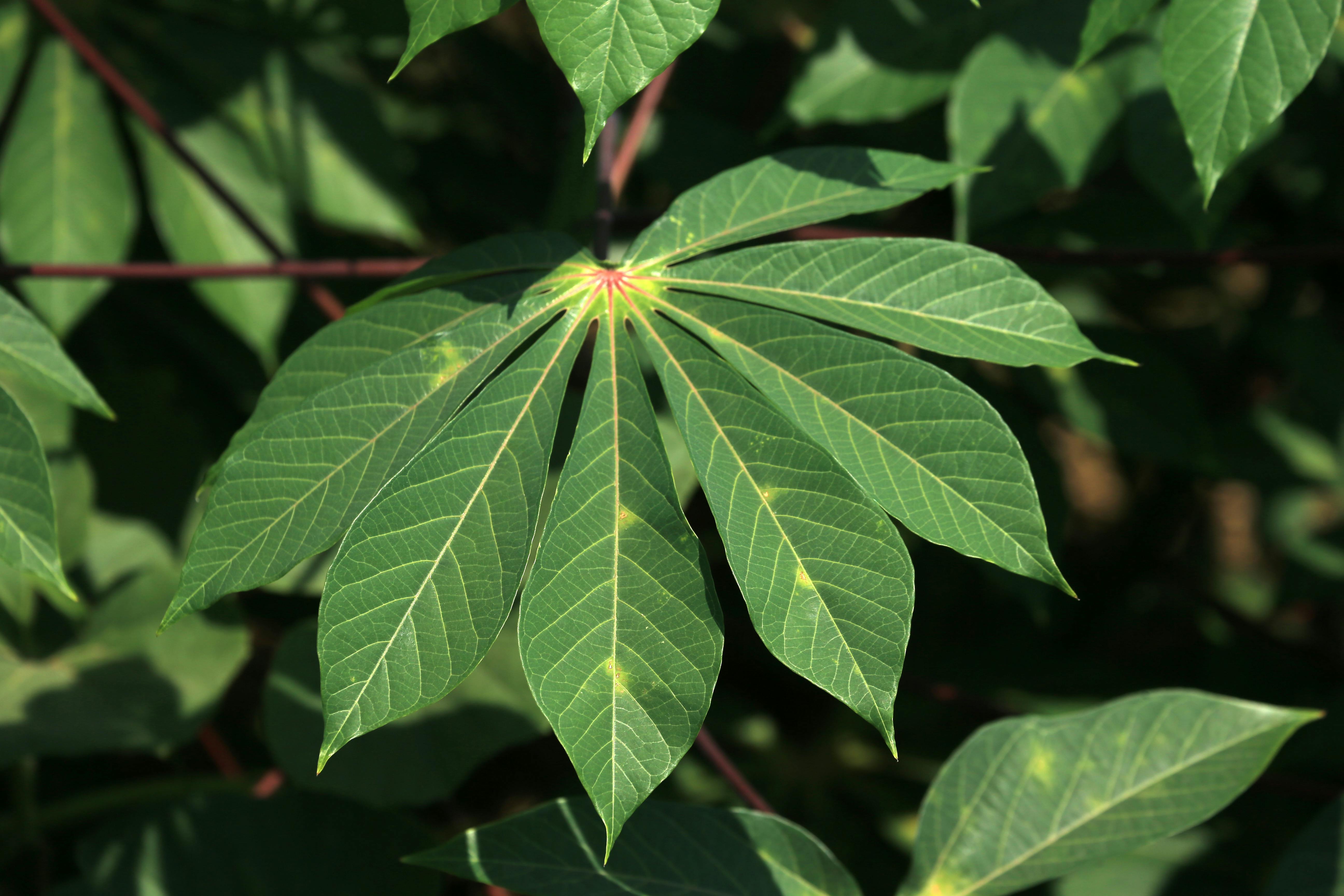
The diets react (see scores below)
Diet Ratings
Cassava leaves contain approximately 6-8g net carbs per 100g cooked. While nutrient-dense, they exceed reasonable portion allowances within daily keto carb limits and are starchy vegetables.
Cassava leaves are a leafy green vegetable derived entirely from plants. They are a whole food with no animal products or derivatives. Nutritious and commonly used in plant-based cuisines.
Cassava leaves are nutrient-dense and were consumed by some traditional populations, but cassava root contains cyanogenic compounds requiring processing. Leaves are lower-risk but less commonly evaluated in paleo literature.
Strict paleo practitioners avoid cassava entirely due to its association with processed cassava products and potential anti-nutrients, while some paleo authorities accept properly prepared cassava leaves as a vegetable source.
Nutrient-dense leafy green vegetable high in vitamins, minerals, and plant-based protein. Fits Mediterranean emphasis on plant-forward eating and vegetables consumed daily. Not traditionally Mediterranean but nutritionally aligned with core principles.
Cassava leaves are not part of traditional Mediterranean cuisines; some purists may prioritize regional vegetables like spinach, chard, or kale over non-traditional greens.
Cassava leaves are plant-derived vegetables. Carnivore diet excludes all plant foods including leafy greens. Contains plant compounds and anti-nutrients.
Cassava leaves are a whole vegetable with no excluded ingredients. They are compliant on Whole30.
Cassava leaves are low in FODMAPs. Monash University has tested cassava root (low-FODMAP) and leaves are similarly low in fermentable carbohydrates. Safe during elimination phase at standard serving sizes.
Cassava leaves are nutrient-dense vegetables rich in potassium, calcium, magnesium, fiber, and plant-based protein. Low in sodium and saturated fat. Exemplify DASH vegetable emphasis.
Cassava leaves are a low-glycemic vegetable with minimal net carbs and good micronutrient density. They fit well into the 8 vegetable servings per day target. Colorful, nutrient-dense vegetables are Zone-favorable carb sources.
Cassava leaves are nutrient-dense, rich in antioxidants, polyphenols, vitamins (A, C, K), minerals, and fiber. They have been used traditionally in anti-inflammatory cuisines and contain compounds that support antioxidant defense. Low in calories and pro-inflammatory compounds.
Cassava leaves are nutrient-dense with 2.7g protein and 1.6g fiber per 100g raw, plus vitamins A, C, and minerals. Low calorie, high water content supports hydration, and fiber aids digestion and prevents constipation—a major GLP-1 side effect.
Nutritional profile
Six traits that cut across every diet.
Fiber & Plants
How much whole-plant food and fiber it delivers.
Healthy Fats
The quality of its fats (unsaturated, omega-3).
Whole / Unprocessed
How close it is to its natural, unprocessed form.
Gut Gentle
How easy it is on digestion (low FODMAP, few irritants).
Low Glycemic
How little it spikes your blood sugar.
Protein Density
How much protein it packs per calorie.
Controversy Index
Score range: 1–9/10. Higher controversy = more disagreement between diets.
Diet-Specific Tips for Cassava leaves
 Vegan — 9/10
- Whole plant food
- Leafy green vegetable
- No animal ingredients
- Nutrient-dense
 Paleo — 5/10
- traditional food preparation required
- potential anti-nutrients in cassava family
- nutrient-dense greens
- limited paleo consensus
 Mediterranean — 8/10
- Leafy green vegetable
- Plant-based protein
- Nutrient-dense
- Non-traditional but nutritionally aligned
 Whole30 — 9/10
- Whole vegetable
- No processing
- Compliant produce
 Low-FODMAP — 8/10
- Low fructan content
- Low GOS content
- Leafy vegetable with minimal fermentable sugars
 DASH — 9/10
- high potassium
- high calcium
- high magnesium
- high fiber
- plant protein
- low sodium
 Zone — 8/10
- Low glycemic index
- Minimal net carbs
- High in micronutrients and fiber
- Supports vegetable quota
 Anti-Inflammatory — 8/10
- high antioxidant content
- rich in vitamins A, C, K
- good source of fiber
- polyphenol-rich
 GLP-1 Friendly — 8/10
- high fiber
- nutrient-dense
- low calorie
- high water content