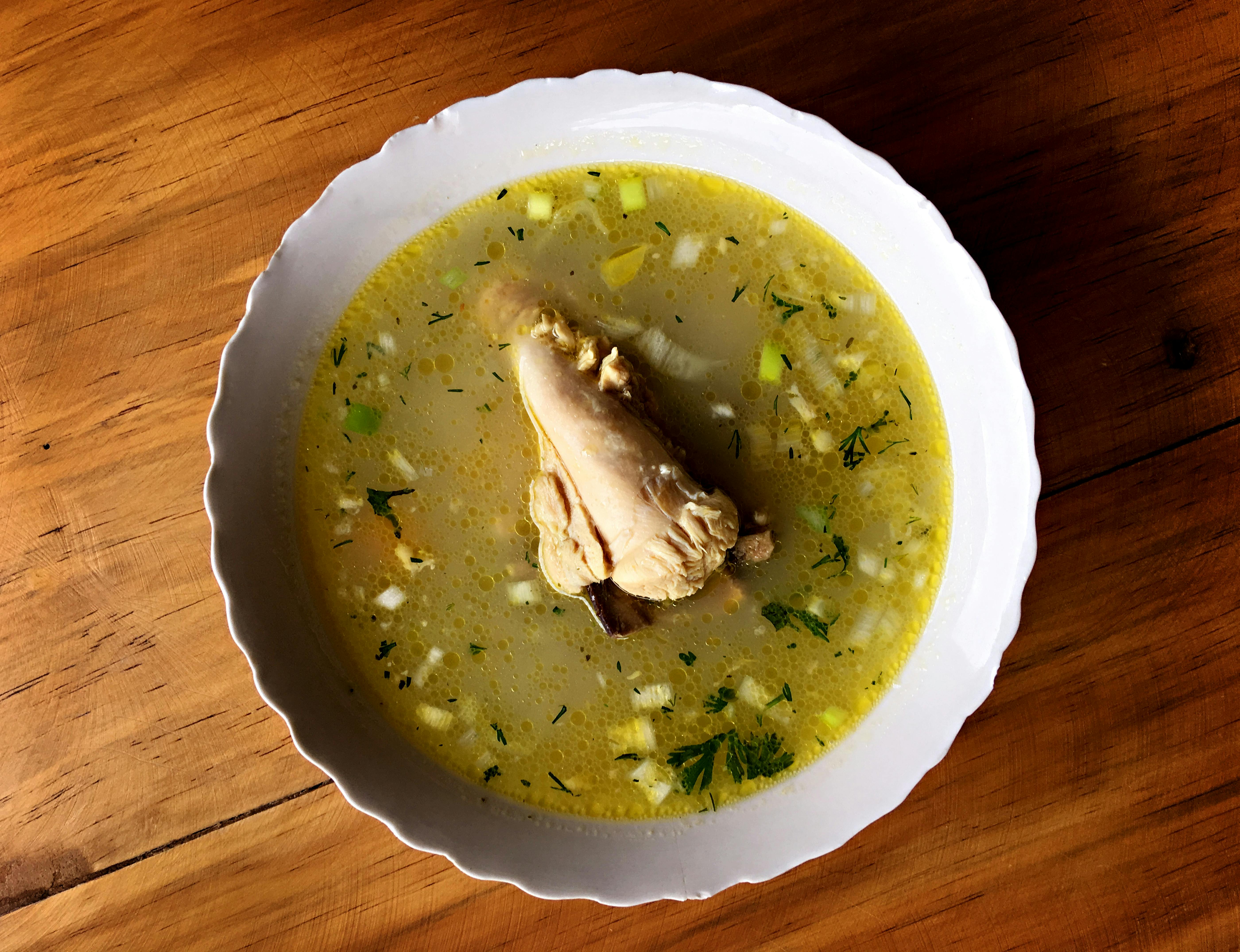
The diets react (see scores below)
Diet Ratings
Bone broth or quality chicken broth contains collagen, gelatin, and minimal carbs. Supports ketosis and gut health.
Chicken broth is made by simmering chicken bones and meat in water. Contains animal-derived ingredients and is not plant-based.
Homemade bone broth from chicken bones is a paleo staple, providing collagen, gelatin, and minerals. No additives or grains required.
Homemade chicken broth is a traditional Mediterranean ingredient used as a base for soups and dishes. It adds flavor and nutrients without excess fat when prepared properly, and supports plant-based vegetable dishes.
Bone broth from chicken is animal-derived, nutrient-dense, and universally accepted. Provides collagen, gelatin, and minerals. Ensure no plant-based additives or vegetable stock.
Homemade chicken broth with only chicken, water, vegetables, and salt is compliant. However, most commercial broths contain added sugar, MSG (now allowed per 2024 rules), or other additives. Label-reading is essential.
Official Whole30 guidelines allow MSG as of 2024, making many commercial broths compliant if they contain no added sugar or other excluded ingredients. However, some practitioners prefer homemade to avoid processed versions.
Plain chicken broth (water, chicken, salt) is low-FODMAP. However, most commercial broths contain onion and/or garlic, making them high-FODMAP. Homemade broth without aromatics is safe; store-bought requires label verification.
Monash rates plain chicken broth as low-FODMAP, but clinical practice often advises caution because most commercial broths contain garlic and onion powder. During elimination, homemade or verified garlic/onion-free broths are safer.
Standard chicken broth is typically high in sodium (often 800-1000mg per cup), which conflicts with DASH sodium limits. Low-sodium versions score higher. Provides some minerals but sodium content is the limiting factor.
Low-calorie, minimal macronutrients, and useful as a cooking medium or flavor base. Contains some protein and negligible carbs/fat. Does not significantly impact Zone ratios and supports anti-inflammatory cooking practices.
Bone broth and chicken broth contain collagen, gelatin, and amino acids (glycine, proline) that support gut barrier integrity and may reduce intestinal permeability. Low in inflammatory compounds. Provides minerals and is a foundational anti-inflammatory cooking ingredient.
Low-sodium chicken broth provides hydration and some collagen/amino acids, supporting digestion and satiety. However, protein content is minimal (1-2g per cup) and it lacks fiber. Useful as a base or sipping food during nausea, but should not substitute for protein-rich meals. Some GLP-1 patients find warm broths soothing; others find them insufficient for satiety.
Some RDs recommend broth primarily for hydration and nausea management rather than as a meaningful protein source, while others view it as a valuable low-calorie, easily digestible option that supports meal frequency without triggering GI distress.
Nutritional profile
Six traits that cut across every diet.
Fiber & Plants
How much whole-plant food and fiber it delivers.
Healthy Fats
The quality of its fats (unsaturated, omega-3).
Whole / Unprocessed
How close it is to its natural, unprocessed form.
Gut Gentle
How easy it is on digestion (low FODMAP, few irritants).
Low Glycemic
How little it spikes your blood sugar.
Protein Density
How much protein it packs per calorie.
 Low-FODMAP+3
 DASH+3
 Whole30+2
 Carnivore−2
Similar on the other 7 diets
Swaps into 69 dishes
Controversy Index
Score range: 1–9/10. Higher controversy = more disagreement between diets.
Diet-Specific Tips for Chicken broth
 Keto — 8/10
- Typically 0-1g net carbs per cup
- Collagen and electrolytes
- No added sugars (check label)
- Supports satiety
 Paleo — 9/10
- Homemade preferred
- Collagen and mineral source
- No additives
 Mediterranean — 8/10
- Traditional Mediterranean ingredient
- Supports vegetable-based dishes
- Low-fat when homemade
- Adds depth to legume soups
Carnivore — 8/10- Pure animal product
- Collagen and gelatin source
- Mineral-rich
- Must verify no plant additives
Whole30 — 6/10- Check label for added sugar
- MSG now allowed (2024 rule change)
- Homemade versions are safest
- Verify no soy or other legume derivatives
Low-FODMAP — 5/10- Depends on ingredients
- Garlic and onion are common hidden additives
- Homemade without aromatics is safe
DASH — 5/10- High sodium in standard versions
- Low-sodium alternatives available
- Minimal calories or macronutrients
- Can be used in moderation or replaced with low-sodium versions
 Zone — 8/10
- Minimal macronutrient impact
- Supports anti-inflammatory cooking
- Low sodium versions preferred
- Useful Zone meal component
 Anti-Inflammatory — 8/10
- collagen and gelatin
- gut-barrier supporting amino acids
- mineral content
- low inflammatory load
 GLP-1 Friendly — 5/10
- minimal protein
- high water content
- easy to digest
- low nutrient density
- hydration support