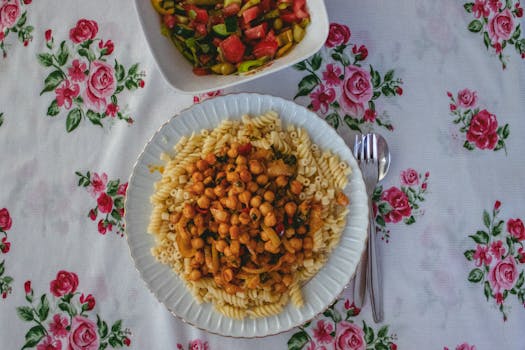
The diets react (see scores below)
Diet Ratings
Chickpea pasta contains ~20g net carbs per 100g cooked. Legume-based pasta with high carbohydrate content. Incompatible with ketogenic diet despite higher protein than wheat.
Plant-based pasta made from chickpea flour, higher protein than wheat pasta, minimally processed. Fully vegan-compliant. Verify no egg-based varieties.
Chickpea pasta is a processed legume-based grain substitute. It violates paleo through legume base and processing, despite being marketed as a protein-rich alternative.
Legume-based pasta with superior protein and fiber compared to refined grain pasta. Aligns with Mediterranean principles of legume consumption and whole food emphasis.
Chickpea pasta is legume-derived (plant-based) and explicitly excluded from carnivore diet. While higher protein than wheat pasta, it remains plant-derived and incompatible.
Pasta is explicitly prohibited as a recreated noodle product. Additionally, chickpea-based pasta contains legumes (chickpeas), which are excluded. Violates both the legume exclusion and the no-pasta rule.
Chickpea pasta is made from high-FODMAP chickpeas. While processing may reduce some FODMAPs, Monash testing suggests chickpea pasta remains high-FODMAP at typical serving sizes (1 cup cooked).
Monash University has limited specific testing on chickpea pasta products. Some clinical practitioners suggest small portions (50g cooked) may be tolerated, but this is not well-established and individual tolerance varies significantly.
Higher protein and fiber than refined pasta. Excellent DASH alternative with legume nutrients. Lower glycemic index. Score slightly lower than whole grain pasta due to processing.
Chickpea pasta is lower-glycemic than wheat pasta with higher protein content, making it more Zone-compatible. However, it remains processed and requires careful portioning. Works as a carb block alternative but whole chickpeas are preferable for optimal Zone adherence.
Whole legume-based pasta with high fiber, polyphenols, and plant protein. Lower glycemic index than refined wheat pasta. Supports healthy microbiota and sustained energy.
High protein (14g per cooked cup), high fiber (10g per cup), low fat, nutrient-dense. Better protein and fiber than regular pasta. Soft texture aids digestion. Small portions satisfying. Excellent GLP-1 grain alternative.
Nutritional profile
Six traits that cut across every diet.
Fiber & Plants
How much whole-plant food and fiber it delivers.
Healthy Fats
The quality of its fats (unsaturated, omega-3).
Whole / Unprocessed
How close it is to its natural, unprocessed form.
Gut Gentle
How easy it is on digestion (low FODMAP, few irritants).
Low Glycemic
How little it spikes your blood sugar.
Protein Density
How much protein it packs per calorie.
Controversy Index
Score range: 1–8/10. Higher controversy = more disagreement between diets.
Diet-Specific Tips for Chickpea pasta
 Vegan — 8/10
- Plant-based legume base
- Higher protein than wheat
- Minimal processing
- Verify no egg content
 Mediterranean — 8/10
- legume-based
- plant protein
- fiber content
- whole food
 DASH — 8/10
- Higher protein than refined pasta (12g per 2oz dry)
- Higher fiber (8g per 2oz dry)
- Lower glycemic index
- Retains potassium and magnesium from chickpeas
- Low sodium when unsalted
 Zone — 6/10
- Lower glycemic index than wheat pasta
- Higher protein than wheat pasta
- Still processed food
- Requires portion control
- Acceptable carb block alternative
 Anti-Inflammatory — 8/10
- whole legume base
- high fiber
- polyphenols
- plant protein
- low glycemic index
- minimal processing
 GLP-1 Friendly — 8/10
- high protein
- high fiber
- low fat
- nutrient-dense
- soft texture