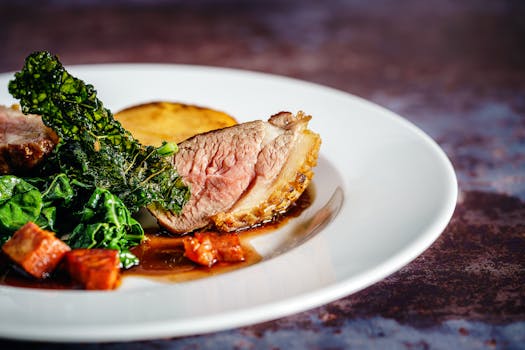
The diets react (see scores below)
Diet Ratings
Duck breast provides excellent fat content (skin-on) with 0g net carbs. High in healthy fats and quality protein. Whole, unprocessed food ideal for keto.
Duck breast is poultry meat, an animal product explicitly excluded from vegan diet.
Duck is a wild fowl available to hunter-gatherers. Unprocessed duck breast is a whole food with beneficial omega-3 fatty acids and micronutrients.
Duck is poultry but higher in fat than chicken or turkey. Mediterranean diet allows poultry in moderate amounts. Duck breast can fit occasionally, but fat content is higher than preferred poultry options. Skin removal recommended.
Mediterranean coastal regions, particularly in Southern France and Spain, have traditions of duck consumption. Some authorities view duck more favorably than red meat, though it remains secondary to leaner poultry.
Duck is a fatty poultry with excellent fat content and nutrient profile. Widely accepted in carnivore diet as a complete animal product with minimal processing.
Whole30 explicitly allows unprocessed poultry. Duck breast is a whole cut with no added ingredients.
Unprocessed poultry with no carbohydrates. Monash University confirms all unprocessed meats and poultry are low-FODMAP.
Duck breast with skin removed is moderately lean (5.3g fat per 3oz), but higher in saturated fat than chicken. Acceptable in DASH if portion-controlled and skin removed. NIH DASH guidelines emphasize poultry but don't specifically address duck; updated clinical interpretation suggests moderation due to fat profile.
NIH DASH guidelines group poultry generically; updated clinical interpretation distinguishes duck as higher-fat poultry requiring portion control versus chicken/turkey.
Duck breast contains moderate fat (~10-12g per 3oz cooked, skin removed), higher than chicken but lower than pork. Protein content is solid (~25g). Requires careful portioning and fat-block accounting. Sears' writings emphasize poultry but don't explicitly address duck; classification depends on skin removal.
Some Zone practitioners treat duck as acceptable if skin is removed and fat is trimmed, citing its favorable omega-3:omega-6 ratio compared to grain-fed poultry. Others classify it closer to red meat due to myoglobin content and fat density.
Duck is poultry but significantly higher in fat than chicken, with mixed inflammatory profile. Contains some beneficial compounds but saturated fat content is elevated. Skin removal improves anti-inflammatory properties.
Some nutritionists note duck's higher iron and selenium content as beneficial. However, mainstream anti-inflammatory guidance prioritizes leaner poultry options.
Duck breast has moderate-to-high fat content (11-13g fat per 3oz cooked), though lower than pork belly. Provides good protein (25g per 3oz) and micronutrients (iron, B vitamins). Skin should be removed. Some GLP-1 patients tolerate it well; others experience nausea from fat content. Individual tolerance varies significantly.
Some RDs recommend duck breast as acceptable lean poultry; others limit it due to fat content triggering GI side effects. Tolerance depends on individual sensitivity to dietary fat and concurrent GLP-1 dose.
Nutritional profile
Six traits that cut across every diet.
Fiber & Plants
How much whole-plant food and fiber it delivers.
Healthy Fats
The quality of its fats (unsaturated, omega-3).
Whole / Unprocessed
How close it is to its natural, unprocessed form.
Gut Gentle
How easy it is on digestion (low FODMAP, few irritants).
Low Glycemic
How little it spikes your blood sugar.
Protein Density
How much protein it packs per calorie.
Controversy Index
Score range: 1–9/10. Higher controversy = more disagreement between diets.
Diet-Specific Tips for Duck breast
 Keto — 9/10
- 0g net carbs
- High fat content with skin
- Quality protein
- Unprocessed
 Paleo — 8/10
- Wild game bird
- Unprocessed
- Omega-3 rich
- No additives
 Mediterranean — 5/10
- Poultry category but higher fat
- Moderate frequency acceptable
- Skin removal important
- Regional Mediterranean tradition exists
 Carnivore — 8/10
- High fat content for poultry
- Complete protein
- Nutrient-dense
- Minimal processing
 Whole30 — 9/10
- Unprocessed meat
- No added sugar or excluded ingredients
- Whole food
 Low-FODMAP — 9/10
- No fermentable carbohydrates
- Unprocessed poultry
- Pure protein and fat
 DASH — 5/10
- Moderate fat content
- Skin must be removed
- Good protein source
- Higher saturated fat than chicken
- Portion control essential
 Zone — 5/10
- Moderate fat content (skin-dependent)
- Good protein yield
- Requires skin removal
- Higher fat than chicken breast
 Anti-Inflammatory — 5/10
- Higher fat than chicken or turkey
- Contains iron and selenium
- Skin contains significant saturated fat
- Moderate omega-6 content
 GLP-1 Friendly — 5/10
- moderate-high fat (skin removal critical)
- good protein content
- micronutrient-rich
- individual tolerance varies
Editor's Picks
As an Amazon Associate, FoodRef.ai earns from qualifying purchases. This does not affect our ratings.