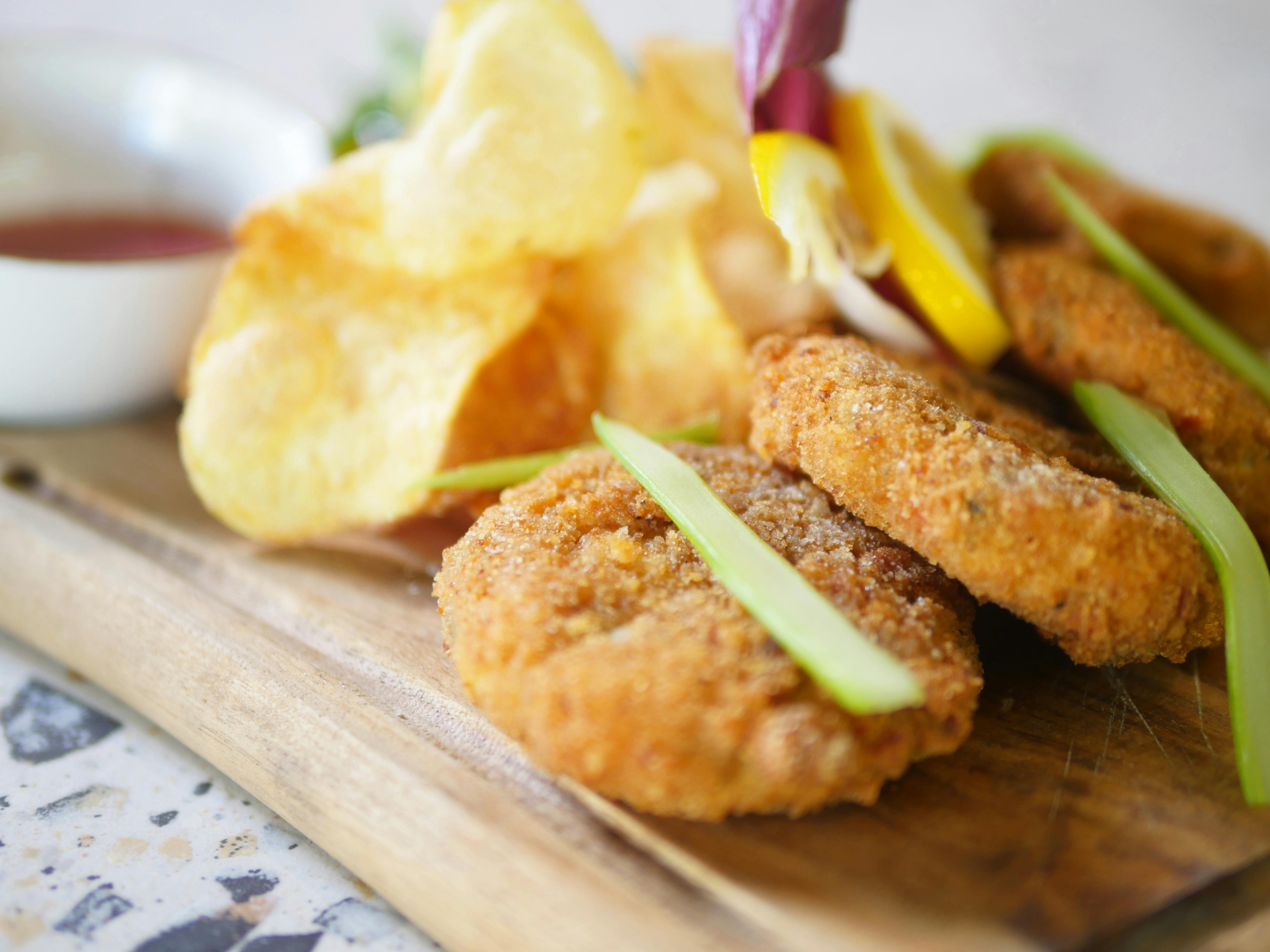
The diets react (see scores below)
Diet Ratings
Fish cakes vary widely; most contain 5-10g net carbs per 100g due to binders and fillers. Some brands add sugar or starch. Requires label verification.
Strict keto practitioners avoid fish cakes due to processing and hidden carbs; others accept homemade versions with verified low-carb binders.
Fish cake is made from fish meat, making it a direct animal product. It is explicitly excluded from all vegan diets regardless of other ingredients.
Fish cakes are processed foods typically containing binders (starches, grains), fillers, and additives. Often contain wheat flour, breadcrumbs, or other excluded ingredients. Processing contradicts paleo philosophy.
Fish cakes contain fish (positive) but are often breaded, fried, and may contain additives or binders. Processing level and preparation method are concerns, though the fish base is Mediterranean-aligned.
Homemade fish cakes with minimal binders and baked preparation could be acceptable in moderation; however, most commercial fish cakes are processed and fried, making them less ideal.
Fish cakes are animal-derived (fish-based) but often contain fillers, binders, starches, or plant-based additives. Quality varies significantly. Pure fish cakes with minimal additives are acceptable; commercial versions often contain problematic ingredients.
Strict carnivores avoid all processed meat products including fish cakes due to potential additives and fillers. Purists prefer whole fish only.
Fish cakes are processed products typically made from ground fish mixed with binders, starches (often corn starch or rice starch), and additives. They frequently contain excluded ingredients such as corn starch, added sugar, and other processed additives. Additionally, the cake format violates the program's spirit against recreating processed foods.
Fish cake varies widely in composition depending on recipe and brand. Base fish is low-FODMAP, but added ingredients (binders, fillers, garlic, onion, wheat starch, added sugars) may introduce FODMAPs. Without ingredient verification, caution is warranted during elimination phase.
Commercial fish cakes often contain garlic, onion, wheat flour, or high-fructose corn syrup as binders or flavorings—all high-FODMAP. Homemade fish cakes with verified low-FODMAP ingredients would be safer, but most store-bought versions should be avoided during elimination.
Fish cakes are typically processed products with high sodium (often 400-600mg per 100g), added binders, and sometimes added sugars. While they contain fish protein, the processing, sodium content, and additives make them inconsistent with DASH principles for regular consumption.
Fish cake is a processed product combining fish protein with binders and fillers. Macronutrient profile varies by brand but typically 12-15g protein, 10-15g carbs, 5-8g fat per 100g. Often contains added sugars and refined carbohydrates. Can fit into Zone meals but requires careful selection of low-sugar varieties and precise portioning.
Fish cakes vary significantly by preparation and region. Some versions are heavily processed with added sugars and trans fats, making them closer to 'avoid' status. Higher-quality versions with minimal additives score higher.
Fish cakes are processed products typically containing fish, starch, salt, and additives (binders, preservatives, sometimes MSG). While they retain some omega-3s from fish, the processing, added sodium, and refined carbohydrates reduce anti-inflammatory benefit. Quality varies significantly by brand and preparation.
Some anti-inflammatory practitioners accept minimally processed fish cakes made with whole fish and minimal additives as acceptable. However, most commercial fish cakes contain refined starches and sodium levels that conflict with anti-inflammatory principles.
Fish cakes typically contain 10-15g protein per 100g but are often fried or pan-fried (high fat, 10-15%), contain fillers/binders, and may include added sugar. Processing reduces nutrient density. High fat content may trigger nausea. Better options exist for protein.
Some RDs accept baked or steamed fish cakes as convenient protein; others avoid due to processing, added sodium, and typical preparation method (frying) that worsens GLP-1 side effects. Preparation method significantly affects suitability.
Nutritional profile
Six traits that cut across every diet.
Fiber & Plants
How much whole-plant food and fiber it delivers.
Healthy Fats
The quality of its fats (unsaturated, omega-3).
Whole / Unprocessed
How close it is to its natural, unprocessed form.
Gut Gentle
How easy it is on digestion (low FODMAP, few irritants).
Low Glycemic
How little it spikes your blood sugar.
Protein Density
How much protein it packs per calorie.
Controversy Index
Score range: 1–5/10. Higher controversy = more disagreement between diets.
Diet-Specific Tips for Fish cake
 Keto — 4/10
- Variable carb content (5-10g per 100g typical)
- Processing and binders
- Label-dependent
- Potential hidden sugars
 Mediterranean — 5/10
- Fish-based (positive)
- Often fried or breaded
- May contain additives
- Processing concerns
 Carnivore — 5/10
- Animal-derived base
- Often contains fillers or binders
- Processing level varies
- Ingredient quality critical
 Low-FODMAP — 5/10
- Fish base is low-FODMAP
- Added ingredients highly variable
- Garlic and onion common in recipes
- Wheat starch or fillers may be present
 Zone — 5/10
- Processed product
- Variable macronutrient profile
- Often contains added sugars
- Moderate protein content
- Requires brand/recipe verification
 Anti-Inflammatory — 4/10
- processed food
- some omega-3 from fish
- high sodium
- refined starch content
- potential additives
 GLP-1 Friendly — 4/10
- Moderate protein
- Often fried or high-fat
- Processed with fillers
- May contain added sugar
- Preparation-dependent