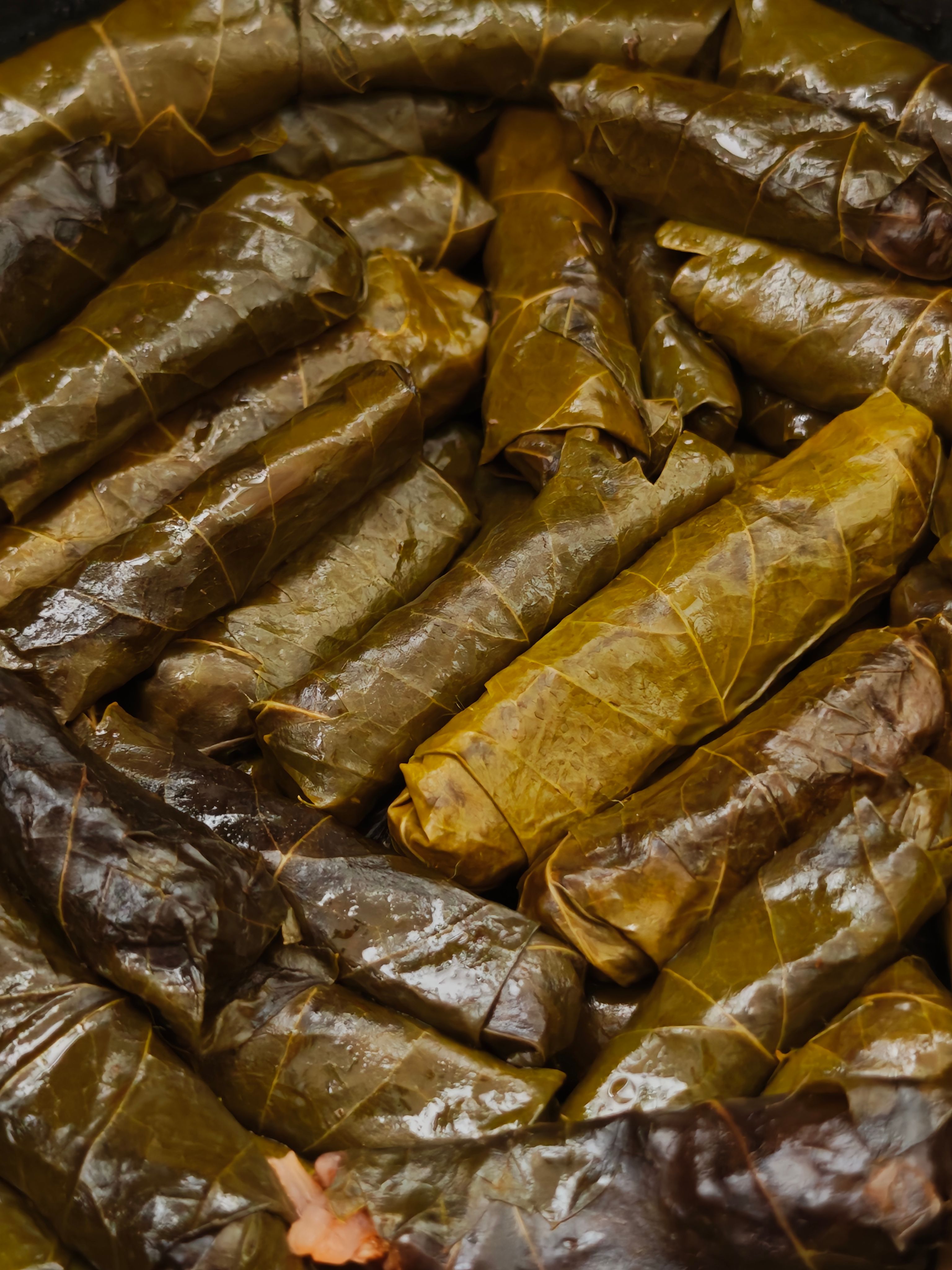
The diets react (see scores below)
Diet Ratings
Grape leaves are low in carbs (2-3g net carbs per 100g) and high in fiber. Excellent for wrapping and adding to salads without carb impact.
Grape leaves are the leaves of grapevines, used in Mediterranean and Middle Eastern cuisine. They are a whole plant with no animal products or animal-derived ingredients.
Grape leaves are unprocessed plant material. Contain no excluded ingredients, grains, legumes, or additives. Used as vegetable wraps in ancestral cuisines.
Grape leaves are a traditional Mediterranean ingredient, especially in Greek and Turkish cuisine (dolmas). Plant-based, minimally processed, and a staple in Mediterranean cooking.
Grape leaves are plant-derived. Carnivore diet excludes all plant foods including leaves and vegetables. No animal origin.
Grape leaves are a whole vegetable product with no excluded ingredients. They are used in various cuisines and are a compliant vegetable on Whole30.
Grape leaves are low-FODMAP. Grapes themselves are low-FODMAP at standard portions per Monash, and leaves contain no significant fructans, GOS, lactose, or polyols. Typically used in small quantities in dishes like dolmas.
Fresh grape leaves are low in sodium and calories, but preserved/jarred grape leaves (commonly used in cooking) are typically packed in brine with 400-800mg sodium per 100g. Fresh versions score higher; preserved versions require rinsing and portion control. Rating reflects the most common preserved form.
Grape leaves are a low-calorie vegetable with minimal carbohydrates and negligible protein/fat. Approximately 3g net carbs per 100g. Rich in polyphenols and anti-inflammatory compounds. Can be used as a vegetable component in Zone meals without significantly impacting ratios. Excellent for adding volume and nutrients.
Grape leaves are rich in polyphenols, tannins, and antioxidants with documented anti-inflammatory properties. Low in calories, high in fiber. Used in Mediterranean and Middle Eastern cuisines. Minimal processing when fresh or simply preserved.
Low calorie (33 kcal per 100g), good fiber, minimal fat, supports hydration (high water content). Often used in Mediterranean cuisine. Easy to digest, nutrient-dense per calorie. Supports satiety without GI burden.
Nutritional profile
Six traits that cut across every diet.
Fiber & Plants
How much whole-plant food and fiber it delivers.
Healthy Fats
The quality of its fats (unsaturated, omega-3).
Whole / Unprocessed
How close it is to its natural, unprocessed form.
Gut Gentle
How easy it is on digestion (low FODMAP, few irritants).
Low Glycemic
How little it spikes your blood sugar.
Protein Density
How much protein it packs per calorie.
Controversy Index
Score range: 1–9/10. Higher controversy = more disagreement between diets.
Diet-Specific Tips for Grape leaves
 Keto — 8/10
- Low net carbs (2-3g per 100g)
- High fiber
- Whole food
- Versatile preparation
 Vegan — 9/10
- Whole plant leaves
- No animal products
- Minimal processing
 Paleo — 9/10
- Unprocessed plant material
- No grains, legumes, or dairy
- Ancestral culinary use
- Minimal processing
 Mediterranean — 9/10
- Traditional Mediterranean ingredient
- Plant-based
- Minimal processing
- Staple in Greek and Turkish cuisine
 Whole30 — 9/10
- Whole vegetable product
- No excluded ingredients
- Vegetables are explicitly allowed
 Low-FODMAP — 8/10
- Leaves are low-FODMAP
- No significant carbohydrate content
- Typically used in small amounts
 DASH — 5/10
- Fresh: low sodium, low calorie
- Preserved/jarred: high sodium (400-800mg per 100g)
- Rinsing reduces sodium by 30-40%
- Preparation method critical
 Zone — 8/10
- Low glycemic carbohydrate
- Minimal caloric impact
- Polyphenol-rich
- Anti-inflammatory
- Excellent vegetable choice
 Anti-Inflammatory — 8/10
- polyphenols and tannins
- antioxidants
- low calorie density
- fiber content
- minimal processing
 GLP-1 Friendly — 7/10
- Low calorie
- Good fiber
- High water content
- Low fat
- Easy to digest