The diets react (see scores below)
Diet Ratings
Unsweetened grated coconut contains 3-4g net carbs per ounce with high fat content (70%+ calories from fat). Excellent keto ingredient. Avoid sweetened versions.
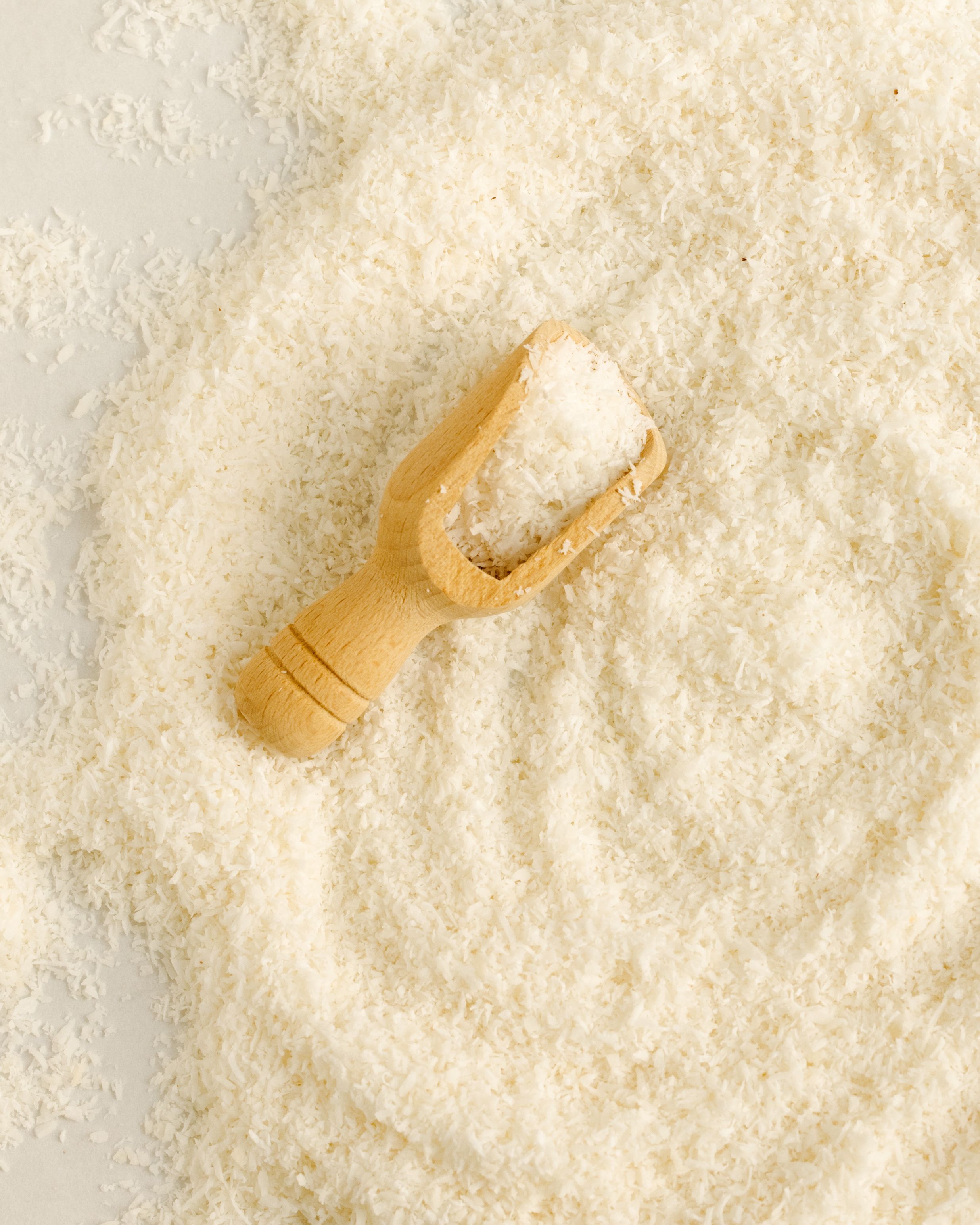
Grated coconut is shredded coconut meat with no animal products or animal-derived ingredients. It is a whole plant food suitable for all vegan diets.
Grated coconut is unprocessed coconut meat. Contains no excluded ingredients, additives, or seed oils. Approved paleo food with healthy fat profile.
Grated coconut is plant-based but high in saturated fat. Not traditional to Mediterranean cuisine. While some modern interpretations include coconut as a plant fat, olive oil remains the canonical fat source.
Contemporary Mediterranean diet advocates may include coconut as a plant-based fat alternative, particularly in modern adaptations, though traditional Mediterranean sources rely exclusively on olive oil.
Grated coconut is plant-derived from coconut fruit. Carnivore diet excludes all plant foods including fruits and nuts. Despite high fat content, it violates the animal-only principle.
Grated coconut (unsweetened) is a whole food product made from coconut meat. Coconut is explicitly allowed on Whole30. Ensure the product contains no added sugar or other additives.
Grated coconut (unsweetened) is low-FODMAP. Coconut is naturally low in FODMAPs. Monash rates coconut milk and shredded coconut as low-FODMAP at standard portions. Grating does not introduce FODMAPs.
Grated coconut is high in saturated fat (approximately 90% of fat content is saturated), which DASH limits. While coconut provides fiber and minerals, the saturated fat content conflicts with DASH guidelines limiting saturated fat to 6% of daily calories. Small amounts as garnish are acceptable; regular consumption is not recommended.
NIH DASH guidelines explicitly limit tropical oils including coconut due to saturated fat content. However, some updated DASH interpretations note that whole coconut (not oil) contains fiber and may have a different metabolic effect; conservative DASH practitioners still recommend limiting it.
Grated coconut is high in saturated fat (approximately 33g fat, 9g carbs per 100g). While coconut fat has some beneficial properties, Sears' Zone protocol emphasizes monounsaturated fats and limits saturated fat. Can fit into Zone meals in small portions but requires careful balancing. Unsweetened varieties preferred over sweetened.
Sears' later anti-inflammatory work acknowledges some saturated fat is acceptable, and coconut's medium-chain triglycerides have metabolic benefits. Some Zone practitioners accept modest coconut use. However, traditional Zone guidance prioritizes monounsaturated sources like olive oil and almonds.
Grated coconut is high in saturated fat (primarily lauric acid), which has mixed inflammatory effects. Lauric acid may raise LDL cholesterol in some individuals, but coconut also contains polyphenols and medium-chain triglycerides. Acceptable in moderation as part of a balanced diet, but should not be a primary fat source.
Some anti-inflammatory practitioners embrace coconut fat as metabolically favorable and anti-inflammatory due to MCT content and polyphenols. Mainstream nutrition science cautions against excessive saturated fat intake regardless of source. The evidence on coconut's net inflammatory effect remains contested.
High fat (35-40% saturated fat), high calorie density (350+ kcal per 100g), minimal protein (3-4g). Small portions only. Saturated fat and high fat content worsen GLP-1 nausea and bloating. Not recommended as a staple.
Nutritional profile
Six traits that cut across every diet.
Fiber & Plants
How much whole-plant food and fiber it delivers.
Healthy Fats
The quality of its fats (unsaturated, omega-3).
Whole / Unprocessed
How close it is to its natural, unprocessed form.
Gut Gentle
How easy it is on digestion (low FODMAP, few irritants).
Low Glycemic
How little it spikes your blood sugar.
Protein Density
How much protein it packs per calorie.
Controversy Index
Score range: 1–9/10. Higher controversy = more disagreement between diets.
Diet-Specific Tips for Grated coconut
 Keto — 8/10
- Low net carbs (3-4g per ounce unsweetened)
- High fat content
- Whole food
- Must verify unsweetened
 Vegan — 9/10
- Plant-based
- No animal products
- Minimal processing
 Paleo — 9/10
- Unprocessed plant food
- Healthy fat content
- No additives or seed oils
- Ancestral food source
 Mediterranean — 5/10
- Plant-based
- High saturated fat
- Not Mediterranean origin
- Minimal processing
 Whole30 — 9/10
- Whole coconut product
- Coconut is explicitly allowed
- Must verify no added sugar
 Low-FODMAP — 8/10
- Coconut is low-FODMAP
- No added sugars (if unsweetened)
- Standard portions are safe
 DASH — 4/10
- Very high saturated fat (90% of fat)
- High caloric density
- Contains fiber and minerals
- Conflicts with DASH saturated fat limits
 Zone — 5/10
- High saturated fat content
- Moderate carbohydrates
- Medium-chain triglycerides
- Requires small portions
- Unsweetened preferred
 Anti-Inflammatory — 5/10
- high saturated fat (lauric acid)
- polyphenols
- medium-chain triglycerides
- high caloric density
 GLP-1 Friendly — 5/10
- High saturated fat
- High calorie density
- Low protein
- Triggers nausea
- Portion-critical