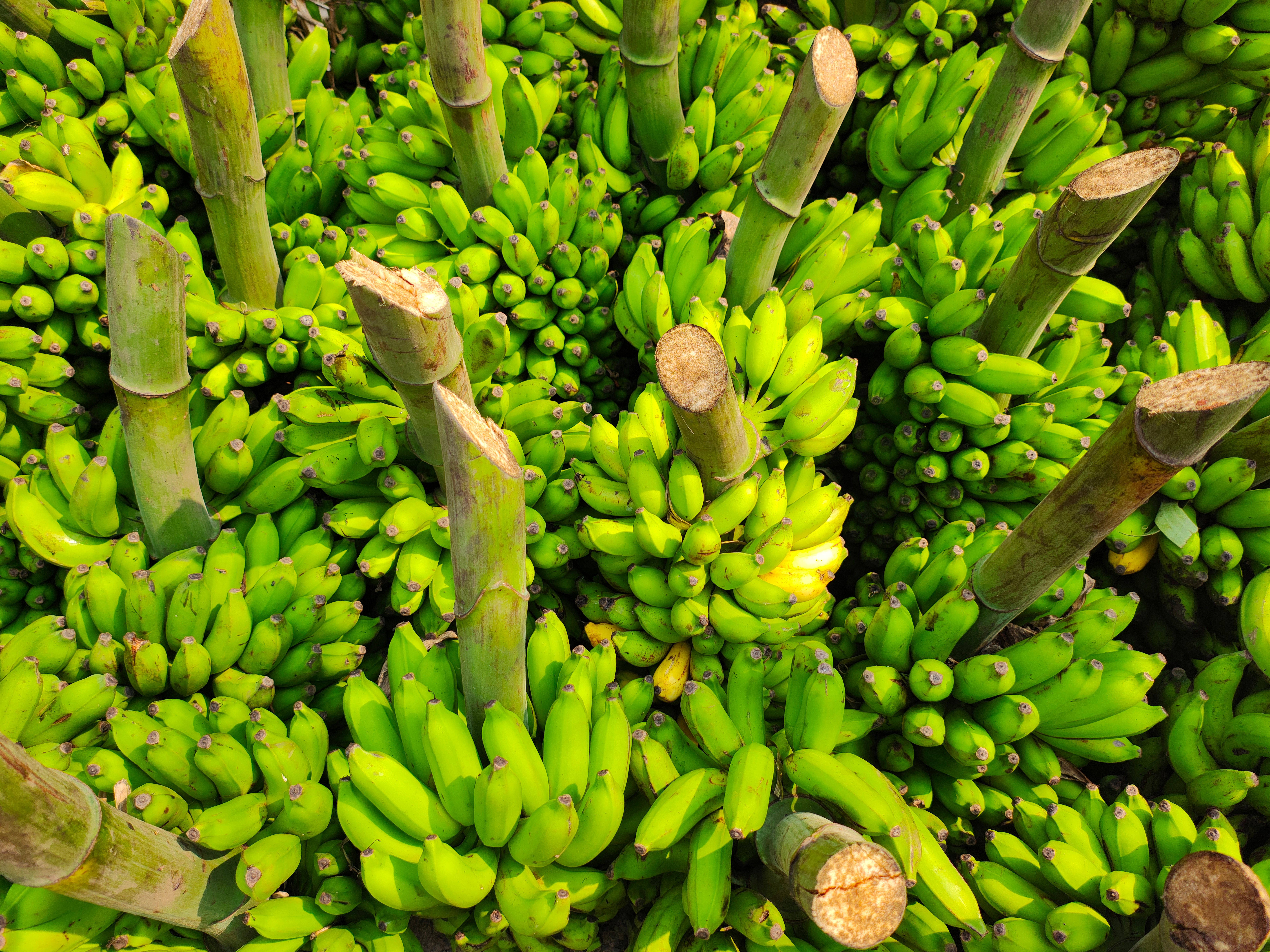
The diets react (see scores below)
Diet Ratings
Green bananas contain 20-25g net carbs per 100g. Even unripe, they are fruit with high carb content. Incompatible with keto.
Green bananas are unripe bananas with no animal products or animal-derived ingredients. They are a whole plant food rich in resistant starch and suitable for all vegan diets.
Green bananas are lower in sugar than ripe bananas and contain resistant starch, which some paleo practitioners accept as a safe starch. However, bananas are fruits with higher carbohydrate content than ancestral diets typically provided.
Strict paleo followers exclude all bananas as non-ancestral tropical fruits with high sugar content. However, Paul Jaminet's Perfect Health Diet and some modern paleo practitioners accept green bananas specifically for their resistant starch content and lower glycemic impact.
Green bananas are plant-based, whole foods with resistant starch and fiber. While not traditionally Mediterranean, they align with the plant-forward principle and are increasingly recognized as a healthy carbohydrate source.
Strict Mediterranean traditionalists may note that bananas are not native to the Mediterranean region; however, modern Mediterranean diet principles embrace plant-based whole foods universally.
Green bananas are fruit, a plant food explicitly excluded from carnivore diet. Ripeness stage does not change their plant origin or incompatibility.
Green bananas are whole fruit with no excluded ingredients. All fruit is explicitly allowed on Whole30, including bananas at any stage of ripeness.
Green (unripe) bananas are low-FODMAP and actually preferred over ripe bananas during elimination phase. Unripe bananas contain resistant starch rather than free fructose, making them lower in FODMAPs than yellow or brown bananas. Monash rates bananas as low-FODMAP.
Green bananas are excellent DASH foods, rich in potassium, fiber, and resistant starch. They have lower sugar content than ripe bananas and provide sustained energy. Bananas are explicitly encouraged in DASH eating plans as a core fruit source.
Green bananas are lower in sugar than ripe bananas due to higher resistant starch content. Approximately 23g net carbs and 1g protein per 100g. Resistant starch provides lower glycemic impact than ripe bananas. Can fit into Zone meals as a carb block but requires careful portioning and pairing with lean protein and monounsaturated fat.
Bananas are classified as 'unfavorable' carbs in Zone due to higher glycemic index and sugar content. Green bananas are better than ripe bananas due to resistant starch, but still less ideal than vegetables or whole grains. Some Zone practitioners avoid all bananas; others accept green bananas in moderation.
Green (unripe) bananas are high in resistant starch, which acts as a prebiotic and supports anti-inflammatory gut microbiota. Lower glycemic index than ripe bananas. Rich in polyphenols and potassium. Supports digestive health and stable blood sugar.
Green bananas contain resistant starch (prebiotic fiber, ~3-4g per 100g), which supports digestion and may be easier to tolerate than ripe bananas. However, still carb-heavy (23g per 100g) with minimal protein (1g). Better than ripe bananas but not ideal for GLP-1 patients with reduced appetite.
Some RDs recommend green bananas for their resistant starch and prebiotic benefits; others view them as unnecessary carbs in a reduced-calorie context where protein and nutrient density should be prioritized. Tolerance depends on individual carb sensitivity.
Nutritional profile
Six traits that cut across every diet.
Fiber & Plants
How much whole-plant food and fiber it delivers.
Healthy Fats
The quality of its fats (unsaturated, omega-3).
Whole / Unprocessed
How close it is to its natural, unprocessed form.
Gut Gentle
How easy it is on digestion (low FODMAP, few irritants).
Low Glycemic
How little it spikes your blood sugar.
Protein Density
How much protein it packs per calorie.
Controversy Index
Score range: 1–9/10. Higher controversy = more disagreement between diets.
Diet-Specific Tips for Green bananas
 Vegan — 9/10
- Whole plant fruit
- No animal products
- Unprocessed
 Paleo — 6/10
- Fruit with moderate carbohydrate content
- Resistant starch in green form
- Lower sugar than ripe bananas
- Portion control important
 Mediterranean — 7/10
- Plant-based whole food
- High in resistant starch
- Not Mediterranean origin
- Minimal processing
 Whole30 — 9/10
- Whole fruit product
- All fruit is explicitly allowed
- No excluded ingredients
 Low-FODMAP — 8/10
- Resistant starch in unripe form
- Lower free fructose than ripe bananas
- Monash-approved at standard portions
 DASH — 8/10
- High potassium (DASH priority mineral)
- High fiber content
- Lower sugar than ripe bananas
- Resistant starch supports digestive health
 Zone — 6/10
- Moderate carbohydrate content
- Resistant starch reduces glycemic impact
- Lower sugar than ripe bananas
- Minimal protein
- Requires precise portioning
 Anti-Inflammatory — 7/10
- resistant starch
- prebiotic fiber
- lower glycemic index
- polyphenols
- potassium
- gut microbiome support
 GLP-1 Friendly — 5/10
- Resistant starch
- Prebiotic fiber
- High carbohydrate
- Low protein
- Better than ripe bananas