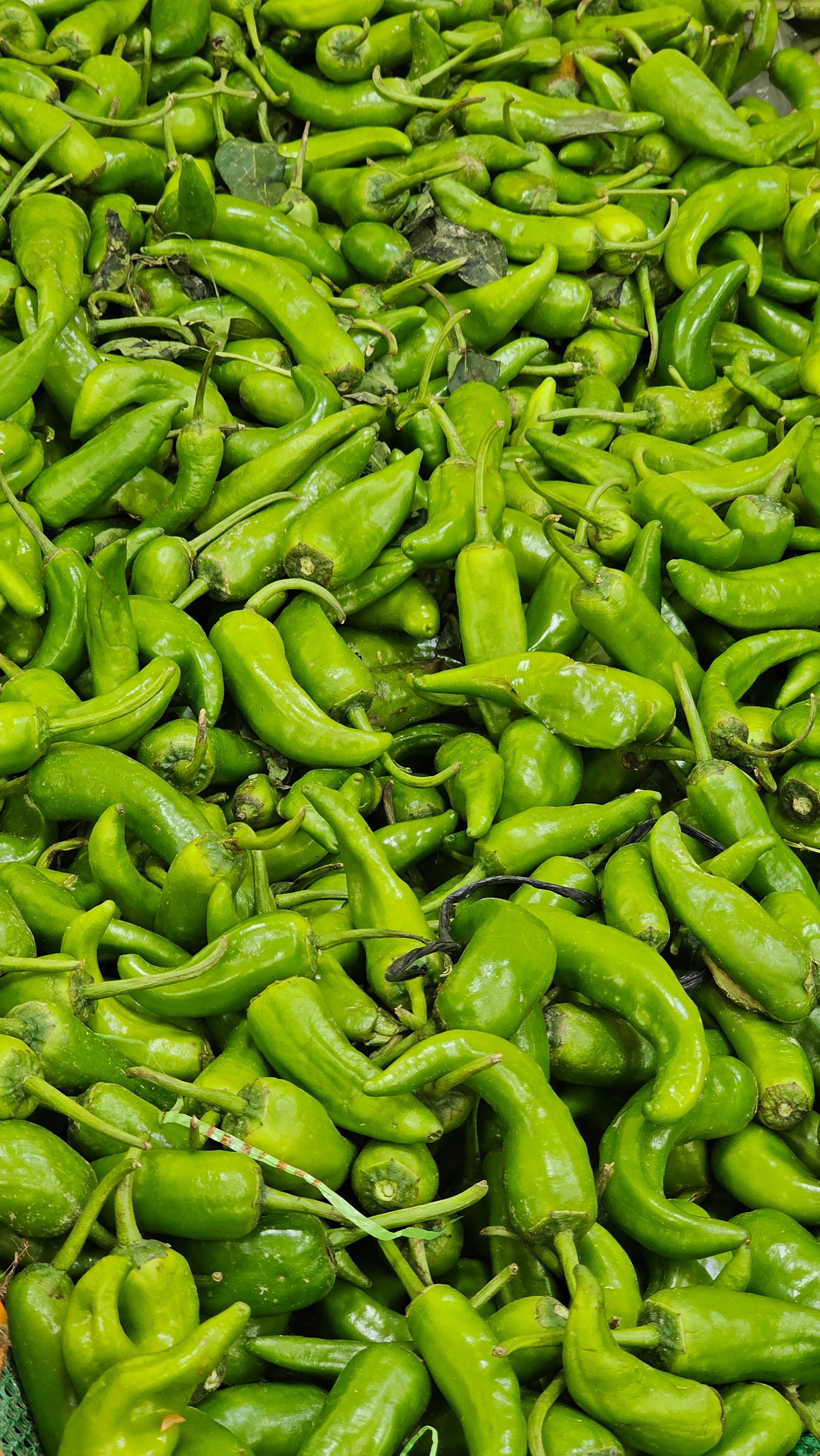
The diets react (see scores below)
Diet Ratings
Green chiles contain ~3g net carbs per 100g but are typically consumed in small quantities (1-2 peppers per meal). Negligible carb impact while providing flavor and nutrients.
Green chiles are peppers with no animal products or animal-derived ingredients. They are a whole plant-based food.
Green chiles are unprocessed vegetables available to Paleolithic humans. Rich in vitamin C and capsaicin with anti-inflammatory properties. Nightshade family but widely accepted in paleo.
Green chiles are whole plant foods with minimal calories, rich in vitamins and antioxidants. While not traditionally Mediterranean, they align perfectly with the diet's emphasis on plant-based whole foods and can be used liberally.
Green chiles are plant-derived peppers. All vegetables and plant foods are explicitly excluded from carnivore diet. Contains plant compounds and alkaloids not aligned with carnivore principles.
Green chiles are vegetables/peppers, which are explicitly allowed on Whole30. They are whole, unprocessed foods with no excluded ingredients.
Fresh green chiles (e.g., poblano, serrano, jalapeño) are low-FODMAP at standard servings. Monash confirms no significant FODMAP content in typical culinary amounts.
Green chiles are a core DASH vegetable with negligible sodium, low calories, and rich in vitamin C and antioxidants. They add flavor without salt, supporting DASH's emphasis on herbs and spices for taste. Fresh or roasted green chiles are ideal; canned versions may contain added sodium.
Green chiles are low-glycemic vegetables with minimal net carbohydrates (~2g per 100g) and high fiber. They provide polyphenols and capsaicin (anti-inflammatory compounds) without disrupting Zone ratios. Like other peppers, they are ideal Zone carbohydrate sources and contribute to the anti-inflammatory focus. They are an excellent choice for flavor and nutrition.
Green chiles contain capsaicin, which has potent anti-inflammatory and analgesic properties. Rich in vitamin C and polyphenols. Nightshade vegetables, but widely included in anti-inflammatory diets due to their capsaicin content and antioxidant profile.
Green chiles are low-calorie (30 kcal per 100g) and nutrient-dense (vitamin C, fiber). However, spice level varies widely. Mild green chiles are acceptable; hot varieties may worsen reflux and nausea in GLP-1 patients with sensitive GI tracts. Individual tolerance is key.
Some GLP-1 RDs recommend avoiding all chiles due to reflux risk; others note that mild green chiles are well-tolerated by most patients and provide nutritional benefit. Tolerance depends on baseline GI sensitivity and injection timing.
Nutritional profile
Six traits that cut across every diet.
Fiber & Plants
How much whole-plant food and fiber it delivers.
Healthy Fats
The quality of its fats (unsaturated, omega-3).
Whole / Unprocessed
How close it is to its natural, unprocessed form.
Gut Gentle
How easy it is on digestion (low FODMAP, few irritants).
Low Glycemic
How little it spikes your blood sugar.
Protein Density
How much protein it packs per calorie.
Controversy Index
Score range: 1–10/10. Higher controversy = more disagreement between diets.
Diet-Specific Tips for Green chiles
 Keto — 8/10
- 3g net carbs per 100g
- Used in small portions
- Minimal carb burden per serving
- Whole food ingredient
 Vegan — 10/10
- Plant-based
- No animal ingredients
- Whole food vegetable
 Paleo — 9/10
- Unprocessed vegetable
- Anti-inflammatory properties
- Available to hunter-gatherers
- No anti-nutrients
 Mediterranean — 8/10
- whole plant food
- nutrient-dense
- minimal processing
- no added sugars
- compatible with principles
 Whole30 — 10/10
- Vegetable
- Whole food
- Explicitly allowed
 Low-FODMAP — 8/10
- No fructans, GOS, lactose, or polyols
- Safe at standard cooking portions
- Excellent low-FODMAP seasoning option
 DASH — 9/10
- Negligible sodium (fresh)
- Rich in vitamin C
- Low calorie
- Supports salt-free flavoring
 Zone — 9/10
- Low-glycemic
- High fiber
- Polyphenol-rich
- Capsaicin (anti-inflammatory)
- Nutrient-dense
- Favorable vegetable
 Anti-Inflammatory — 8/10
- capsaicin (anti-inflammatory)
- vitamin C
- polyphenols
- antioxidants
- nightshade (but capsaicin-rich)
 GLP-1 Friendly — 6/10
- Low calorie, nutrient-dense
- Good fiber content
- Spice level variable and individual tolerance-dependent
- May worsen reflux in sensitive patients
- Mild varieties generally acceptable