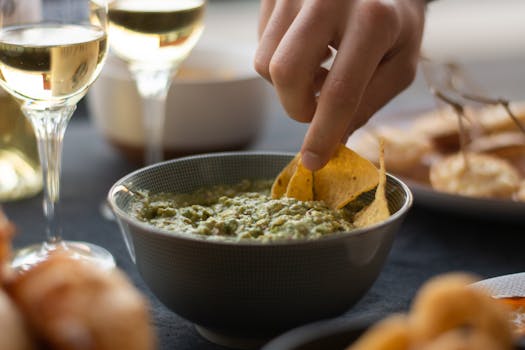
The diets react (see scores below)
Diet Ratings
Approximately 2-3g net carbs per 2-tablespoon serving. High fat from avocado, minimal carbs. Excellent keto food. Verify no added sugars in commercial versions.
Made from avocados, lime, and spices. Pure plant-based whole food. Verify commercial versions don't contain dairy or other additives.
Guacamole (avocados, lime, cilantro, salt, peppers) is made entirely from paleo-approved ingredients. Avocados are nutrient-dense fruits rich in healthy fats. Minimal processing aligns perfectly with paleo philosophy.
Guacamole is made from avocados, which are rich in monounsaturated fats similar to olive oil. While avocados are not traditional Mediterranean, they align with the diet's emphasis on healthy fats and whole foods. Portion control is important due to caloric density.
Made from avocados (fruit) and other plant ingredients like lime and cilantro. Plant-based food violates carnivore exclusion of all plant foods and fruits.
Fresh guacamole (avocados, lime, salt, cilantro) is compliant. Most commercial versions are also compliant, but some contain additives or preservatives. Homemade is ideal.
Some Whole30 practitioners prefer homemade guacamole to avoid any processing or additives, though most commercial versions are technically compliant.
Guacamole made from avocado, lime, and salt is low-FODMAP. Monash University confirms avocado is low-FODMAP. Avoid versions with added garlic or onion.
Excellent source of monounsaturated fat, potassium, fiber, and magnesium. Low sodium (typically <100mg per 2 tablespoons). Supports DASH nutrient profile. Portion control important due to caloric density.
Avocado is monounsaturated fat ideal. Low-glycemic carbs from vegetables. Polyphenol-rich. Anti-inflammatory. Perfect fat block component. Minimal processing.
Avocados are explicitly emphasized in anti-inflammatory pyramid for omega-3 content and polyphenols. Guacamole combines avocado with anti-inflammatory ingredients (lime, cilantro, onion, garlic). Excellent choice.
High fat content (9g per 2 tbsp serving) from avocado, which worsens nausea and bloating on GLP-1. Contains fiber and some nutrients, but fat load is problematic. Small amounts (1-2 tbsp) may be tolerated as a condiment on lean proteins. Some RDs recommend avoiding; others allow minimal portions.
Some GLP-1 nutrition specialists recommend avoiding guacamole entirely due to high fat density and nausea risk. Others suggest small amounts (1-2 tbsp) are acceptable if paired with lean protein, arguing the monounsaturated fat and nutrient density justify limited use. Individual fat tolerance varies significantly.
Nutritional profile
Six traits that cut across every diet.
Fiber & Plants
How much whole-plant food and fiber it delivers.
Healthy Fats
The quality of its fats (unsaturated, omega-3).
Whole / Unprocessed
How close it is to its natural, unprocessed form.
Gut Gentle
How easy it is on digestion (low FODMAP, few irritants).
Low Glycemic
How little it spikes your blood sugar.
Protein Density
How much protein it packs per calorie.
Controversy Index
Score range: 1–9/10. Higher controversy = more disagreement between diets.
Diet-Specific Tips for Guacamole
 Keto — 9/10
- 2-3g net carbs per 2 tablespoons
- High healthy fat
- Avocado-based
- Check commercial versions for additives
 Vegan — 9/10
- Whole plant food
- No animal products
- Check commercial versions
 Paleo — 9/10
- Avocado is paleo superfood
- All ingredients paleo-compliant
- Minimal processing
- Homemade preferred; check store-bought for additives
 Mediterranean — 8/10
- healthy monounsaturated fats
- whole food
- minimally processed
- nutrient-dense
- high calorie density
 Whole30 — 5/10
- Homemade preferred
- Most commercial versions compliant
- Check for additives
 Low-FODMAP — 8/10
- Avocado is low-FODMAP
- Minimal fermentable carbohydrates
- Check for added garlic/onion
- Homemade is safest
 DASH — 8/10
- monounsaturated fat
- potassium and magnesium content
- fiber-rich
- low sodium
- calorie-dense
 Zone — 9/10
- Monounsaturated fat dominant
- Low-glycemic carbs
- Polyphenol-rich
- Anti-inflammatory
- Minimal processing
 Anti-Inflammatory — 9/10
- High omega-3 fatty acids from avocado
- Polyphenols and antioxidants
- Anti-inflammatory supporting ingredients
- Portion control recommended due to caloric density
 GLP-1 Friendly — 5/10
- high fat content
- triggers nausea
- nutrient-dense
- portion-dependent
- fiber-rich