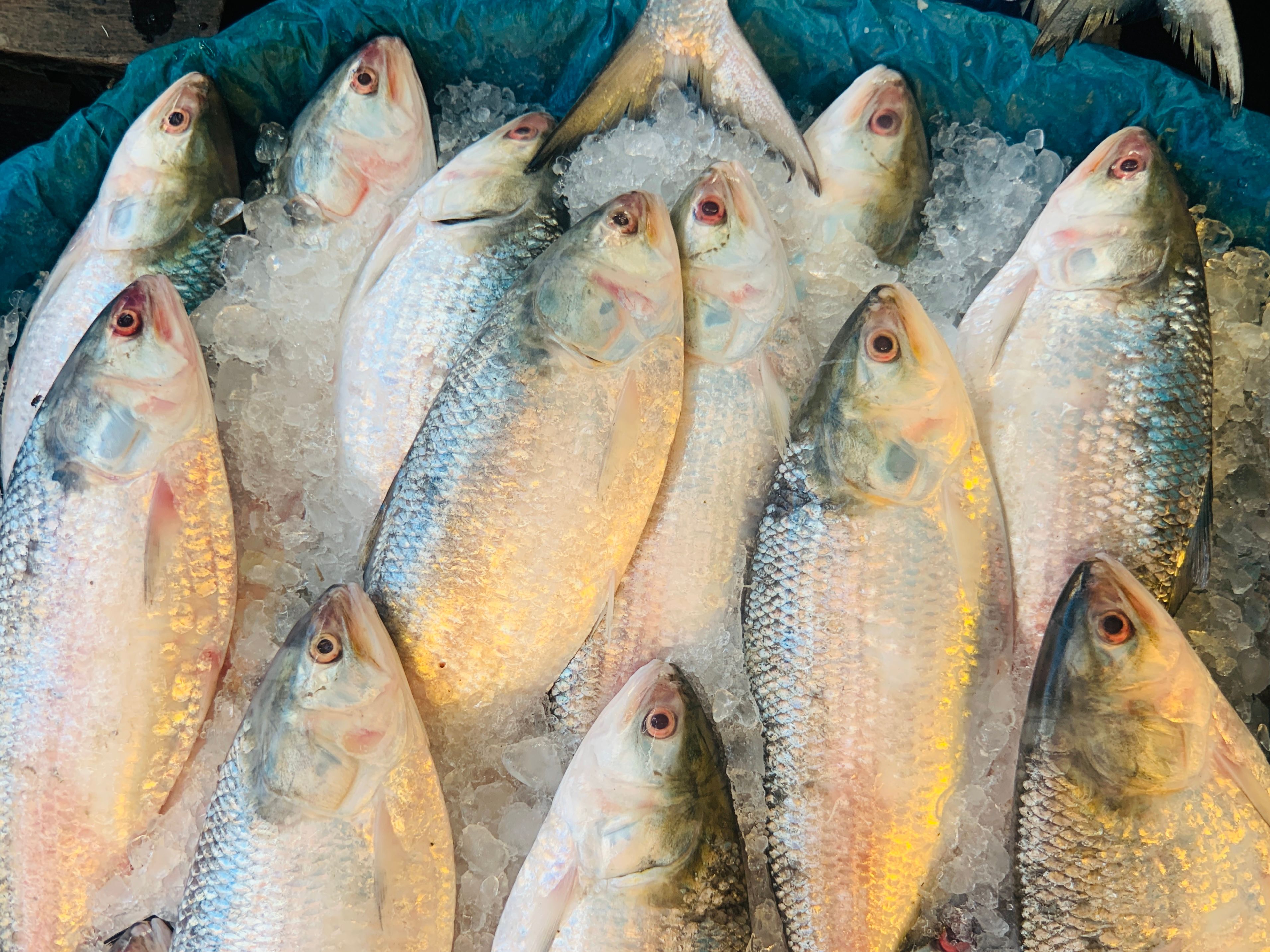
The diets react (see scores below)
Diet Ratings
Hilsa is an oily fish rich in omega-3 fatty acids and high-quality protein with zero carbs. Excellent keto staple food.
Hilsa is a freshwater fish. Fish and all animal flesh are explicitly excluded from vegan diets.
Hilsa is an oily fish rich in omega-3 fatty acids, selenium, and vitamin D. Fish is a core paleo protein source. Unprocessed hilsa fish meets all paleo criteria.
Hilsa is an oily fish rich in omega-3 fatty acids. Mediterranean diet strongly encourages fish and seafood 2-3 times weekly. Oily fish varieties are particularly valued for cardiovascular and anti-inflammatory benefits.
Hilsa is a fatty freshwater fish rich in omega-3 fatty acids and micronutrients. Pure animal protein and fat with no processing required. Excellent carnivore staple.
Hilsa is a whole seafood product with no processing or excluded ingredients. Seafood is explicitly allowed on Whole30.
Hilsa (Tenualosa ilisha) is a fatty fish with no carbohydrate content. Fish is universally low-FODMAP regardless of species. No FODMAPs present in plain cooked fish.
Hilsa is an oily fish rich in omega-3 fatty acids (EPA/DHA), high-quality protein, and potassium. DASH explicitly recommends fish 2-3 times/week. Low sodium when fresh. Excellent cardiovascular benefits.
Hilsa is a fatty fish rich in omega-3 fatty acids, which are central to Zone's anti-inflammatory protocol. It provides lean protein (approximately 20g per 100g) and beneficial monounsaturated and polyunsaturated fats. Fits well as a protein block in Zone meals. Higher fat content requires portion awareness but is nutritionally favorable.
Hilsa is a fatty freshwater fish rich in omega-3 fatty acids (EPA and DHA), which are cornerstone anti-inflammatory nutrients. It also provides high-quality protein and selenium. The omega-3 content makes it one of the most anti-inflammatory fish options available.
Excellent protein source (20g per 100g), but hilsa is an oily fish with high fat content (15g per 100g, mostly omega-3s). Omega-3s are beneficial, but total fat may trigger nausea/bloating in GLP-1 patients. Leaner fish (cod, tilapia) preferred; hilsa acceptable in smaller portions.
Nutritional profile
Six traits that cut across every diet.
Fiber & Plants
How much whole-plant food and fiber it delivers.
Healthy Fats
The quality of its fats (unsaturated, omega-3).
Whole / Unprocessed
How close it is to its natural, unprocessed form.
Gut Gentle
How easy it is on digestion (low FODMAP, few irritants).
Low Glycemic
How little it spikes your blood sugar.
Protein Density
How much protein it packs per calorie.
Controversy Index
Score range: 1–10/10. Higher controversy = more disagreement between diets.
Diet-Specific Tips for Hilsa fish
 Keto — 9/10
- Zero net carbs
- High omega-3 fatty acids
- Excellent protein quality
- High fat content
 Paleo — 9/10
- High-quality protein
- Rich in omega-3 fatty acids
- Unprocessed whole food
- Excellent micronutrient profile
 Mediterranean — 9/10
- oily fish high in omega-3s
- seafood emphasis in Mediterranean
- cardiovascular benefits
- recommended 2-3 times weekly
 Carnivore — 8/10
- fatty fish
- high omega-3 content
- complete animal protein
- micronutrient-dense
 Whole30 — 10/10
- Seafood (explicitly allowed)
- Whole, unprocessed
- No additives
 Low-FODMAP — 9/10
- Fish protein with zero FODMAP carbohydrates
- No fructans, GOS, lactose, or polyols
- Safe at any reasonable serving size
 DASH — 8/10
- Rich in omega-3 fatty acids
- High-quality protein
- Good source of potassium
- Low sodium (fresh)
- Supports cardiovascular health
 Zone — 8/10
- Excellent source of omega-3 fatty acids
- High-quality lean protein
- Anti-inflammatory profile
- Fits standard protein block requirements
 Anti-Inflammatory — 9/10
- High omega-3 fatty acids (EPA/DHA)
- Excellent protein source
- Contains selenium and B vitamins
- Reduces inflammatory markers (CRP, IL-6)
 GLP-1 Friendly — 5/10
- high protein
- high fat (oily fish)
- omega-3 rich
- easy to digest
- portion control needed