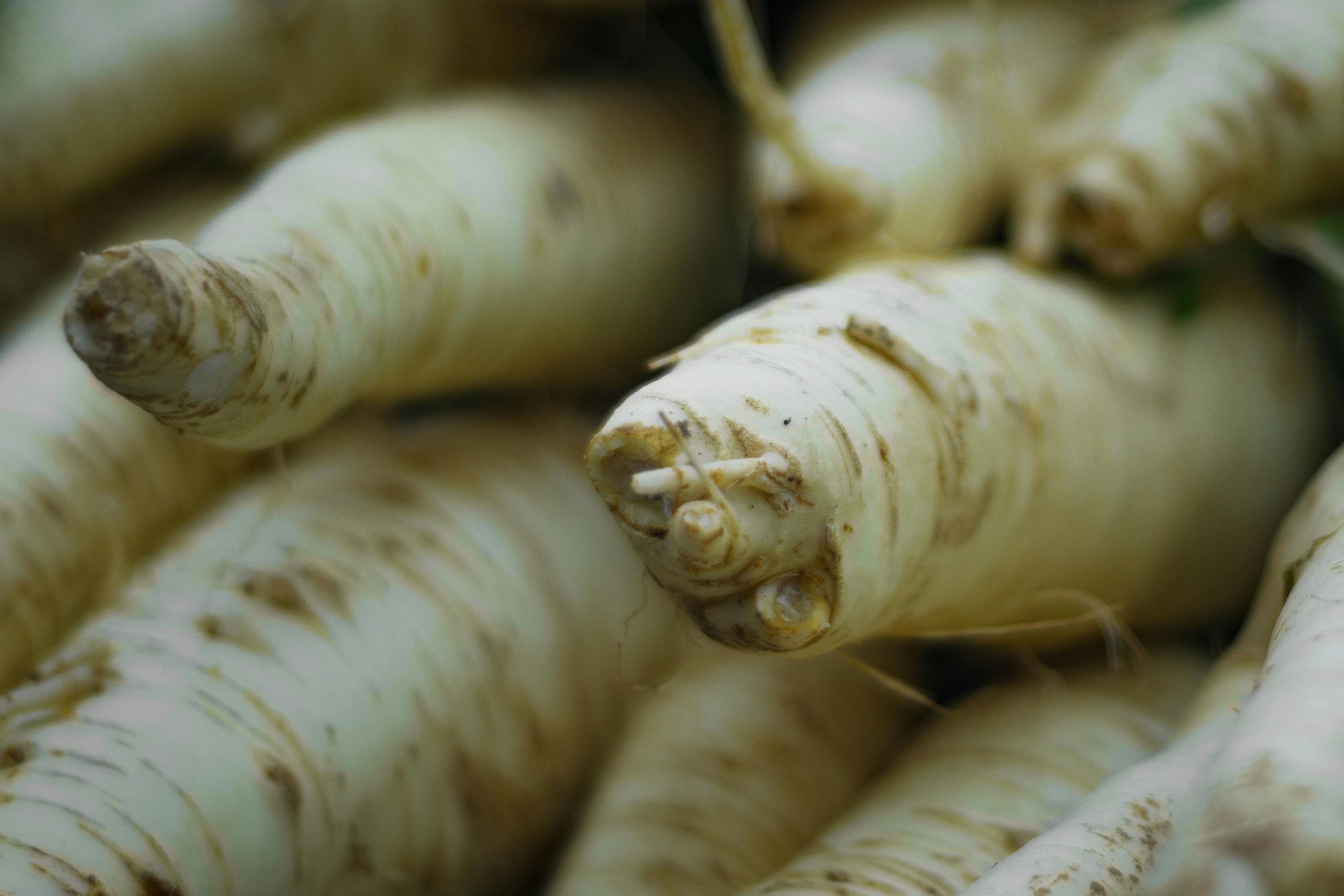
The diets react (see scores below)
Diet Ratings
Horseradish is a pungent root vegetable with only 3-4g net carbs per 100g. Used in small quantities as a condiment, making it very keto-friendly.
Horseradish is a plant root vegetable with no animal products or derivatives. Pure plant-based condiment or vegetable.
Horseradish is a root vegetable and cruciferous plant used as a condiment/spice. It's unprocessed, nutrient-dense, and available to hunter-gatherers. Contains glucosinolates with potential anti-inflammatory properties.
Horseradish is a pungent root vegetable and condiment with minimal calories. Aligns with Mediterranean emphasis on vegetables and herbs/spices for flavoring. Low glycemic impact and nutrient-dense.
Horseradish is a plant root used as a condiment/spice. Plant-derived and explicitly excluded from carnivore diet regardless of pungency or perceived 'heat'.
Horseradish is a root vegetable and spice that is Whole30-compliant. Plain horseradish root or powder contains no excluded ingredients. Check prepared horseradish products for added sugar or vinegar compatibility.
Horseradish root contains fructans and may have moderate FODMAP content. Monash data is limited, but root vegetables with fructan content are typically restricted during elimination. Small condiment amounts (1 teaspoon) may be tolerated; larger servings should be avoided.
Monash testing on horseradish is sparse; assessment based on fructan content in root vegetables and typical practitioner guidance. Some sources suggest small amounts as condiment are acceptable, but elimination phase caution is warranted.
Horseradish is a low-calorie, low-sodium vegetable with minimal carbohydrates and good fiber. Rich in vitamin C and glucosinolates (anti-inflammatory compounds). Adds flavor without salt, supporting DASH sodium reduction goals.
Horseradish is a low-carbohydrate, low-calorie vegetable with minimal macronutrient impact. It is rich in polyphenols and glucosinolates with anti-inflammatory properties. Functions as a favorable vegetable in Zone protocol and can be used liberally as a condiment or side without disrupting macronutrient ratios. Aligns perfectly with Zone's emphasis on colorful, low-glycemic vegetables.
Horseradish is a pungent root vegetable rich in glucosinolates and isothiocyanates, compounds with potent anti-inflammatory and antioxidant properties. It also contains vitamin C and fiber. The sharp flavor indicates high phytochemical content aligned with anti-inflammatory principles.
Low-calorie condiment (6 cal per tbsp) with minimal fat, high water content, and some fiber. Supports hydration and digestion. Spice level is moderate (not extreme heat like habanero). Excellent flavor addition without GI burden. Works well in small portions.
Nutritional profile
Six traits that cut across every diet.
Fiber & Plants
How much whole-plant food and fiber it delivers.
Healthy Fats
The quality of its fats (unsaturated, omega-3).
Whole / Unprocessed
How close it is to its natural, unprocessed form.
Gut Gentle
How easy it is on digestion (low FODMAP, few irritants).
Low Glycemic
How little it spikes your blood sugar.
Protein Density
How much protein it packs per calorie.
Controversy Index
Score range: 1–9/10. Higher controversy = more disagreement between diets.
Diet-Specific Tips for Horseradish
 Keto — 8/10
- 3-4g net carbs per 100g
- Typically used in small amounts
- No added sugars in pure form
- Supports flavor without carbs
 Vegan — 9/10
- Plant root vegetable
- 100% plant-based
- Whole food
 Paleo — 8/10
- Root vegetable
- Unprocessed
- Cruciferous plant
- Used in small amounts as condiment
 Mediterranean — 8/10
- vegetable-based
- minimal calories
- flavor enhancer
- low glycemic impact
 Whole30 — 9/10
- Vegetable/spice (allowed)
- Whole food form preferred
- Check processed versions for additives
 Low-FODMAP — 5/10
- Root vegetable with potential fructan content
- Typically used in small condiment amounts
- Limited specific Monash FODMAP data
- Portion control critical
 DASH — 9/10
- Very low sodium
- Low calorie density
- Good source of vitamin C
- Contains glucosinolates
- Enhances flavor without added salt
 Zone — 9/10
- Very low glycemic index
- Minimal caloric/macronutrient impact
- Anti-inflammatory polyphenols
- Ideal as condiment or vegetable side
 Anti-Inflammatory — 8/10
- Glucosinolates and isothiocyanates
- High vitamin C content
- Antimicrobial and anti-inflammatory compounds
- Supports detoxification pathways
 GLP-1 Friendly — 8/10
- very low calorie
- low fat
- high water content
- moderate spice
- nutrient-dense per calorie
- condiment-friendly