The diets react (see scores below)
Diet Ratings
Jaggery is unrefined cane sugar with approximately 95g carbs per 100g. Completely incompatible with ketosis and will spike blood glucose.
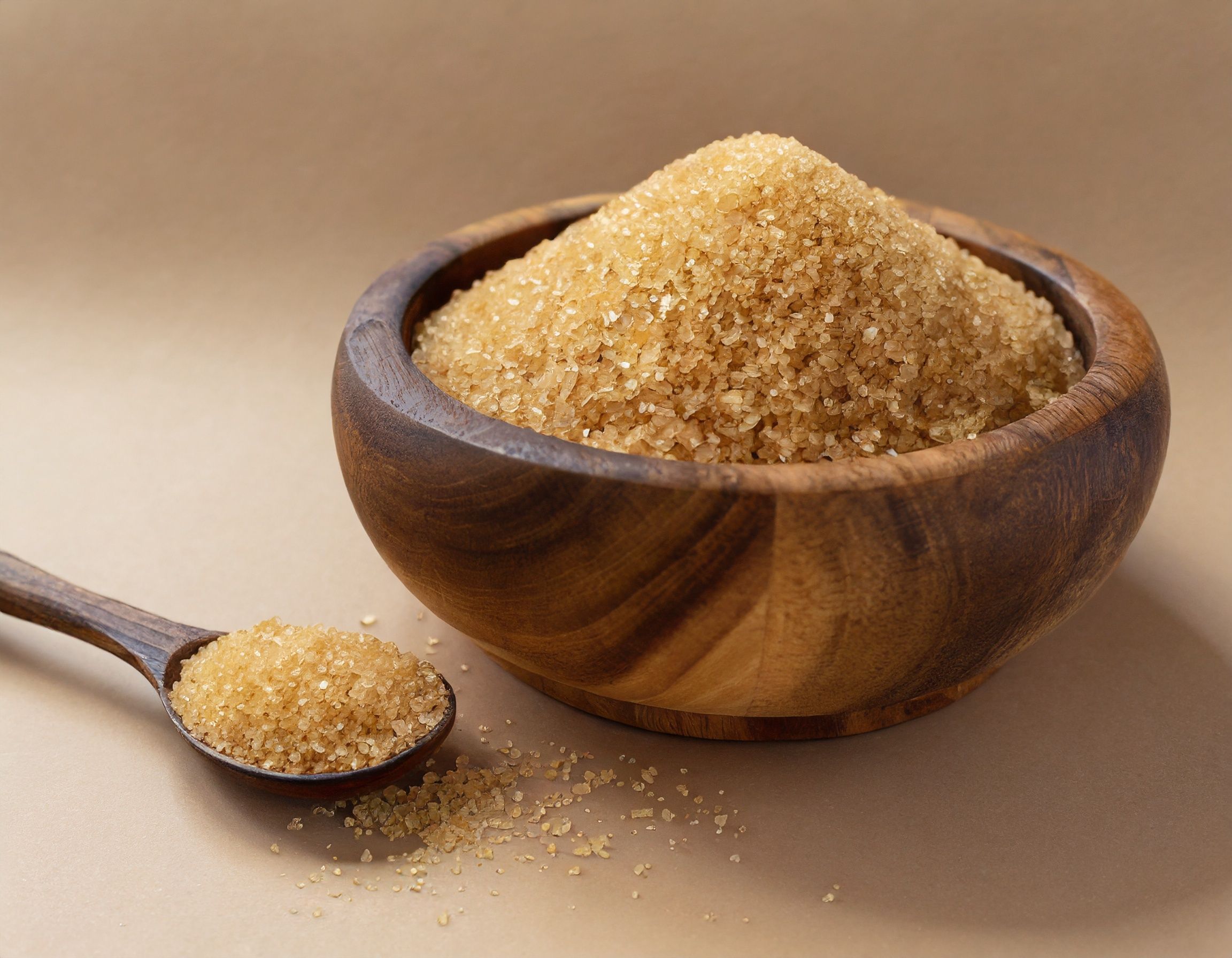
Jaggery is an unrefined sugar product made by concentrating sugarcane or palm juice. Contains no animal products or derivatives. Whole-food sweetener.
Jaggery is unrefined cane sugar, a concentrated sweetener. While less processed than refined sugar, it's still a concentrated carbohydrate with minimal micronutrients. Paleo allows natural sweeteners in moderation, but jaggery is high-glycemic.
Some paleo practitioners accept jaggery in small amounts as a natural sweetener alternative, arguing it's less processed than refined sugar and contains trace minerals. However, strict paleo excludes all concentrated sweeteners.
Jaggery is an unrefined sugar product. Mediterranean diet minimizes added sugars and refined carbohydrates. Despite being less processed than white sugar, it remains a concentrated sweetener that contradicts core dietary principles.
Jaggery is unrefined cane sugar—a plant-derived sweetener. Explicitly excluded from carnivore diet as it is pure carbohydrate from plant source.
Jaggery is an unrefined sugar product made from sugarcane or palm sap. Added sugar in any form—including unrefined sugars—is explicitly excluded on Whole30.
Jaggery is unrefined cane sugar with high fructose and glucose content. It is essentially concentrated sugar with excess fructose relative to glucose, making it high-FODMAP. No safe serving size during elimination phase.
Jaggery is unrefined cane sugar with minimal micronutrient advantage over refined sugar. DASH limits added sugars to <6 tsp/day (~25g). Jaggery provides ~15g sugar per tbsp with no fiber, sodium reduction benefit, or significant minerals. Treats as added sugar.
Jaggery is an unrefined sugar product with a high glycemic index, causing rapid blood glucose spikes. Zone protocol strictly limits high-glycemic carbohydrates. While technically any food can fit in blocks, jaggery provides no nutritional benefit beyond simple carbohydrates and actively works against Zone's goal of maintaining stable insulin levels. No meaningful way to incorporate into a balanced Zone meal.
Jaggery is an unrefined sugar product with a high glycemic index. Despite containing trace minerals, it is primarily sucrose and promotes rapid blood glucose spikes, triggering inflammatory responses. The anti-inflammatory diet strictly limits added sugars and refined carbohydrates.
Concentrated sugar (94g per 100g) with minimal protein, fiber, or micronutrients. Empty calories contradict GLP-1 dietary principle of nutrient density per calorie. Rapid blood sugar spike; no satiety benefit. Contradicts medication's purpose.
Nutritional profile
Six traits that cut across every diet.
Fiber & Plants
How much whole-plant food and fiber it delivers.
Healthy Fats
The quality of its fats (unsaturated, omega-3).
Whole / Unprocessed
How close it is to its natural, unprocessed form.
Gut Gentle
How easy it is on digestion (low FODMAP, few irritants).
Low Glycemic
How little it spikes your blood sugar.
Protein Density
How much protein it packs per calorie.
Controversy Index
Score range: 1–8/10. Higher controversy = more disagreement between diets.
 Vegan
Vegan Paleo
Paleo