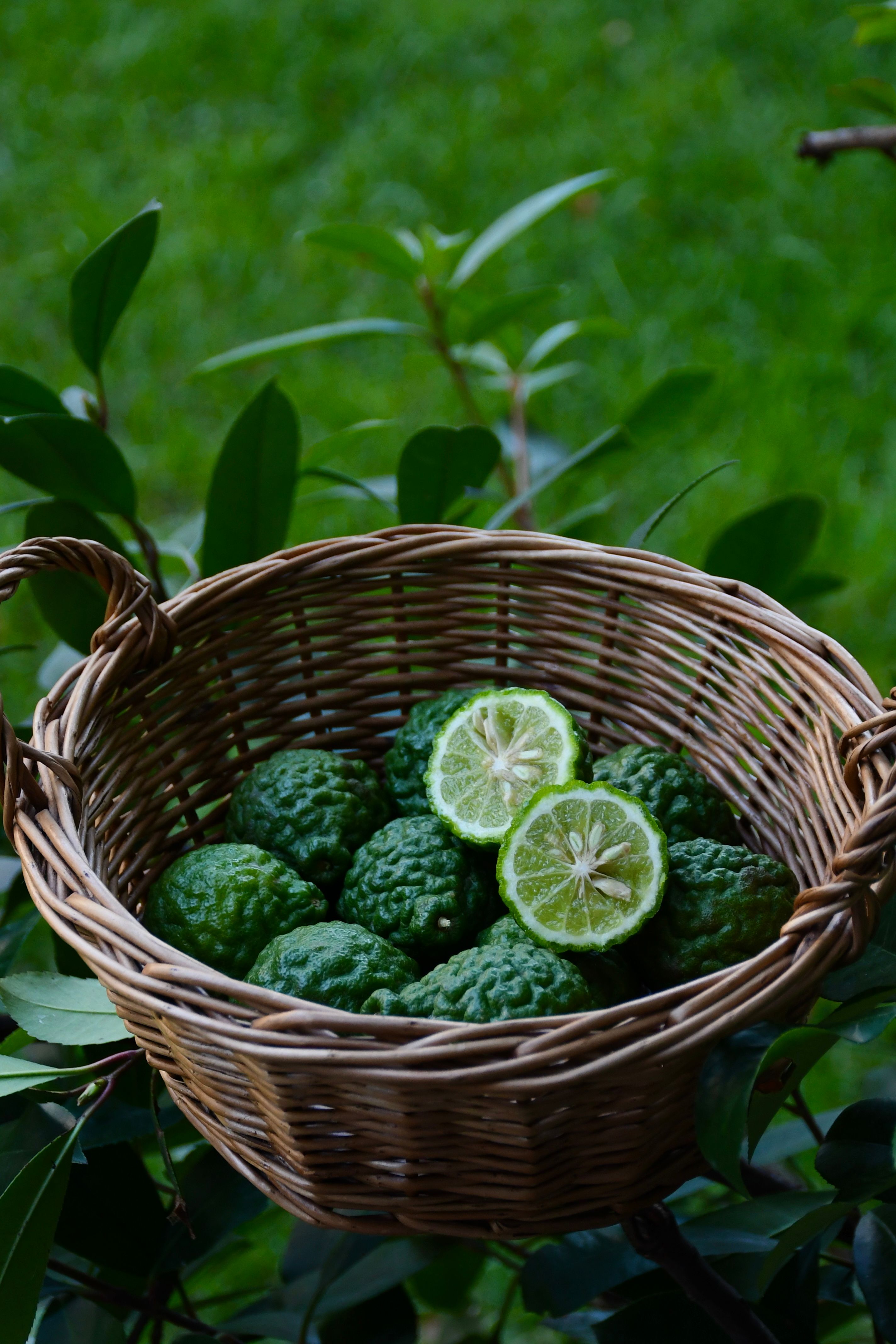
Kaffir lime leaves
Rated by 11 diets
The diets react (see scores below)
Diet Ratings
Kaffir lime leaves are used as a flavoring herb with negligible carbs and calories. Excellent zero-carb seasoning for keto cooking.
Kaffir lime leaves are plant leaves used as a culinary herb. No animal products or derivatives. Pure plant-based seasoning.
Kaffir lime leaves are an herb/spice used for flavoring. They're unprocessed, contain beneficial compounds, and are used in small amounts. Herbs and spices are core paleo-approved ingredients.
Kaffir lime leaves are an herb/spice used for flavoring. Minimal calories, no added sugars, and support Mediterranean principle of using herbs and spices to enhance whole foods without processed additives.
Kaffir lime leaves are plant-derived herb/spice used for flavoring. Explicitly excluded from carnivore diet as plant material.
Kaffir lime leaves are an herb/spice used for flavoring. They contain no excluded ingredients and are a whole, unprocessed seasoning compliant with Whole30.
Kaffir lime leaves are aromatic herb leaves used in small amounts for flavoring. Citrus leaves contain minimal carbohydrates and no significant FODMAPs. Safe at typical culinary portions (few leaves per dish).
Kaffir lime leaves are an herb/spice with negligible calories, sodium, and sugar. Rich in vitamin C and aromatic compounds. DASH encourages herbs and spices as salt-free flavor enhancers. No nutritional drawbacks.
Kaffir lime leaves are a flavoring agent with negligible macronutrient content and minimal carbohydrates. They contain polyphenols and essential oils with anti-inflammatory properties. Function as a condiment/flavoring in Zone meals without impacting macronutrient ratios. Can be used liberally and align with Zone's anti-inflammatory focus.
Kaffir lime leaves are aromatic herb leaves rich in limonene and other volatile oils with anti-inflammatory and antimicrobial properties. They contain polyphenols and vitamin C. The intense flavor indicates high phytochemical concentration, aligning with anti-inflammatory herb guidelines.
Negligible calories, zero fat, high water content, aromatic flavor enhancer. Supports hydration and digestion without GI burden. Excellent condiment for small-portion meals. No spice-related reflux risk (aromatic, not hot). Ideal GLP-1 companion.
Nutritional profile
Six traits that cut across every diet.
Fiber & Plants
How much whole-plant food and fiber it delivers.
Healthy Fats
The quality of its fats (unsaturated, omega-3).
Whole / Unprocessed
How close it is to its natural, unprocessed form.
Gut Gentle
How easy it is on digestion (low FODMAP, few irritants).
Low Glycemic
How little it spikes your blood sugar.
Protein Density
How much protein it packs per calorie.
Controversy Index
Score range: 1–10/10. Higher controversy = more disagreement between diets.
Diet-Specific Tips for Kaffir lime leaves
 Keto — 9/10
- Negligible net carbs
- Herb/flavoring use
- No added sugars
- Supports flavor complexity
 Vegan — 10/10
- Plant leaves
- 100% plant-based
- Whole food
- No processing
 Paleo — 9/10
- Herb/spice
- Unprocessed
- Used in small amounts
- Contains aromatic compounds
 Mediterranean — 8/10
- herb/spice category
- minimal calories
- flavor enhancer
- no added sugars or processing
 Whole30 — 10/10
- Herb/spice (explicitly allowed)
- Whole, unprocessed
- No additives
 Low-FODMAP — 8/10
- Herb/flavoring with minimal carbohydrate content
- No fructans, GOS, lactose, or polyols
- Used in small amounts typical of herbs
 DASH — 9/10
- Negligible sodium
- Very low calorie density
- Source of vitamin C
- Supports flavor without added salt
- No adverse DASH factors
 Zone — 9/10
- Negligible macronutrient impact
- Anti-inflammatory polyphenols
- Ideal as flavoring/condiment
- No glycemic impact
 Anti-Inflammatory — 8/10
- Limonene and volatile oils
- Polyphenol-rich
- Vitamin C content
- Antimicrobial and anti-inflammatory compounds
- Minimal processing
 GLP-1 Friendly — 9/10
- negligible calories
- zero fat
- high water content
- aromatic (not spicy)
- flavor enhancement
- supports hydration
- condiment-friendly