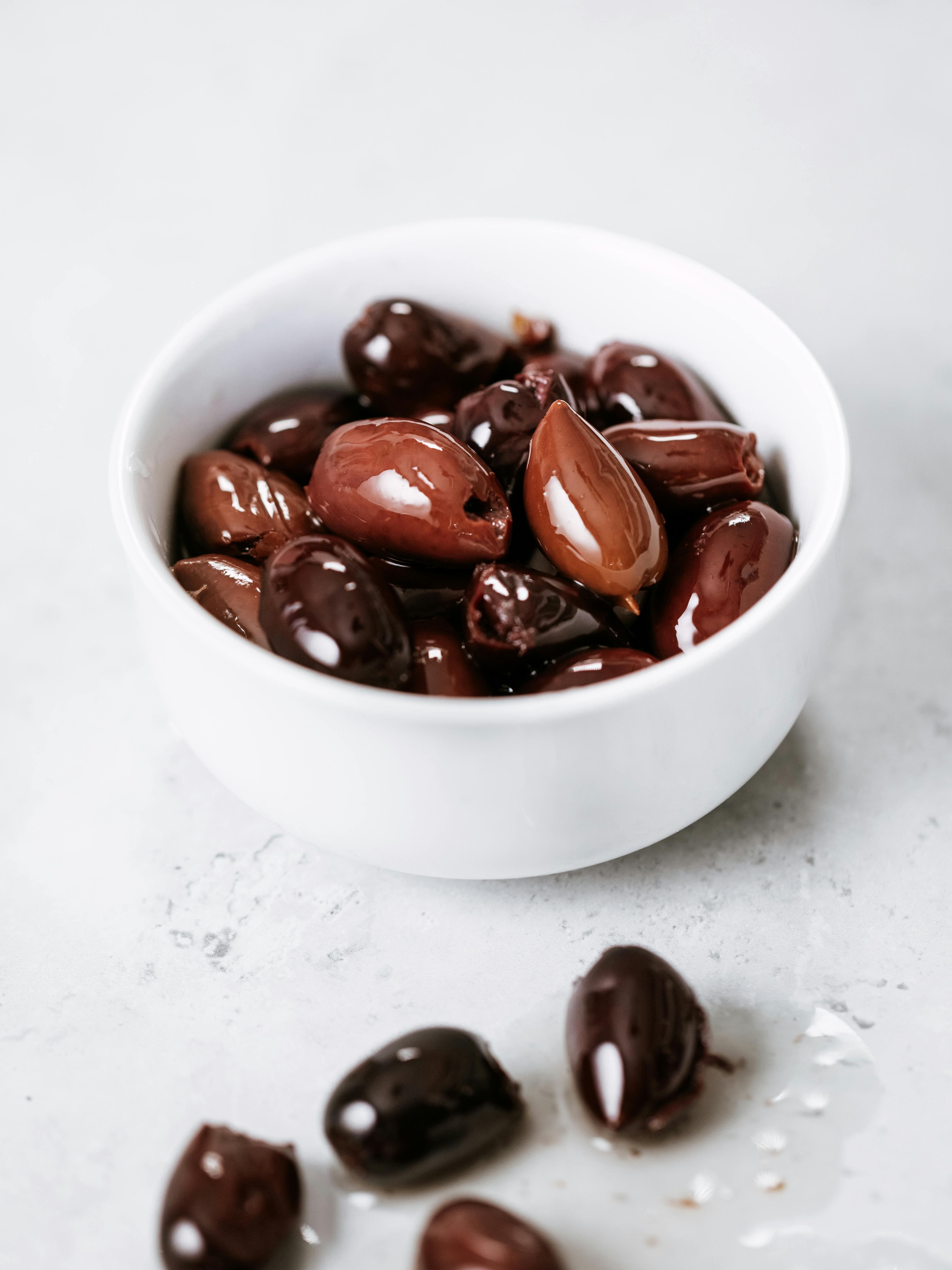
The diets react (see scores below)
Diet Ratings
Kalamata olives contain approximately 1g net carbs per ounce with high healthy monounsaturated fats. Excellent keto snack and salad addition. Minimal impact on daily carb budget.
Kalamata olives are cured olives with no animal ingredients. Typically brined in salt and vinegar. Whole plant food, fully vegan.
Whole, unprocessed fruit cured in salt and olive oil. Olives are paleo-approved; minimal processing and natural preservation method align with paleo principles.
Iconic Mediterranean food, staple in Greek cuisine. Olives are nutrient-dense, provide healthy fats, and are eaten regularly throughout Mediterranean regions. Excellent source of polyphenols and antioxidants.
Kalamata olives are fruit from a plant, explicitly excluded from carnivore diet. While they contain fat, they are plant-derived and violate the core rule of eating only animal products.
Kalamata olives are whole, unprocessed fruits cured in salt and vinegar. Both salt and vinegar are Whole30-compliant. No excluded ingredients are present in standard kalamata olives.
Kalamata olives are low in FODMAPs. Monash University rates olives as low-FODMAP at standard serving sizes (approximately 10 olives or 30g). The curing and fermentation process does not introduce significant FODMAP content.
Kalamata olives are rich in heart-healthy monounsaturated fats and polyphenols, but extremely high in sodium (250-400mg per 10 olives) due to brining. DASH allows olives in very limited portions. Portion control is essential.
Kalamata olives are an excellent Zone fat source, providing monounsaturated fat (~3g per 5 olives) with minimal carbs (~1g net carbs per serving). They are minimally processed, anti-inflammatory, and align perfectly with Sears' emphasis on polyphenol-rich foods. About 5-7 olives constitute one fat block. They are a 'favorable' Zone food.
Rich in monounsaturated fat, polyphenols (oleuropein, hydroxytyrosol), and antioxidants. Fermented preparation enhances bioavailability and adds beneficial compounds. Strong anti-inflammatory properties supported by Mediterranean diet research. High in oleic acid similar to olive oil.
Kalamata olives provide healthy monounsaturated fat (3g per 5 olives) and minimal protein (0.3g). While olives contain beneficial polyphenols, they are calorie-dense (25 calories per 5 olives) with low nutrient density per calorie. High fat content may trigger nausea. Best used as a small garnish (3-5 olives) rather than a snack portion.
Nutritional profile
Six traits that cut across every diet.
Fiber & Plants
How much whole-plant food and fiber it delivers.
Healthy Fats
The quality of its fats (unsaturated, omega-3).
Whole / Unprocessed
How close it is to its natural, unprocessed form.
Gut Gentle
How easy it is on digestion (low FODMAP, few irritants).
Low Glycemic
How little it spikes your blood sugar.
Protein Density
How much protein it packs per calorie.
Controversy Index
Score range: 2–9/10. Higher controversy = more disagreement between diets.
Diet-Specific Tips for Kalamata olives
 Keto — 8/10
- 1g net carbs per ounce
- High healthy fats
- Minimal processing
- Nutrient-dense
 Vegan — 9/10
- Whole plant fruit
- No animal-derived ingredients
- Minimal processing
 Paleo — 8/10
- Whole food
- Minimal processing
- Olive oil-based
- Natural salt curing
 Mediterranean — 9/10
- Traditional Mediterranean staple
- Healthy monounsaturated fats
- High in antioxidants
- Minimal processing
 Whole30 — 8/10
- Whole, unprocessed fruit
- Salt and vinegar curing are compliant
- No added sugar or excluded ingredients
- Natural fat content
 Low-FODMAP — 8/10
- Fermented olive product with minimal FODMAP
- Safe at typical serving sizes (10 olives)
- No added high-FODMAP ingredients in plain varieties
 DASH — 5/10
- Very high sodium (brining)
- Healthy monounsaturated fats
- Antioxidants/polyphenols
- Requires strict portion control
 Zone — 8/10
- Monounsaturated fat
- Low glycemic impact
- Anti-inflammatory
- Polyphenol-rich
- Minimal processing
 Anti-Inflammatory — 8/10
- monounsaturated fat
- polyphenols
- fermented
- antioxidants
- Mediterranean diet staple
 GLP-1 Friendly — 4/10
- high fat density
- minimal protein
- calorie-dense for volume
- high sodium