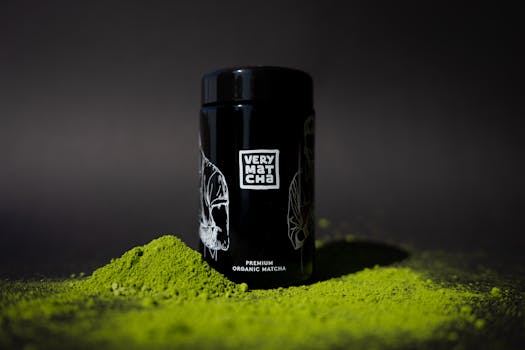
The diets react (see scores below)
Diet Ratings
Pure matcha powder contains only 1-2g net carbs per teaspoon with minimal calories. Excellent source of antioxidants and L-theanine. Prepare with water, almond milk, or heavy cream to maintain keto macros.
Pure matcha is ground green tea leaves. No animal products or derivatives. Whole food ingredient.
Matcha is a minimally processed green tea powder with no additives. It contains beneficial antioxidants and was available in ancient times. Pure matcha powder is paleo-compliant.
While matcha is minimally processed and contains antioxidants, it is not a traditional Mediterranean food. Can be incorporated if prepared without added sugars, but not a staple. Provides some health benefits but lacks Mediterranean dietary emphasis.
Modern Mediterranean diet interpretations increasingly include non-traditional whole foods with proven health benefits. Matcha's antioxidant profile aligns with Mediterranean principles even if geographically non-traditional.
Matcha is a plant-derived green tea powder. It is entirely plant-based and contains no animal products, directly violating the core carnivore principle of eating exclusively animal-derived foods.
Pure matcha powder is a whole, unprocessed green tea powder with no added ingredients. It is explicitly compliant with Whole30. Can be mixed with compliant liquids (water, coconut milk, almond milk).
Matcha powder is pure ground green tea with no FODMAPs. It contains no fermentable carbohydrates, lactose, or polyols. When mixed with low-FODMAP liquids (water, lactose-free milk), it remains low-FODMAP.
Pure matcha powder is minimally processed, contains no added sodium or sugar, and provides antioxidants and L-theanine. When prepared with low-fat milk or water, it aligns with DASH principles. Excellent beverage base for DASH compliance.
Pure matcha is carb-minimal (1-2g per teaspoon), provides polyphenols and L-theanine, and supports anti-inflammatory goals. Must be prepared with protein and fat (e.g., in smoothie with protein powder and almond milk) to form complete Zone meal.
Matcha is a cornerstone anti-inflammatory beverage. Rich in EGCG catechins, L-theanine, and chlorophyll. Provides sustained energy without blood sugar spikes. High antioxidant capacity and polyphenol content. Supports anti-inflammatory pathways.
Matcha itself is nutrient-dense (antioxidants, L-theanine) and low-calorie, but caffeine content may trigger nausea on empty stomach in some GLP-1 patients. Preparation matters: mixed with water or unsweetened almond milk is acceptable; with sweetened milk or added sugar is not. No protein unless fortified.
Some GLP-1 patients tolerate matcha well and appreciate the sustained energy without the jitters of coffee; others experience worsened nausea or reflux, particularly on injection days. Caffeine sensitivity varies significantly.
Controversy Index
Score range: 1–9/10. Higher controversy = more disagreement between diets.
Diet-Specific Tips for Matcha powder
 Keto — 8/10
- 1-2g net carbs per teaspoon
- High antioxidant content
- Requires keto-friendly preparation (avoid sugar/milk)
 Vegan — 9/10
- Pure plant material
- Minimal processing
- No additives in pure form
 Paleo — 8/10
- unprocessed plant food
- no additives
- natural antioxidants
- minimal processing
 Mediterranean — 5/10
- minimally processed
- antioxidant content
- non-traditional to region
- preparation method matters
 Whole30 — 9/10
- Whole, unprocessed
- No added sugar or additives
- Pure tea powder
 Low-FODMAP — 8/10
- Pure tea powder with no fermentable carbohydrates
- No lactose or polyols
- Caffeine content is not a FODMAP concern
 DASH — 8/10
- No added sodium or sugar
- Rich in antioxidants and polyphenols
- Minimal processing
- Caffeine content (moderate)
 Zone — 8/10
- Low glycemic load
- High polyphenol content
- Minimal carbs
- Requires pairing for macronutrient balance
 Anti-Inflammatory — 9/10
- high EGCG catechins
- sustained caffeine release
- chlorophyll content
- polyphenol-rich
- no added sugars needed
 GLP-1 Friendly — 6/10
- moderate caffeine
- nutrient-dense
- no protein
- preparation-dependent
- individual tolerance varies