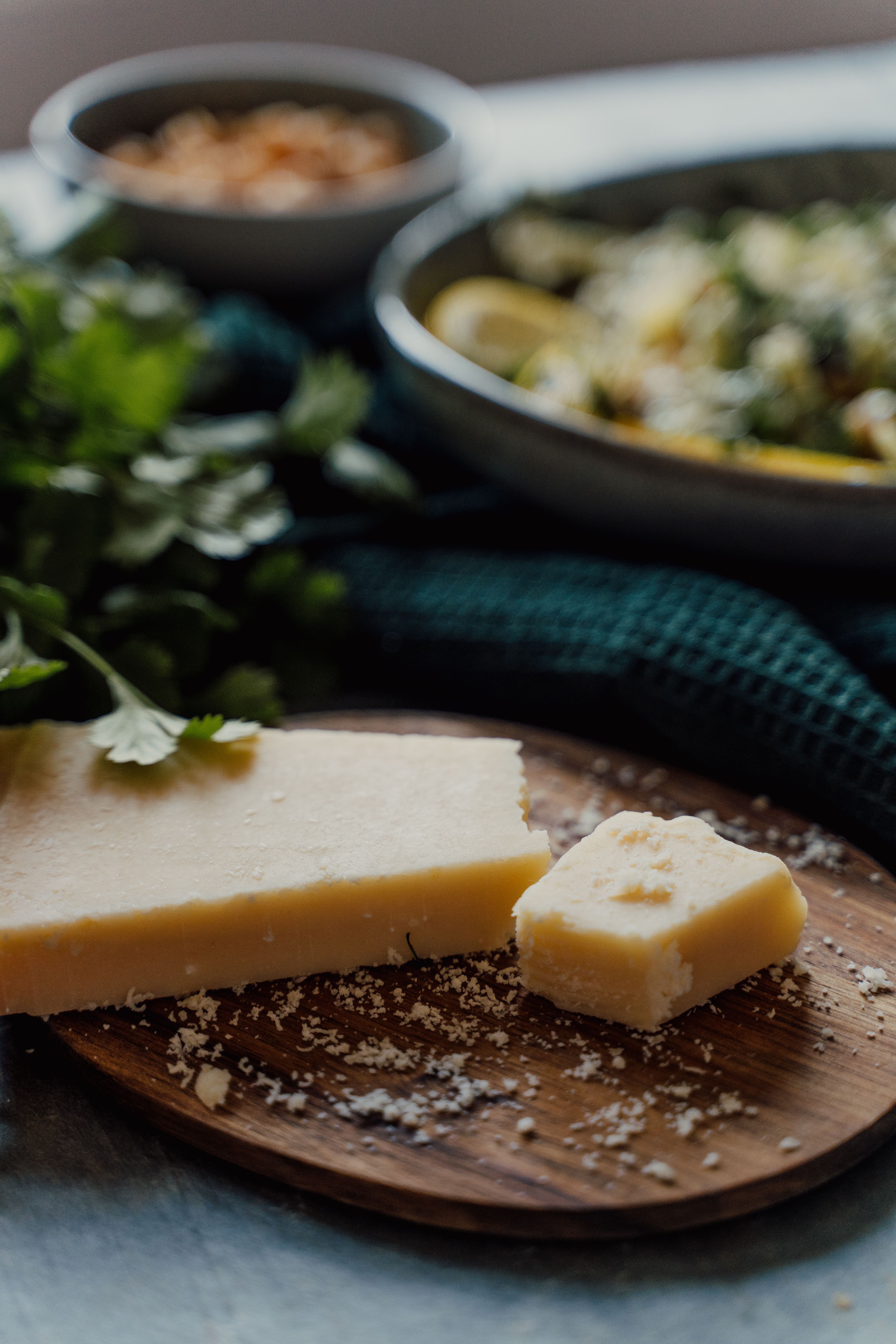
The diets react (see scores below)
Diet Ratings
Pecorino Romano contains <1g net carbs per ounce. High fat, high protein, no added sugars. Excellent hard cheese for keto. Flavor-dense, small portions satisfy.
Hard cheese made from sheep's milk. Direct animal product containing dairy and often animal rennet.
Pecorino Romano is a hard cheese made from sheep's milk. Dairy is explicitly excluded from paleo diet. Aging and processing do not change its dairy status.
Traditional Italian hard cheese used in Mediterranean cooking. High in saturated fat and sodium but provides calcium and flavor. Acceptable in small amounts as a garnish or flavor accent, not as a primary food source.
Mediterranean diet practitioners in Italy and Southern Europe traditionally use Pecorino Romano in small quantities (1-2 tablespoons grated) as a flavor component, making it acceptable within portion-controlled Mediterranean eating patterns.
Animal-derived hard cheese with minimal lactose due to fermentation and aging. Widely included by carnivore practitioners. Strict dairy-exclusion camp opposes all cheese consumption.
Strict carnivore and Lion Diet adherents exclude all dairy products, including hard cheeses, viewing them as unnecessary and potentially inflammatory despite low lactose content.
Pecorino Romano is a cheese (dairy product) explicitly excluded during the 30-day Whole30 period.
Pecorino Romano is a hard aged cheese, low-FODMAP per Monash University. Minimal lactose due to aging and fermentation. Safe at standard serving sizes.
Hard cheese with very high sodium (450mg per ounce) and saturated fat. Minimal potassium or magnesium. Contradicts DASH sodium and fat restrictions.
Pecorino Romano is a hard cheese with good protein (~7g per oz) but high in saturated fat (~7g per oz) and sodium. Carbs negligible (~1g per oz). Can serve as a fat/protein block in small portions (0.5-1 oz), but saturated fat dominates. Better used as a garnish/flavoring than primary protein source. Portion control critical.
Hard cheese high in saturated fat and sodium. Minimal anti-inflammatory compounds. Can be used as a flavoring in small amounts but should not be a primary dairy source in anti-inflammatory diet. Portion control is critical.
Hard cheese with 7g protein and 7g fat per ounce. Moderate protein but high fat density. Small portions (1 oz) work as a flavor accent, but not suitable as a primary protein source. Lactose sensitivity risk in some GLP-1 patients.
Some RDs approve small amounts of Pecorino Romano as a flavor-dense accent that works well in small portions, while others recommend avoiding aged cheeses entirely due to fat content and lactose sensitivity during GLP-1 therapy.
Nutritional profile
Six traits that cut across every diet.
Fiber & Plants
How much whole-plant food and fiber it delivers.
Healthy Fats
The quality of its fats (unsaturated, omega-3).
Whole / Unprocessed
How close it is to its natural, unprocessed form.
Gut Gentle
How easy it is on digestion (low FODMAP, few irritants).
Low Glycemic
How little it spikes your blood sugar.
Protein Density
How much protein it packs per calorie.
Controversy Index
Score range: 1–9/10. Higher controversy = more disagreement between diets.
Diet-Specific Tips for Pecorino Romano
 Keto — 9/10
- Negligible net carbs (<1g per oz)
- High fat and protein
- No added sugars
- Flavor-dense
 Mediterranean — 5/10
- traditional Italian cheese
- high saturated fat
- high sodium
- small portions recommended
- flavor accent role
 Carnivore — 6/10
- dairy-derived (animal product)
- aged/fermented (very low lactose)
- high fat content
- dairy debate within community
 Low-FODMAP — 8/10
- Hard aged cheese with minimal lactose
- Monash-tested as low-FODMAP
- Safe at typical grating/serving portions
 Zone — 6/10
- Good protein density
- High saturated fat content
- Negligible carbohydrates
- High sodium
- Best used as garnish/flavoring
 Anti-Inflammatory — 4/10
- high saturated fat
- high sodium
- strong flavor allows small portions
- minimal nutritional benefit beyond protein
 GLP-1 Friendly — 4/10
- moderate protein
- high fat
- portion-dependent
- lactose sensitivity risk