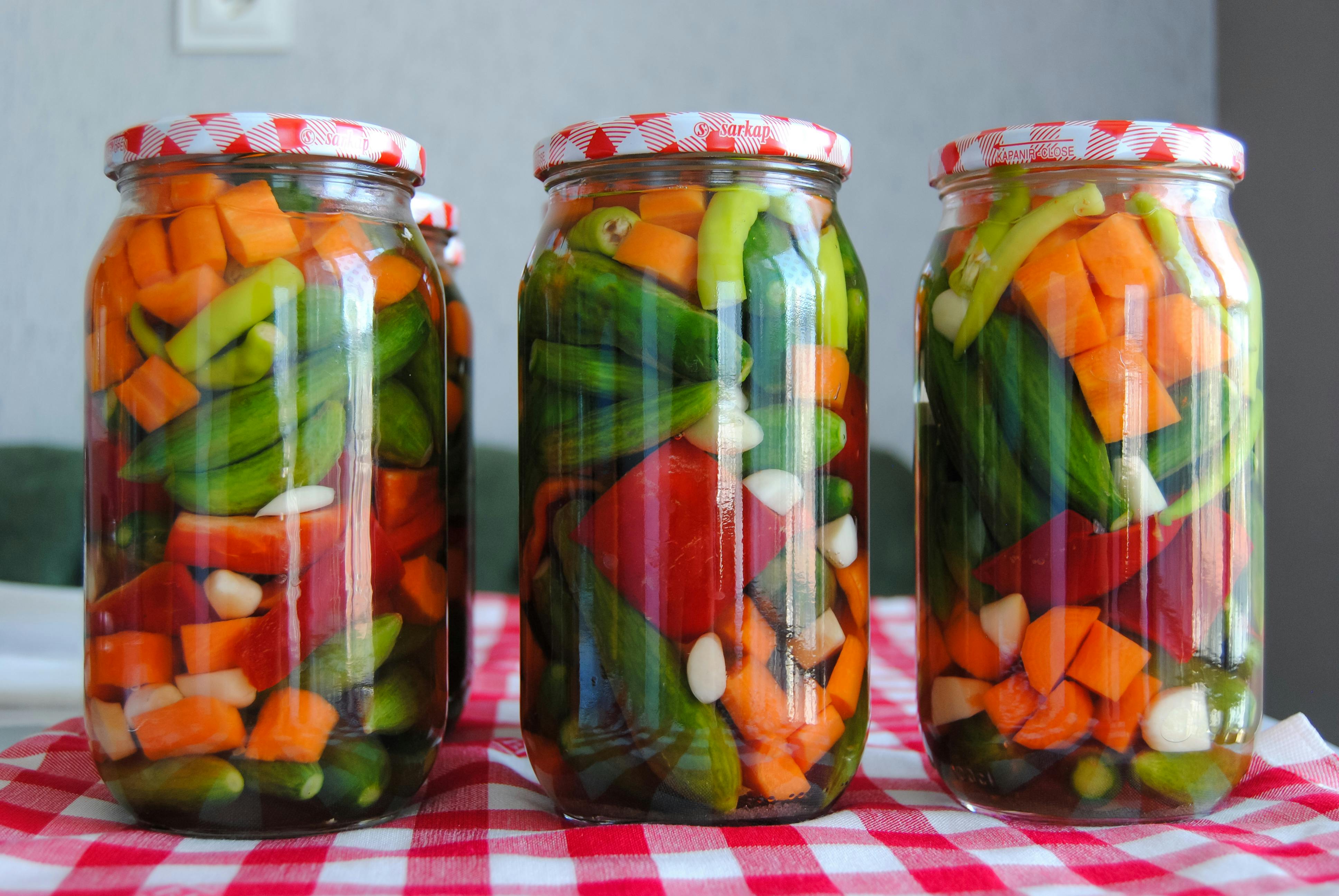
The diets react (see scores below)
Diet Ratings
Pickled carrots contain approximately 4-6g net carbs per 100g, higher than fresh carrots due to pickling liquid. Small portions (1-2 oz) can fit within daily carb limits, but require careful tracking. Vinegar-based pickles are better than sugar-sweetened varieties.
Strict keto practitioners avoid pickled carrots entirely due to carb density; lazy keto followers may include small portions without concern.
Pickled carrots are carrots preserved in vinegar and brine. Standard recipes contain no animal products, though some commercial versions may use animal-derived additives or processing aids.
Pickled carrots contain carrots (approved vegetable) but pickling involves vinegar and often added salt and sugar. The vegetable itself is paleo, but the preservation method introduces salt and potentially refined sugar.
Some paleo practitioners accept pickled vegetables made with vinegar and minimal salt as a fermented food aid to digestion. Others strictly avoid added salt and sugar in any form.
Pickled carrots are a vegetable-based food with minimal processing (pickling preserves vegetables without added sugars in traditional preparations). Carrots are a Mediterranean staple vegetable. Fermented/pickled vegetables support gut health and are encouraged in Mediterranean diet.
Carrots are plant-derived vegetables. Carnivore diet excludes all vegetables and plant foods, regardless of preservation method.
Pickled carrots are vegetables preserved in vinegar and spices. Vinegar is explicitly allowed on Whole30, and carrots are a compliant vegetable. As long as no added sugar is present, pickled carrots are fully compliant.
Carrots are low-FODMAP vegetables. Pickling (vinegar-based preservation) does not introduce FODMAPs. Monash classifies carrots as low-FODMAP at standard serving sizes. Pickled carrots retain the low-FODMAP status of the base vegetable.
Pickled carrots retain some vegetable nutrients but are high in sodium due to pickling brine. A typical serving contains 300-500mg sodium. While carrots are DASH-approved, pickling significantly increases sodium content. Fresh or low-sodium pickled versions are preferable.
Pickled carrots are low-glycemic vegetables with minimal added sugar in most preparations. Carrots are a Zone-favorable vegetable (though higher glycemic than leafy greens, still acceptable). Pickling adds minimal macronutrient impact. Portion control recommended if sugar-heavy brine.
Carrots are rich in beta-carotene, fiber, and polyphenols—all anti-inflammatory. Pickling preserves these compounds and adds beneficial acids (acetic acid). If fermented, adds probiotics. The main concern is added sodium and sugar in some commercial pickled products, but the vegetable base remains anti-inflammatory.
Pickled carrots retain the fiber and micronutrients of raw carrots (~2-3g fiber per cup) with added water content and vinegar (aids digestion). Low calorie, zero fat, zero protein but nutrient-dense per calorie. Vinegar may support satiety and blood sugar stability. Easy to digest and portion-friendly as a side or snack.
Nutritional profile
Six traits that cut across every diet.
Fiber & Plants
How much whole-plant food and fiber it delivers.
Healthy Fats
The quality of its fats (unsaturated, omega-3).
Whole / Unprocessed
How close it is to its natural, unprocessed form.
Gut Gentle
How easy it is on digestion (low FODMAP, few irritants).
Low Glycemic
How little it spikes your blood sugar.
Protein Density
How much protein it packs per calorie.
Controversy Index
Score range: 1–8/10. Higher controversy = more disagreement between diets.
Diet-Specific Tips for Pickled carrots
 Keto — 4/10
- Moderate net carbs
- Portion control essential
- Pickling liquid adds carbs
- Better than fresh carrots for keto
 Vegan — 8/10
- Plant-based vegetable
- Check for additives
- Vinegar-based preservation
 Paleo — 6/10
- Base vegetable is paleo
- Added salt in pickling
- Often contains added sugar
- Vinegar is acceptable
 Mediterranean — 8/10
- vegetable-based
- minimal processing
- fermented/preserved
- supports gut health
- traditional Mediterranean preparation
 Whole30 — 8/10
- Vegetable base
- Vinegar-preserved (allowed)
- No added sugar required
 Low-FODMAP — 8/10
- Carrots are low-FODMAP vegetables
- Pickling process does not add FODMAPs
- Standard serving sizes are safe
 DASH — 5/10
- High sodium from pickling brine
- Retains some fiber and beta-carotene
- Typical serving: 300-500mg sodium
- Low-sodium alternatives available
 Zone — 7/10
- Low-glycemic vegetable
- Minimal added macronutrients
- Fermented/pickled benefits
- Depends on brine sugar content
 Anti-Inflammatory — 7/10
- beta-carotene and carotenoids
- fiber
- polyphenols
- potential probiotic content if fermented
- check for added sugar and sodium in commercial versions
 GLP-1 Friendly — 8/10
- high water content
- good fiber retention
- low calorie
- vinegar aids digestion
- easy to digest
- portion-friendly