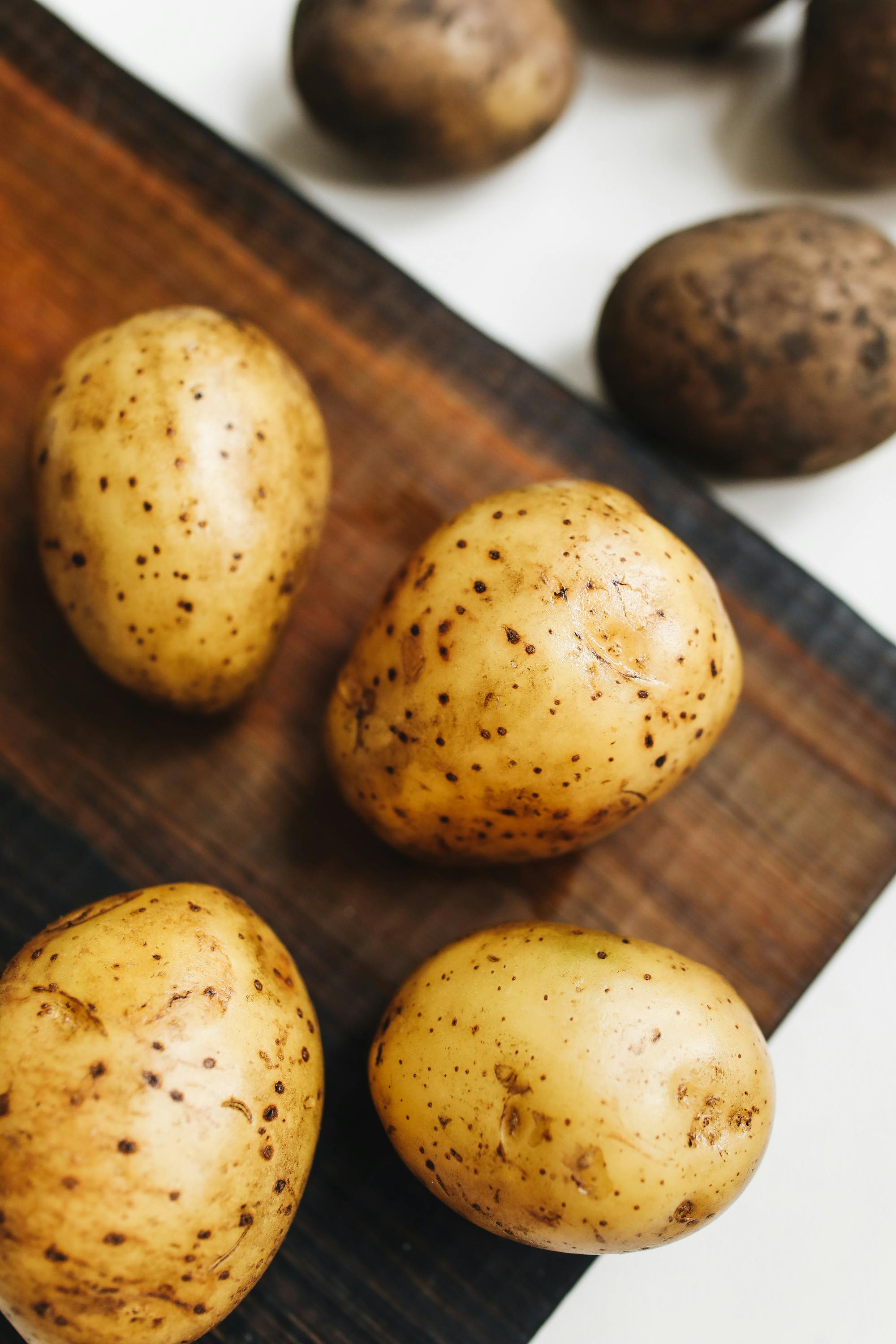
The diets react (see scores below)
Diet Ratings
Starchy vegetable with ~17g net carbs per 100g raw. High glycemic load incompatible with ketosis. No healthy fats.
Whole plant food with no animal products or derivatives. Unprocessed, nutrient-dense vegetable.
White potatoes are debated within paleo community. Originally excluded by Loren Cordain, but Mark Sisson and Whole30 now include them as acceptable tubers. Modern paleo increasingly accepts them in moderation, especially when prepared without seed oils.
Strict Cordain-school paleo excludes all white potatoes due to alkaloid content and higher glycemic load. However, Mark Sisson, Whole30, and most contemporary paleo practitioners now accept white potatoes as legitimate tubers.
Whole starchy vegetable with fiber, potassium, and nutrients when prepared without excess fat. Traditional Mediterranean staple, especially in Spanish and Greek cuisines. Best prepared boiled or roasted with olive oil.
Plant-derived tuber, high in starch and carbohydrates. Carnivore diet excludes all plant foods without exception. No animal component. Potatoes are a primary excluded food category.
Russet potatoes are whole, unprocessed vegetables with no excluded ingredients. Potatoes are a staple vegetable in Whole30 cooking and fully compliant.
Russet potatoes are low-FODMAP. Monash University rates potatoes (all varieties) as low-FODMAP at generous servings (1 medium potato or 150g). Potatoes contain no fructans, GOS, lactose, or polyols. They are a safe starch during elimination and widely recommended by FODMAP practitioners.
Excellent source of potassium, fiber (with skin), and magnesium. Low sodium. DASH-approved starchy vegetable. Preparation method critical: baked/boiled preferred over fried. Rich in resistant starch when cooled.
Russet potatoes are explicitly listed as 'unfavorable' carbs in Zone due to very high glycemic index and high glycemic load. Starchy and low in fiber relative to carb content. Dr. Sears recommends avoiding potatoes in favor of vegetables and legumes. Difficult to portion into Zone blocks without excessive carb intake.
Russet potatoes are starchy nightshades with high glycemic index when cooked. They lack the antioxidant density of colored potatoes. However, they contain resistant starch when cooled, and potatoes are nutrient-dense (potassium, vitamin C, B vitamins). The anti-inflammatory verdict depends on preparation method and individual sensitivity to nightshades.
Mainstream anti-inflammatory nutrition (Dr. Weil) includes potatoes as acceptable vegetables. However, the Autoimmune Protocol (AIP) and some anti-inflammatory practitioners exclude all nightshades due to alkaloids (solanine) and lectins, which they argue trigger inflammation in sensitive individuals. Research on nightshade sensitivity in the general population is limited.
Low protein (2g per 100g cooked), moderate fiber (1.1g), high glycemic index. Calorie-dense relative to satiety and requires large volume to feel filling. Boiled or baked is acceptable in small portions (3-4 oz) paired with high-protein food; fried versions are avoid. Better replaced with sweet potato or non-starchy vegetables.
Nutritional profile
Six traits that cut across every diet.
Fiber & Plants
How much whole-plant food and fiber it delivers.
Healthy Fats
The quality of its fats (unsaturated, omega-3).
Whole / Unprocessed
How close it is to its natural, unprocessed form.
Gut Gentle
How easy it is on digestion (low FODMAP, few irritants).
Low Glycemic
How little it spikes your blood sugar.
Protein Density
How much protein it packs per calorie.
Controversy Index
Score range: 1–10/10. Higher controversy = more disagreement between diets.
Diet-Specific Tips for Russet potatoes
 Vegan — 10/10
- Whole plant food
- No processing
- Staple vegetable
 Paleo — 5/10
- tuber
- moderate glycemic index
- contains alkaloids
- preparation method matters
 Mediterranean — 7/10
- whole vegetable
- traditional staple
- nutrient-dense
- preparation method matters
 Whole30 — 10/10
- Whole vegetable
- No excluded ingredients
- Unprocessed
 Low-FODMAP — 9/10
- No fructans, GOS, lactose, or polyols
- Safe at standard meal portions (1+ medium potatoes)
- Cooking method does not affect FODMAP status
- Versatile carbohydrate base
 DASH — 7/10
- High potassium content
- Good fiber (with skin)
- Low sodium
- Preparation method critical (avoid frying)
 Anti-Inflammatory — 5/10
- nightshade vegetable
- high glycemic index (cooked)
- resistant starch (cooled)
- nutrient-dense
- individual sensitivity variable
 GLP-1 Friendly — 4/10
- low protein
- high glycemic index
- requires large volume
- preparation-dependent
- better alternatives available